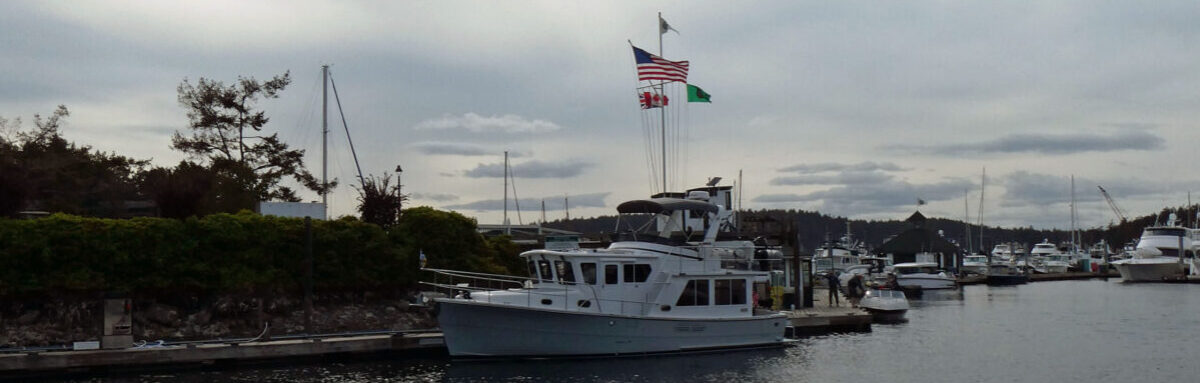
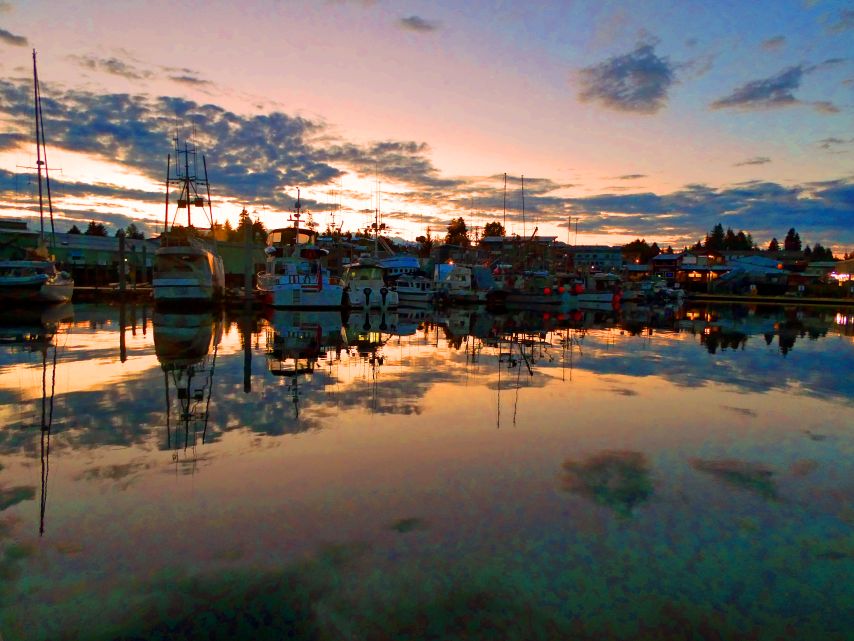
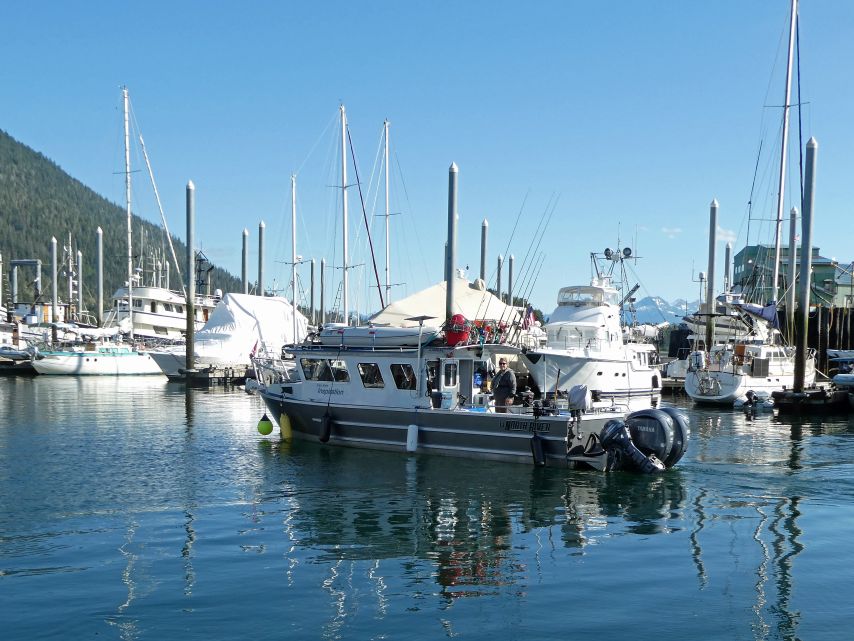
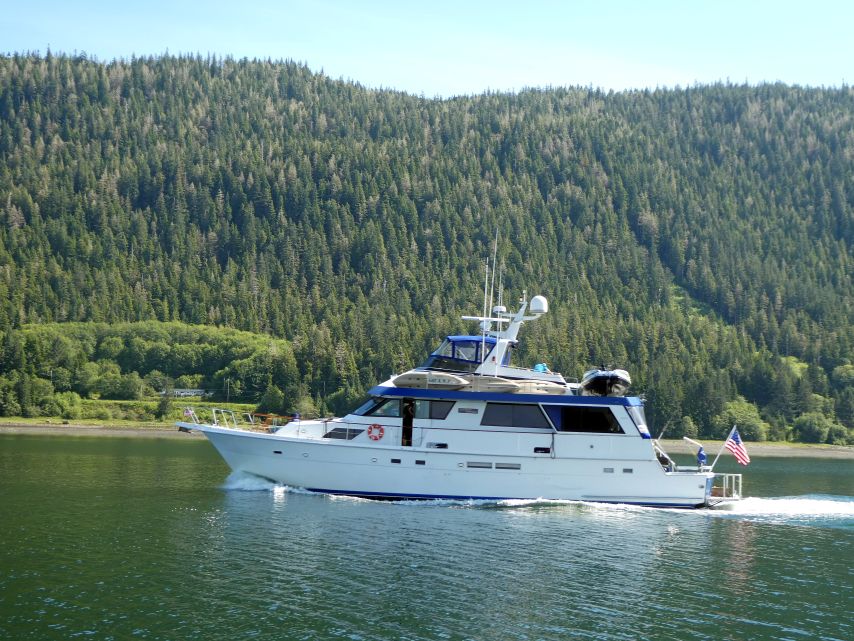
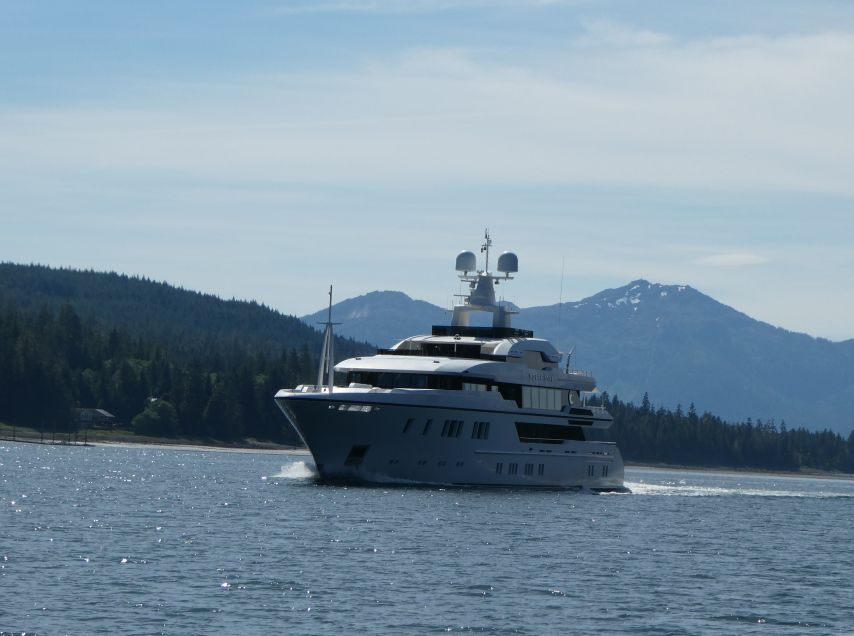
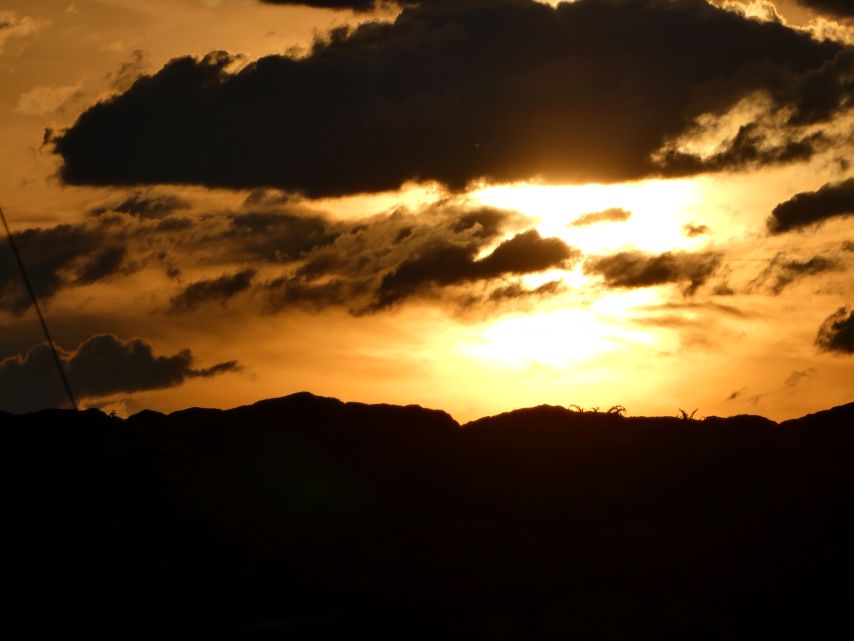
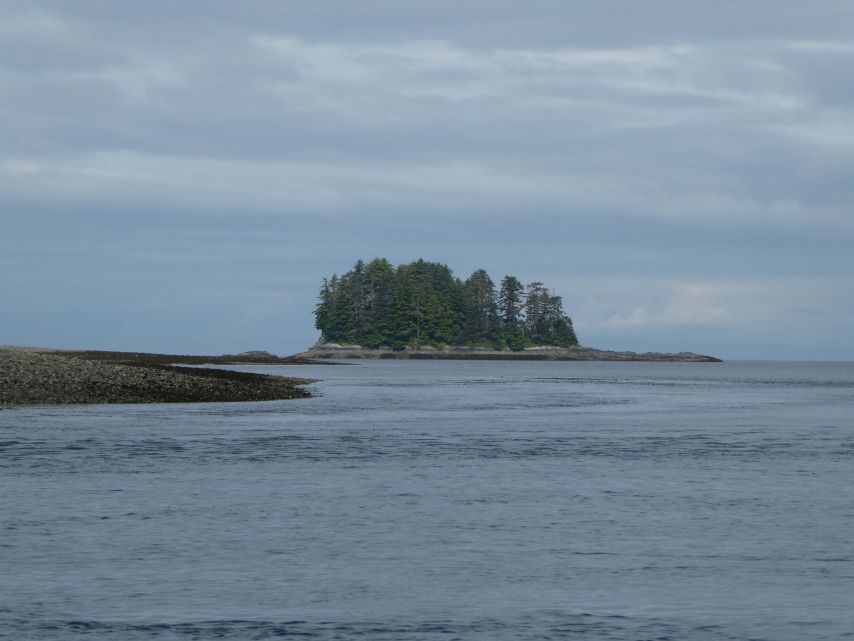
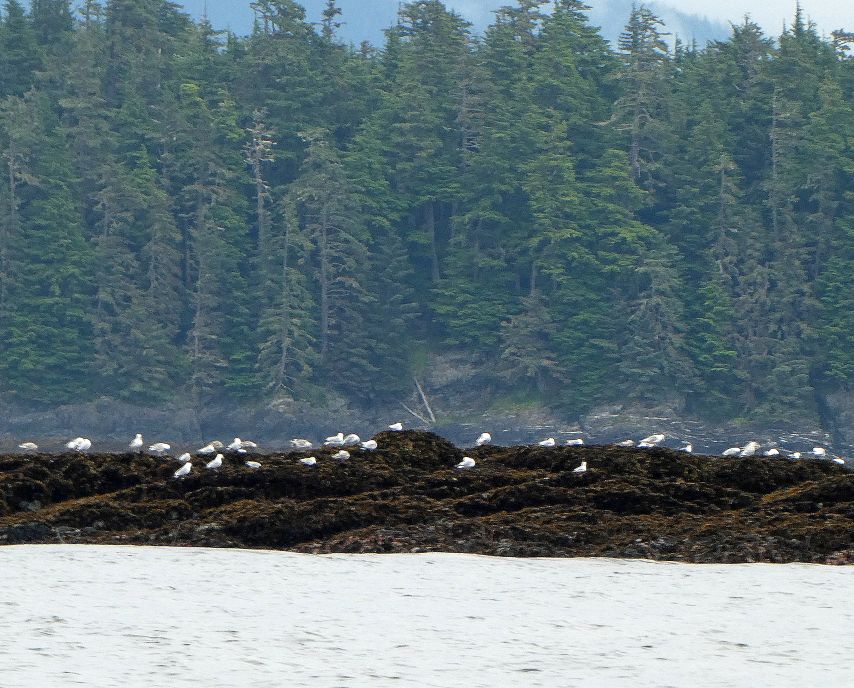
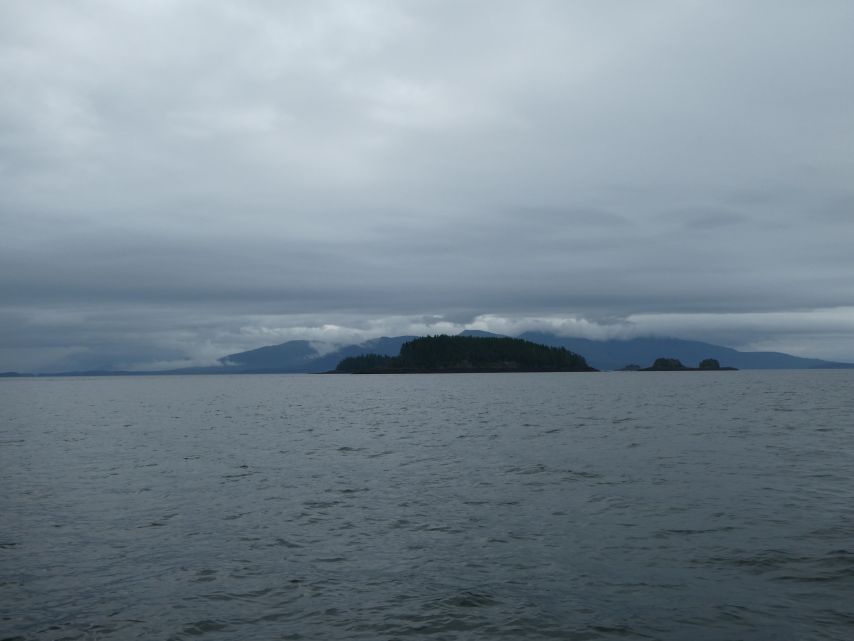
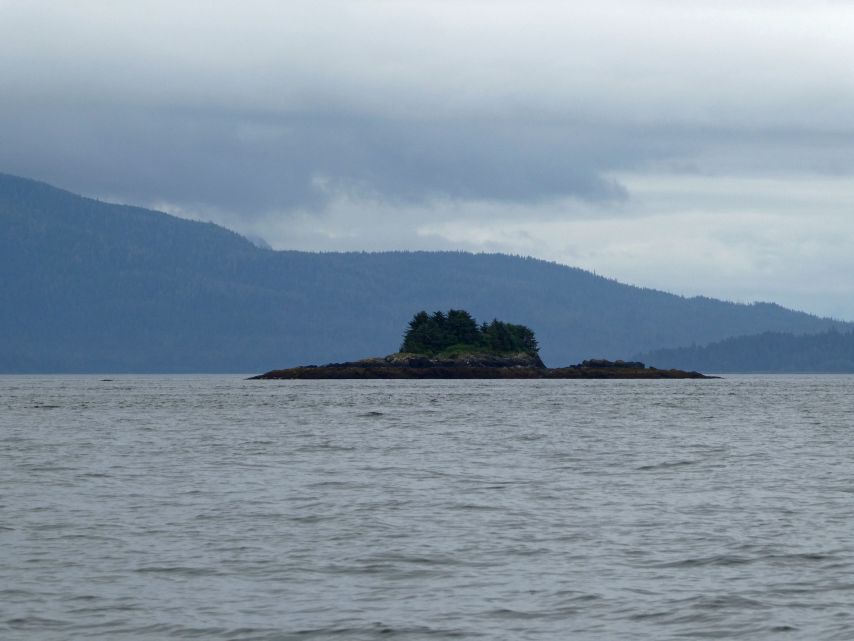
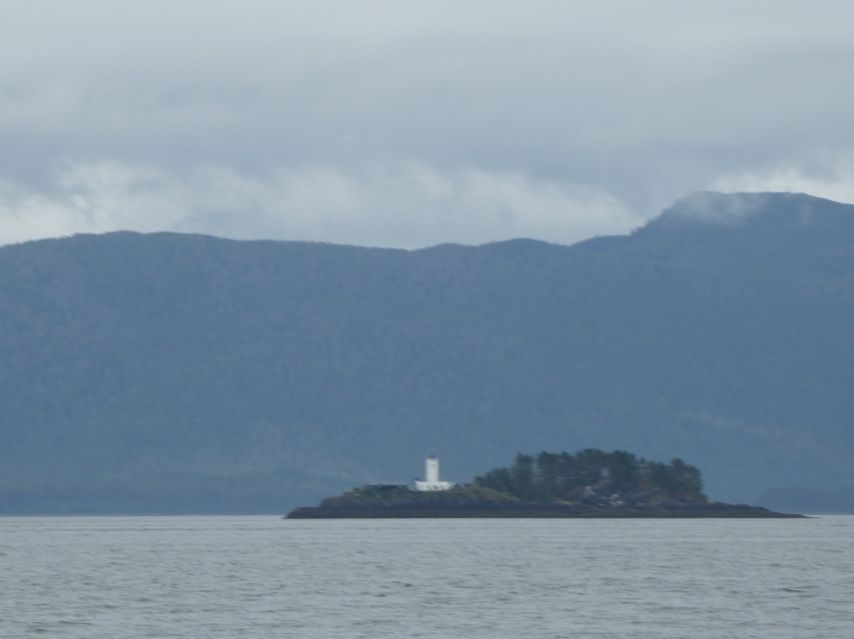
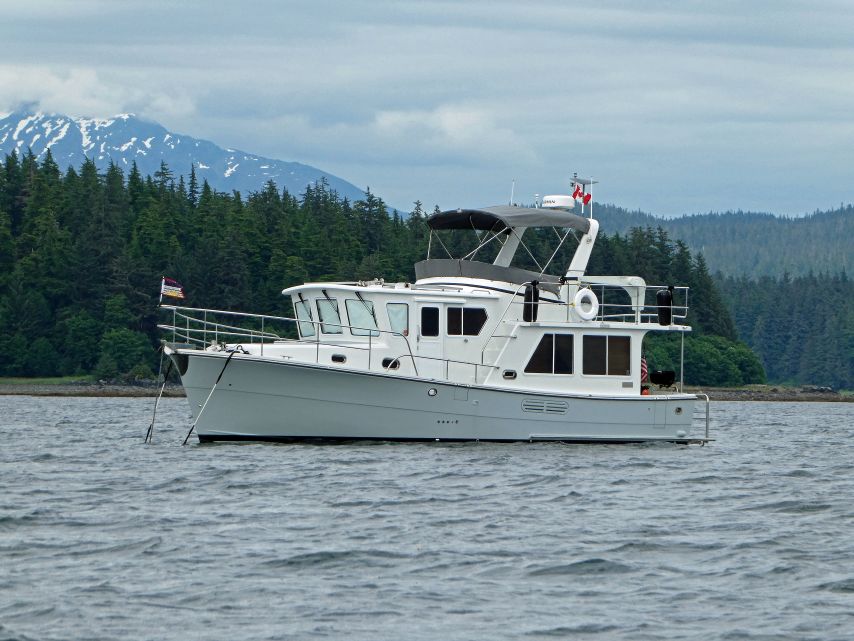
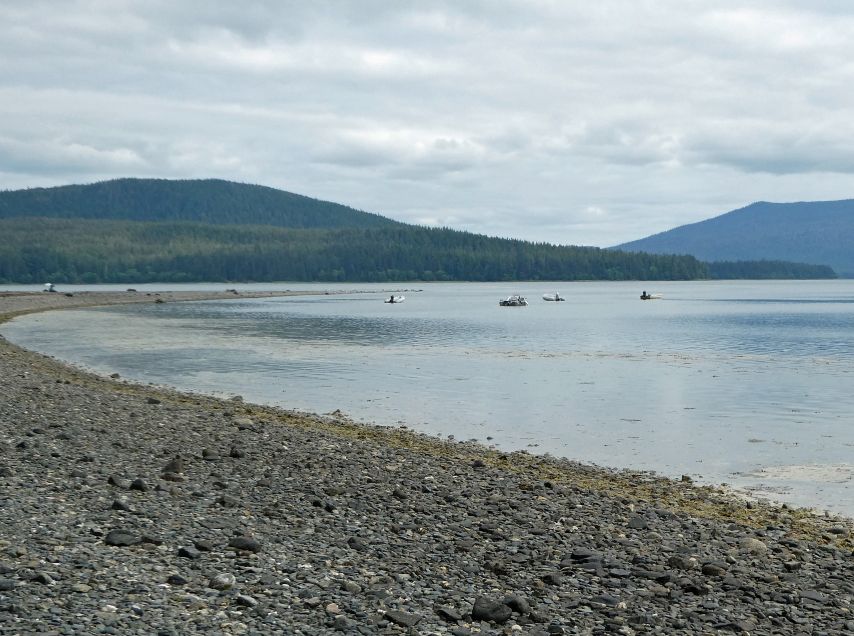
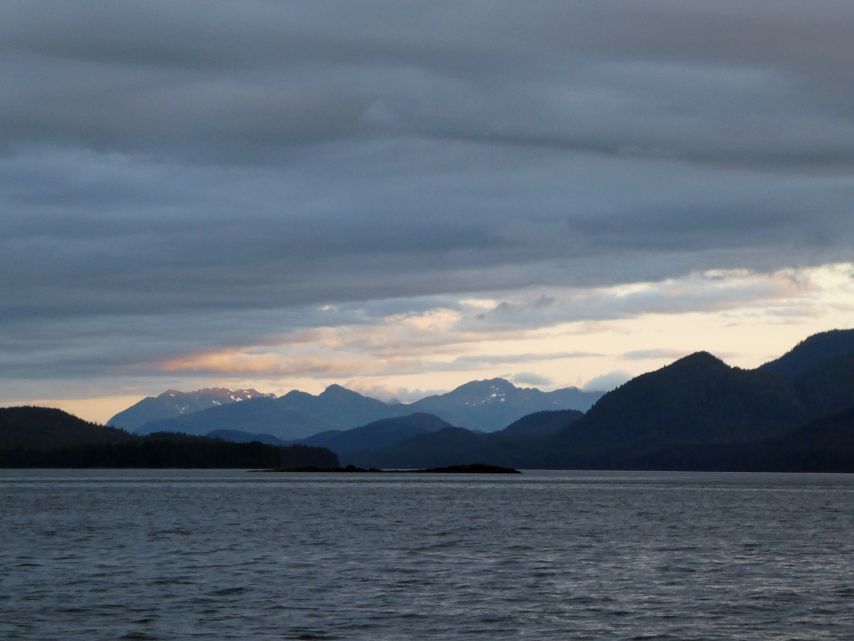
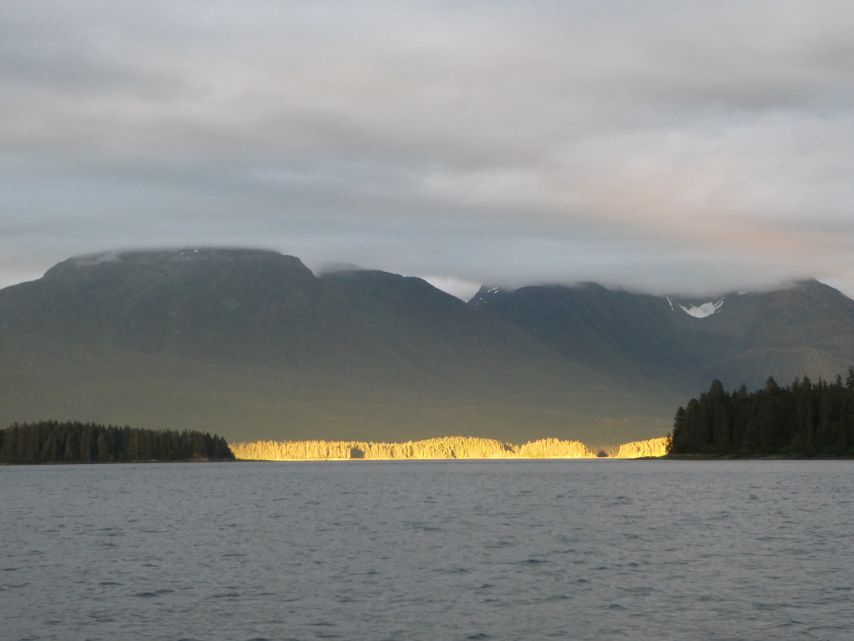
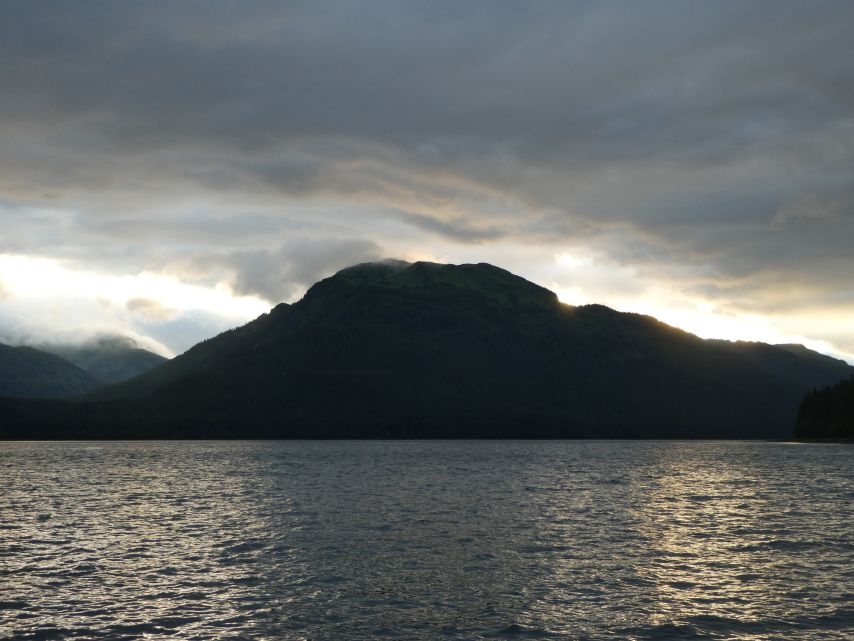
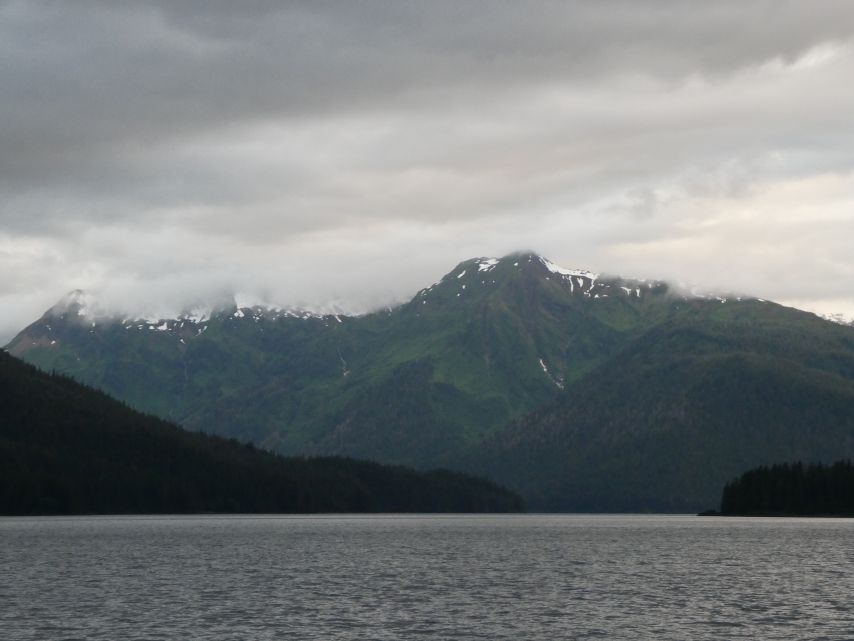
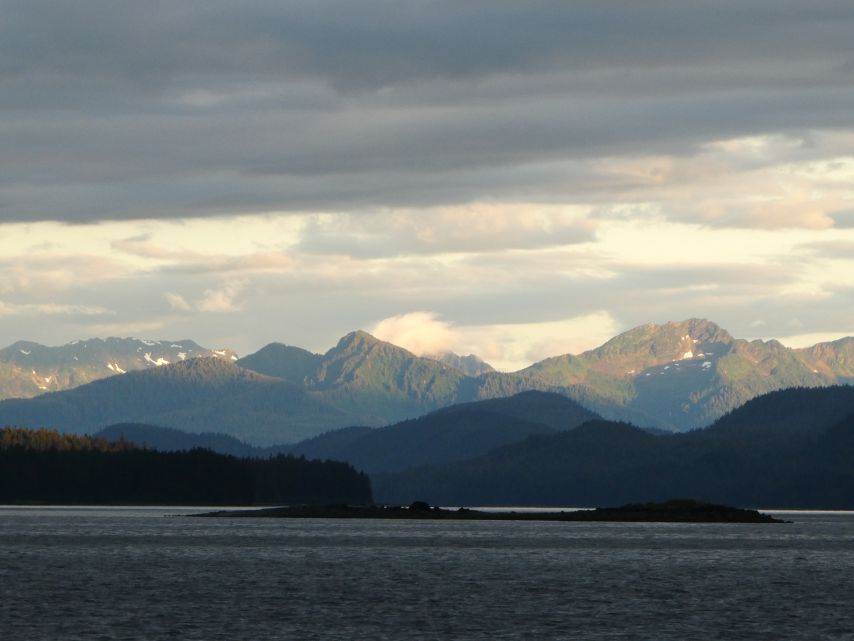
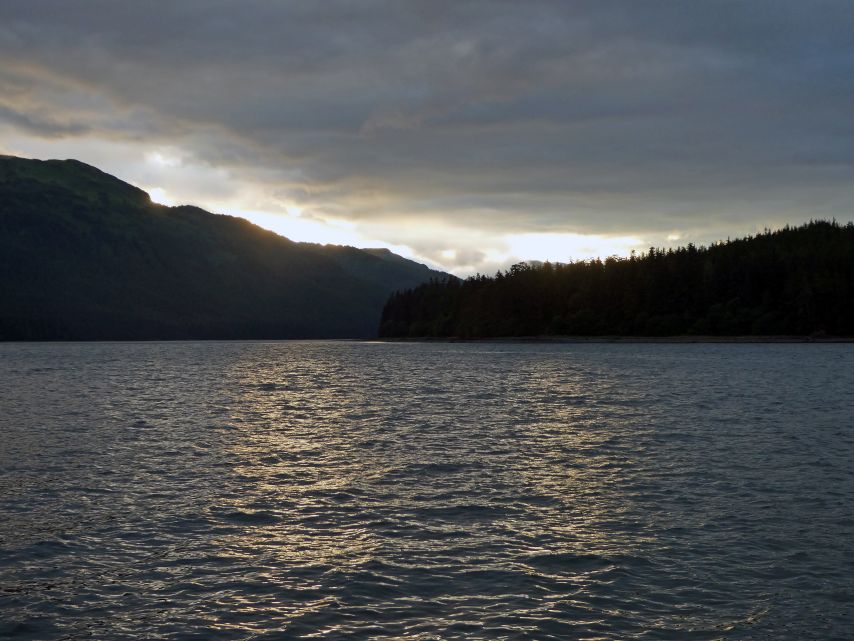
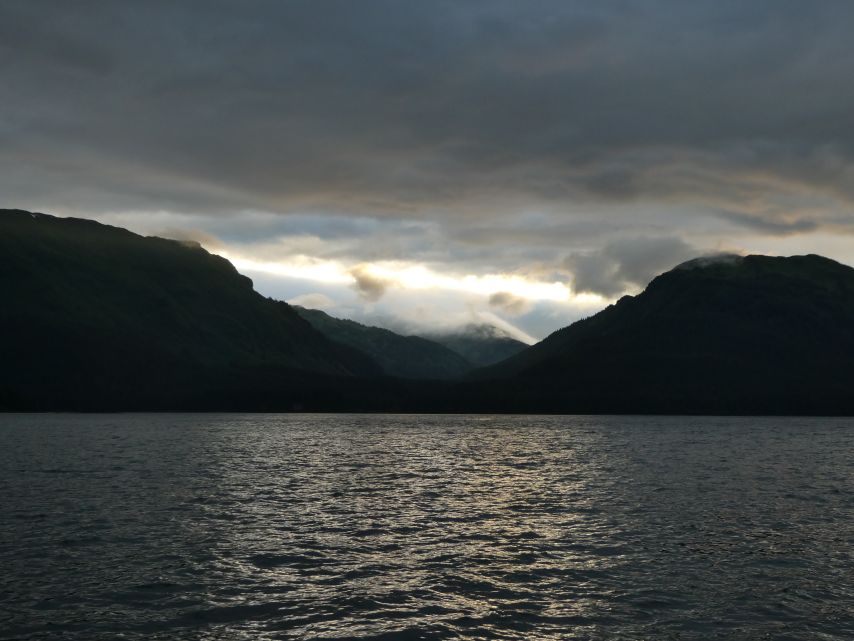
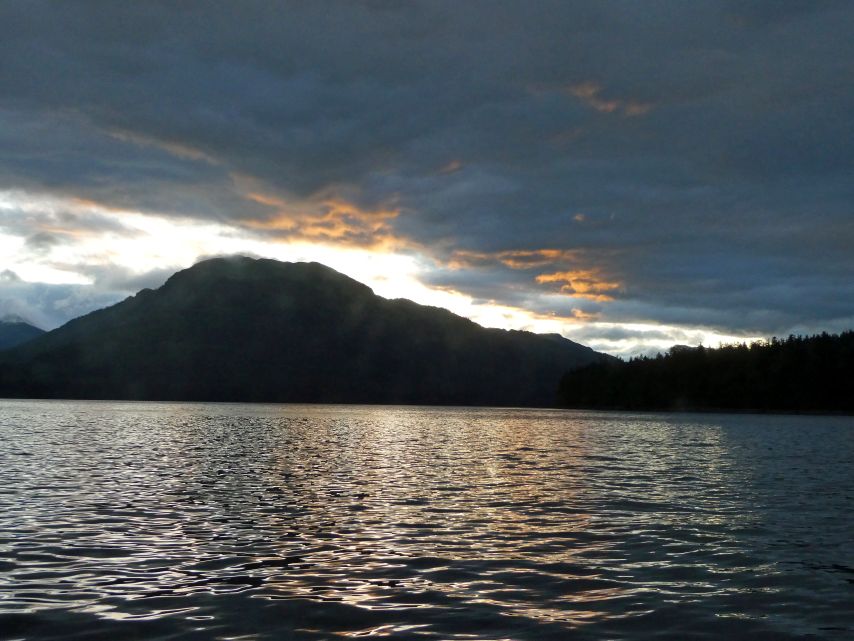
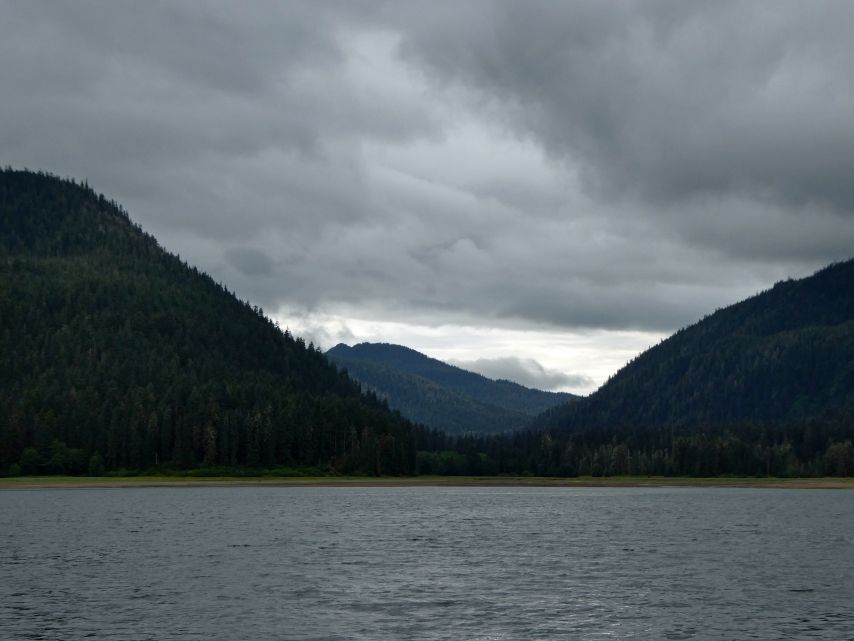
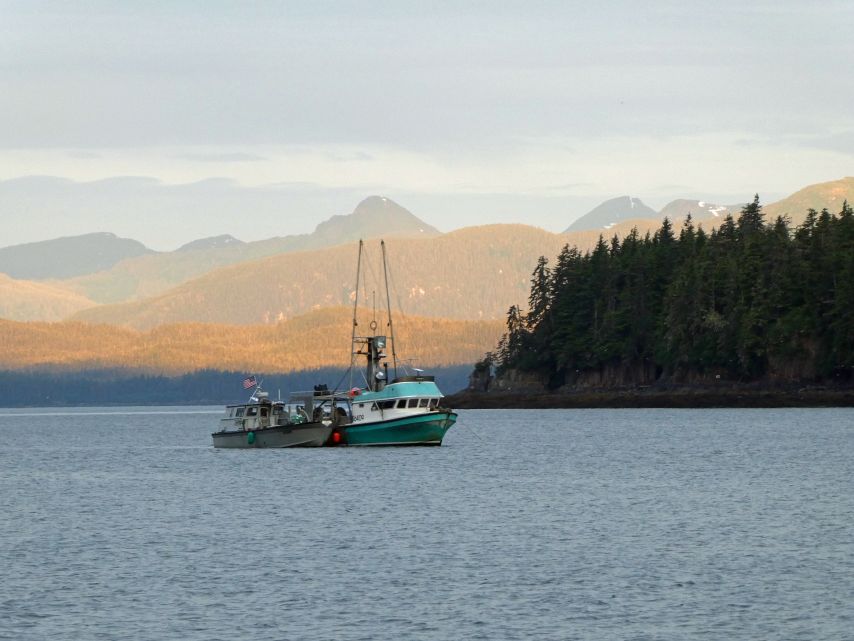
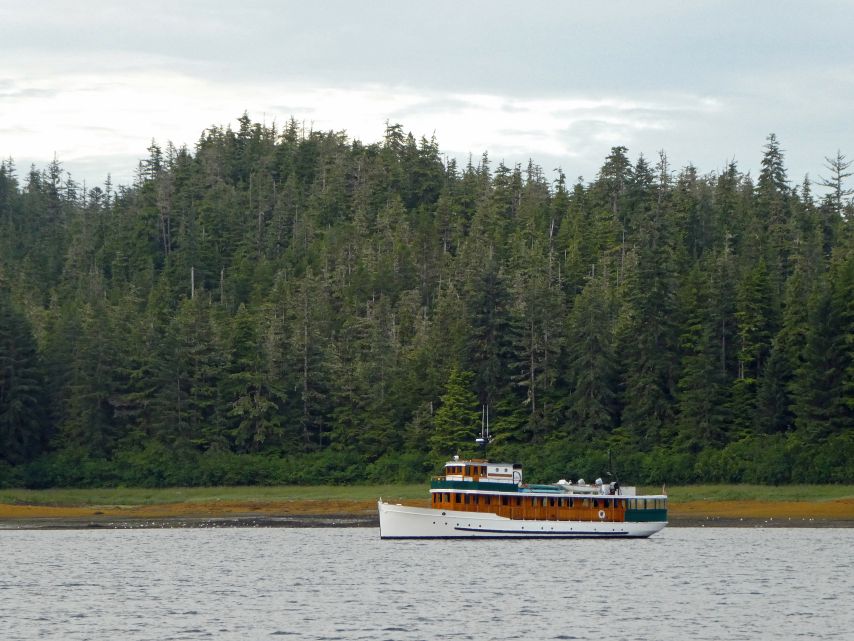
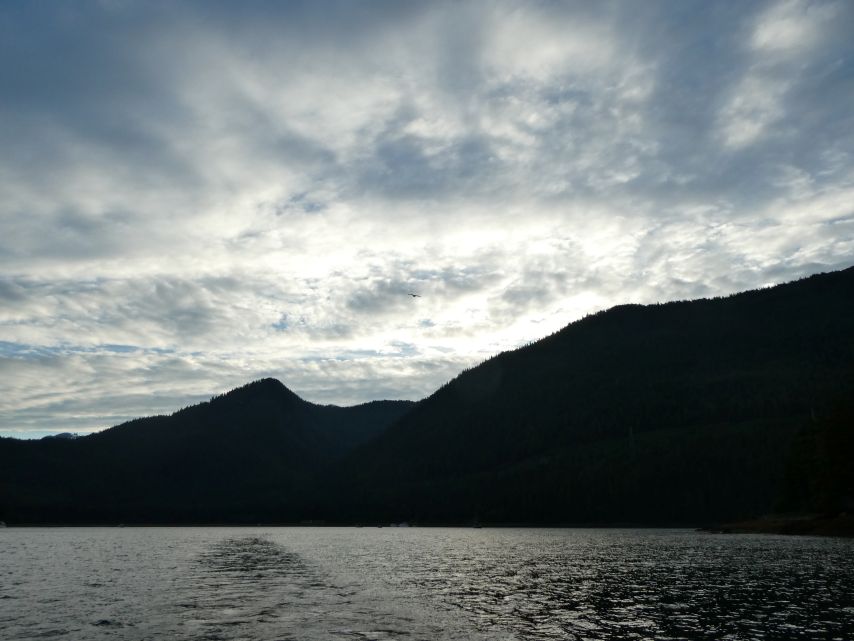
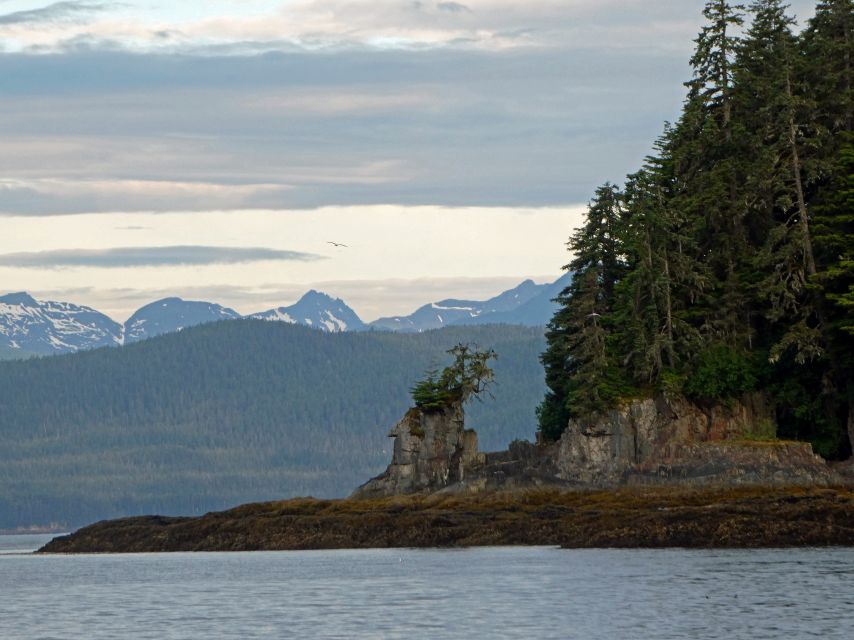
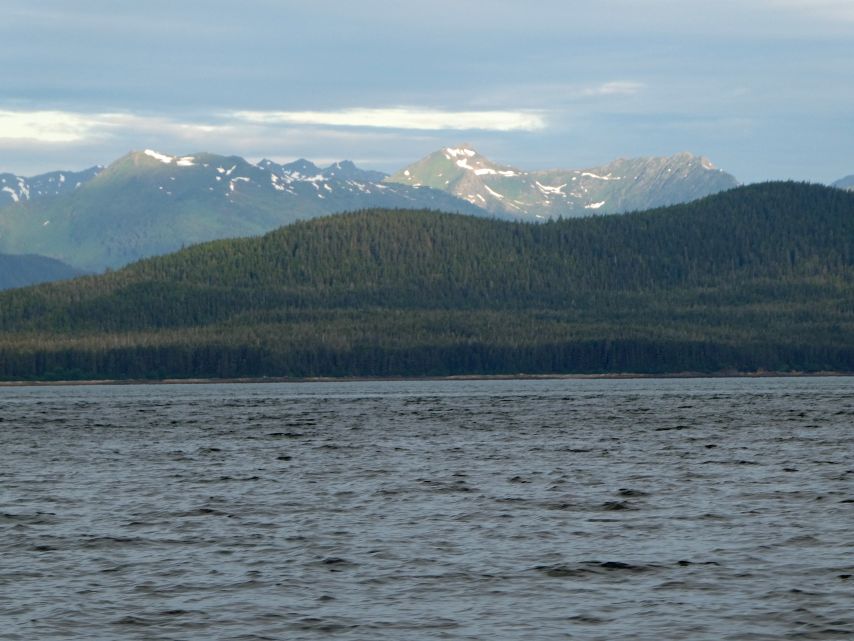
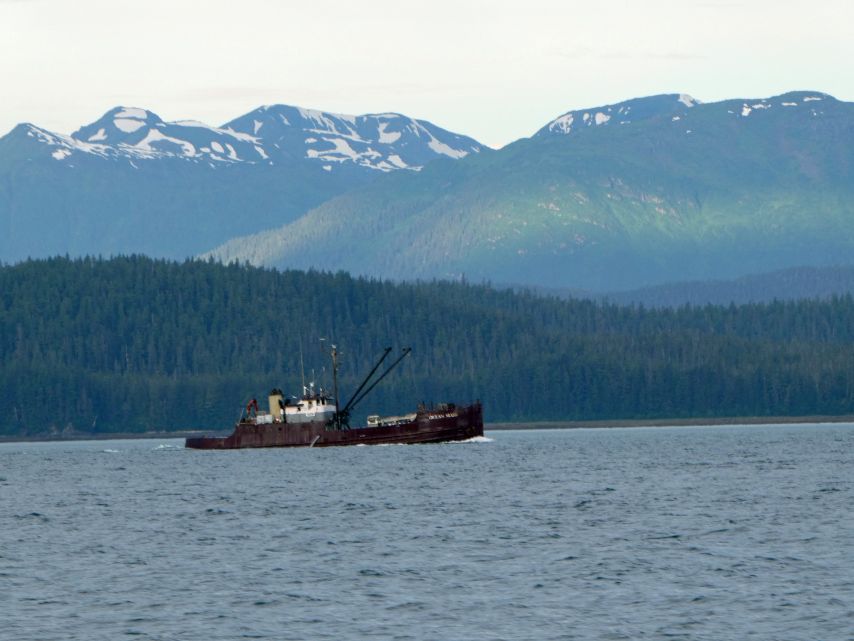
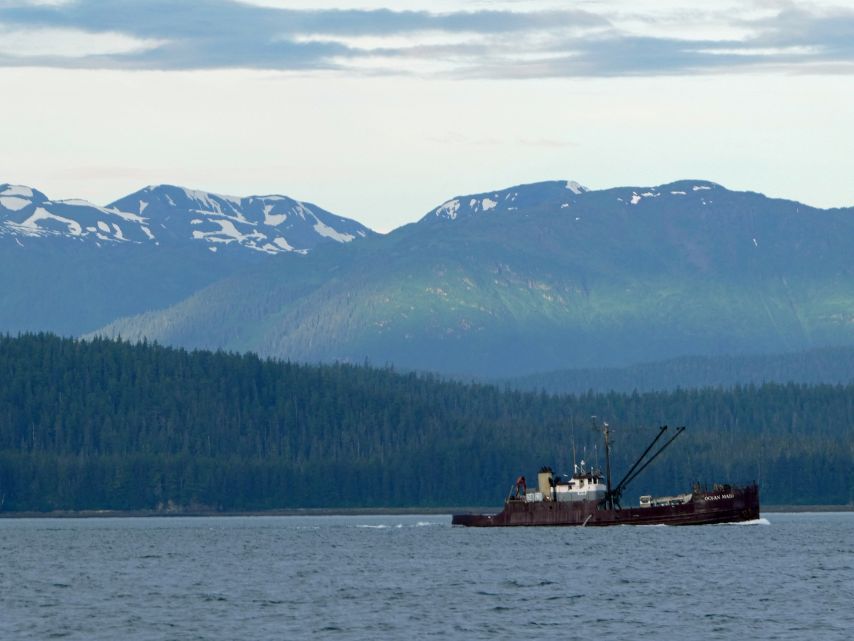
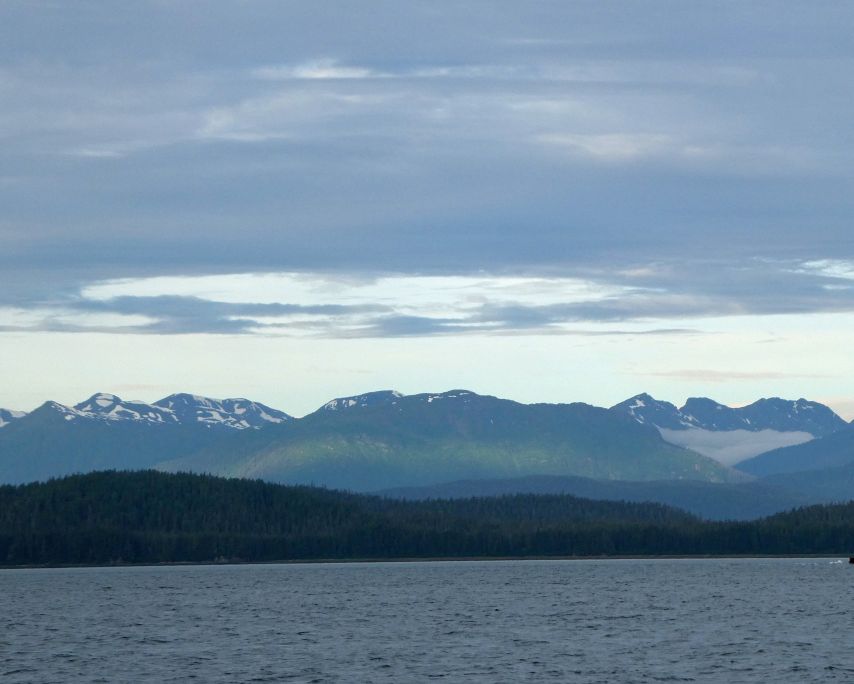
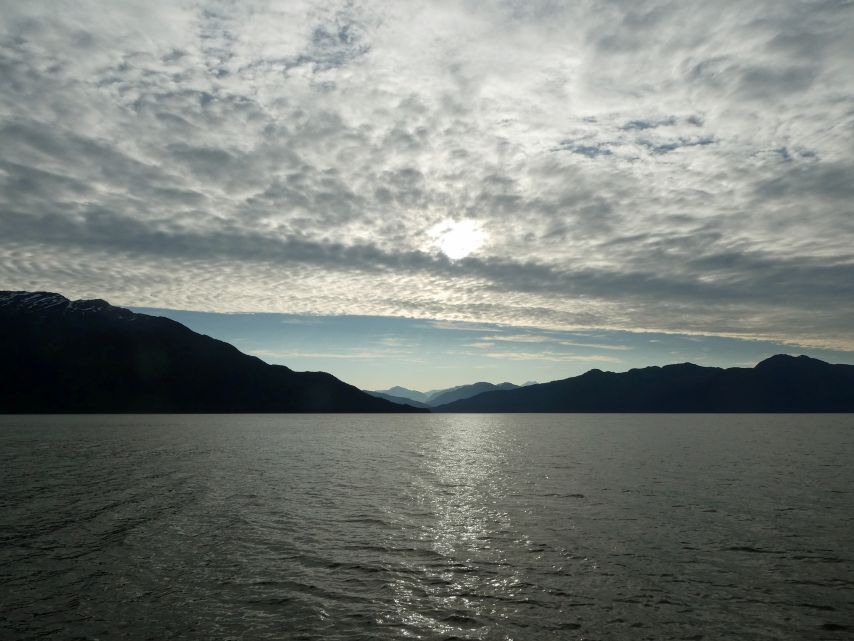
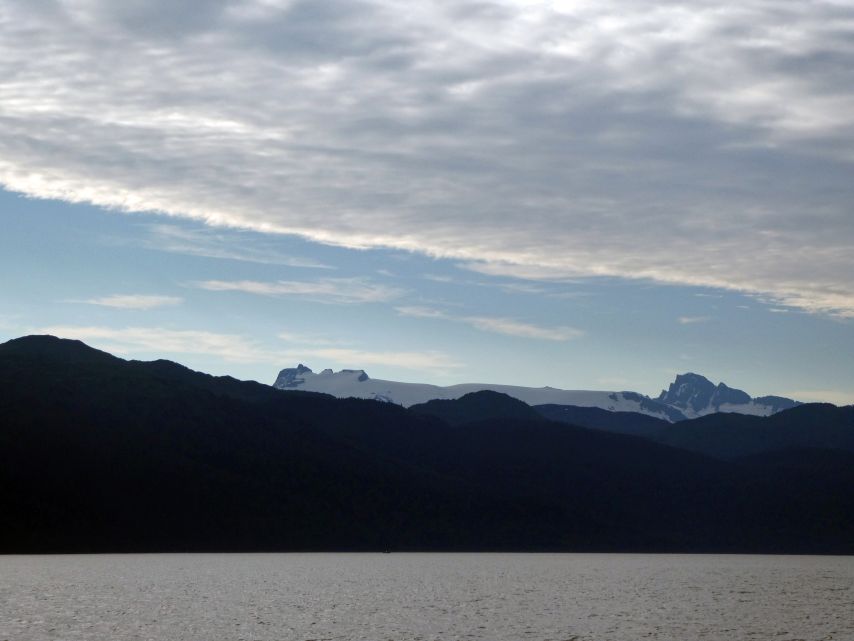
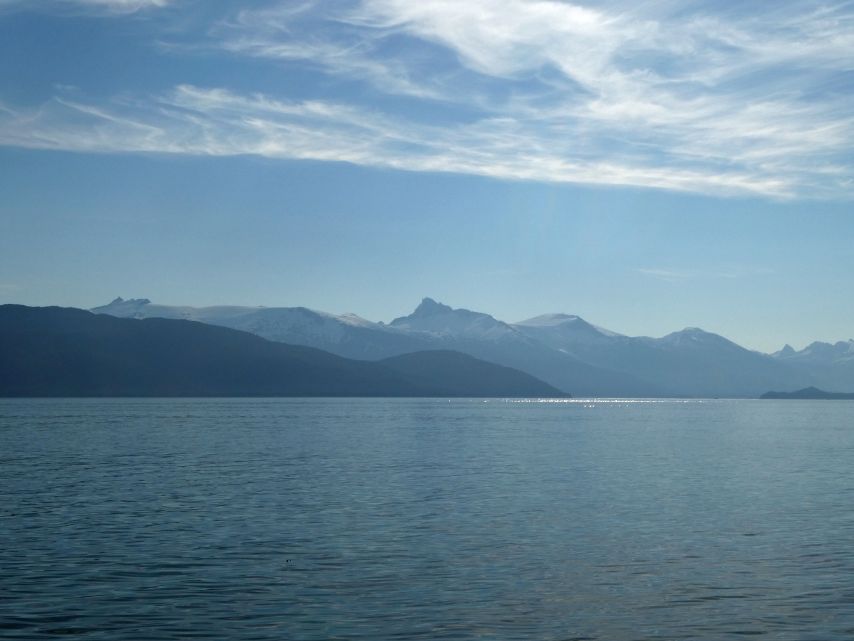
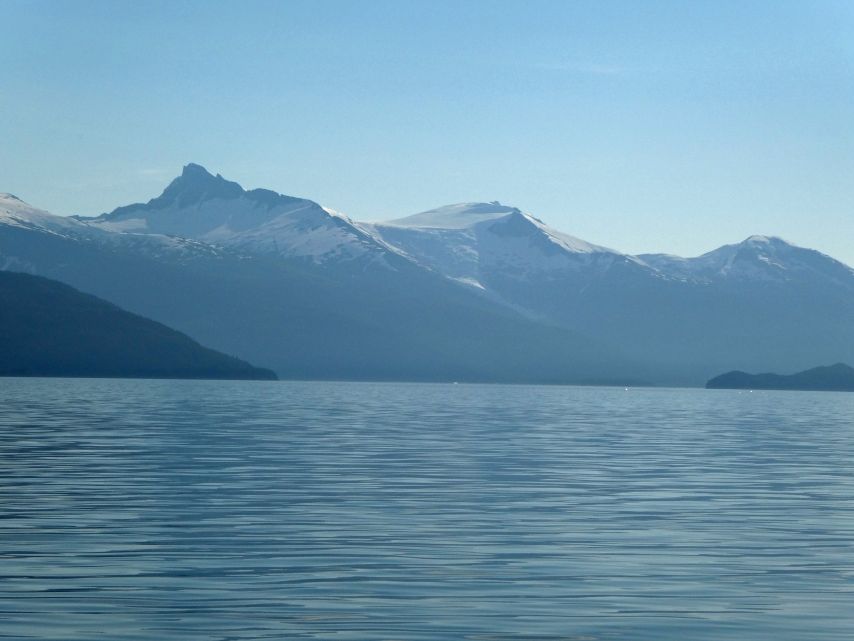
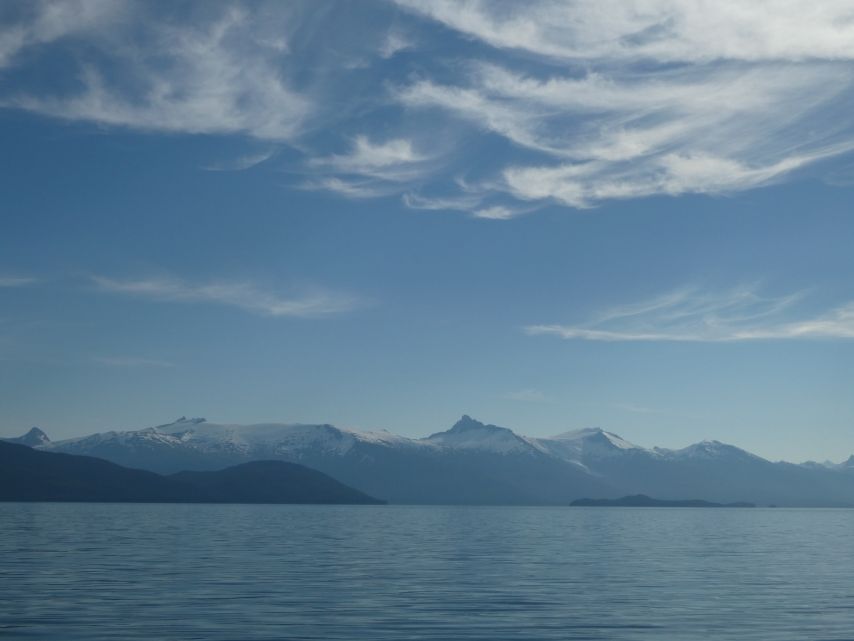
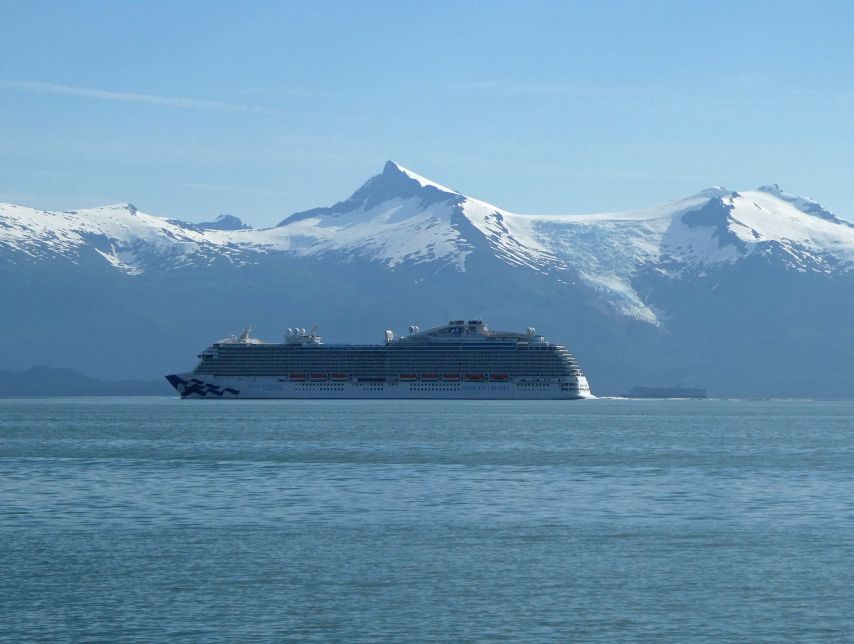
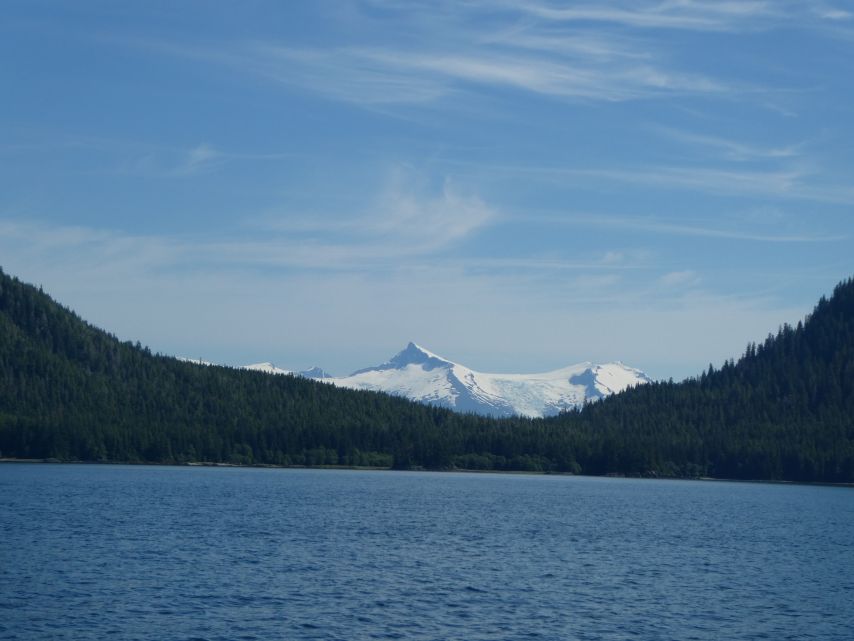
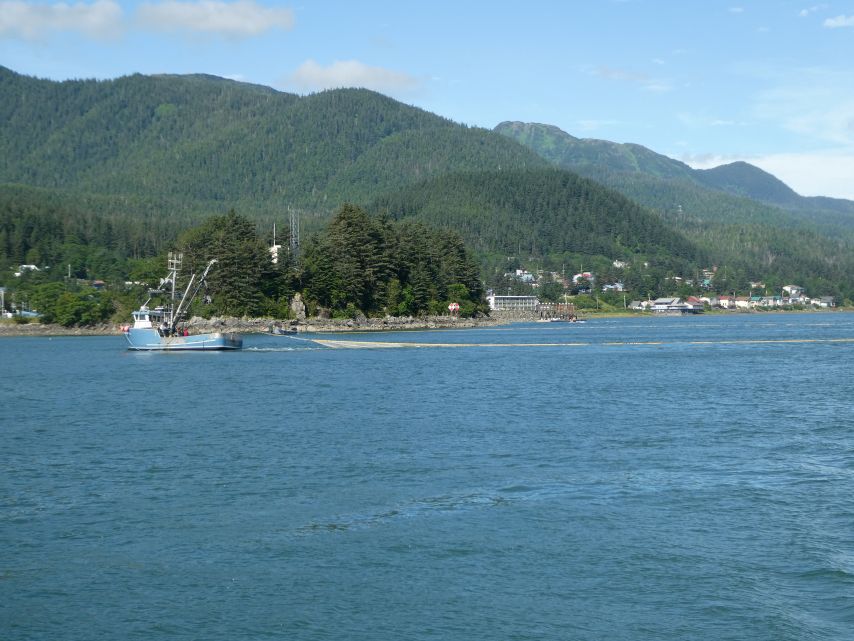
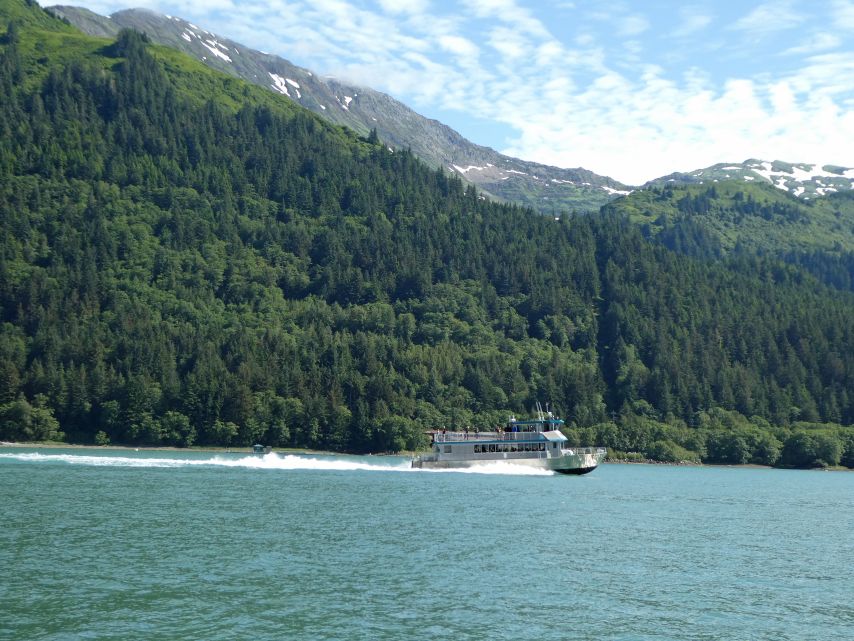
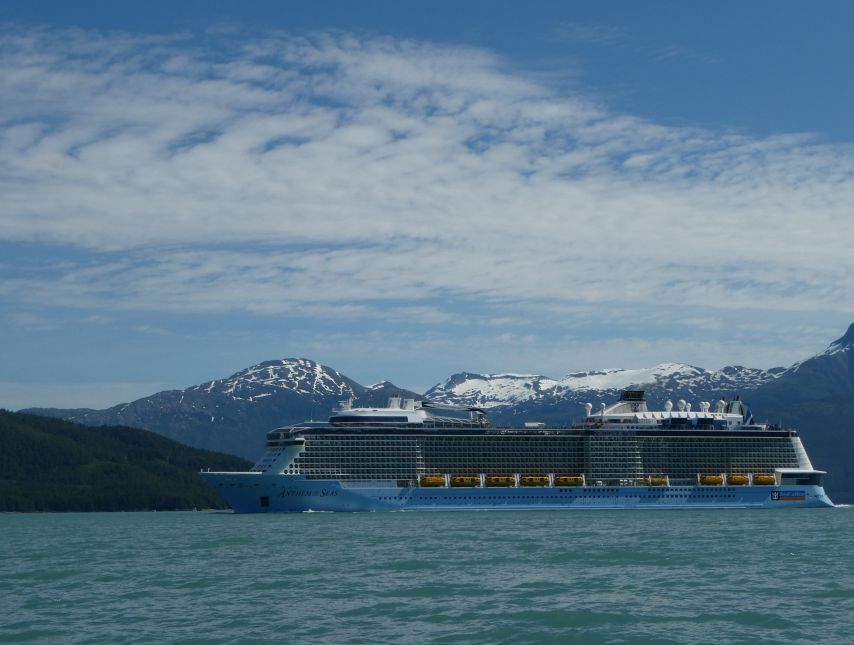
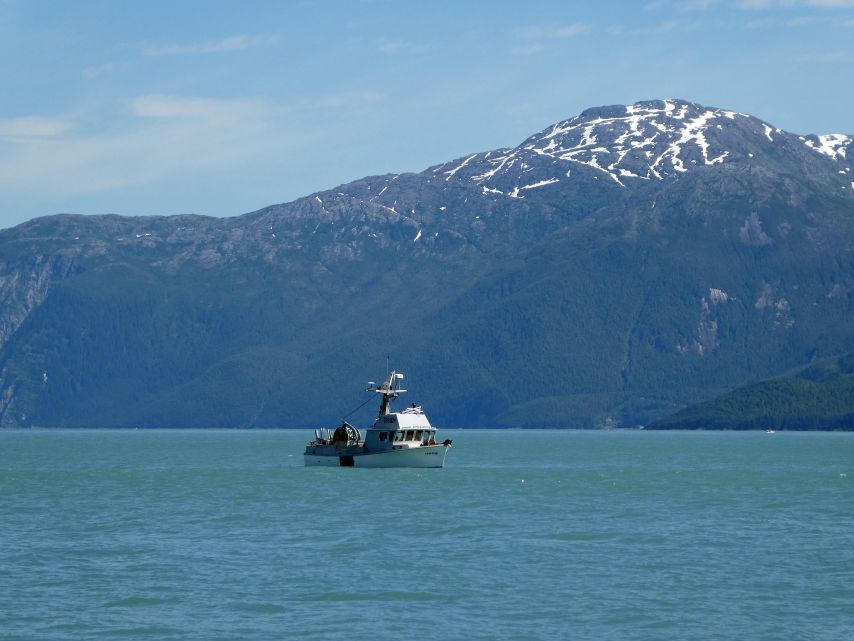
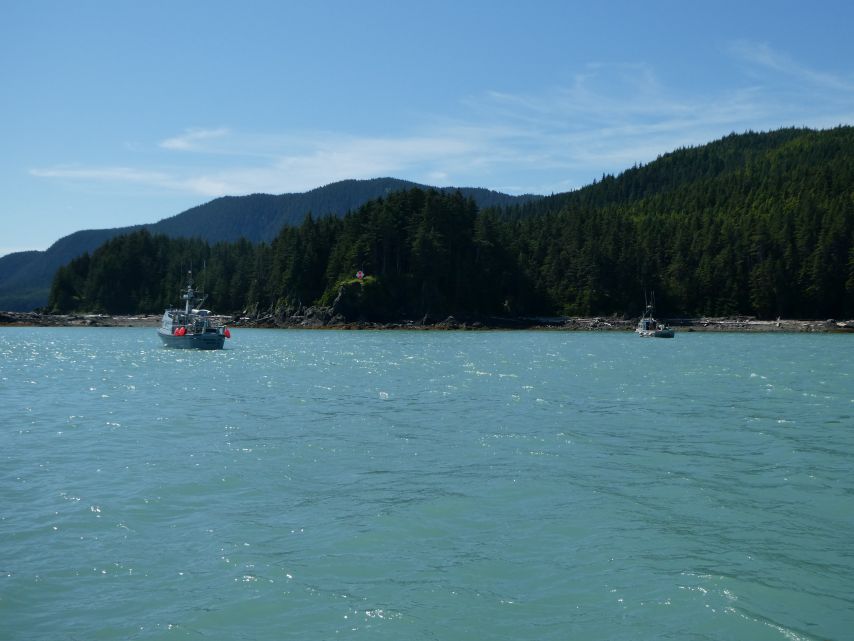
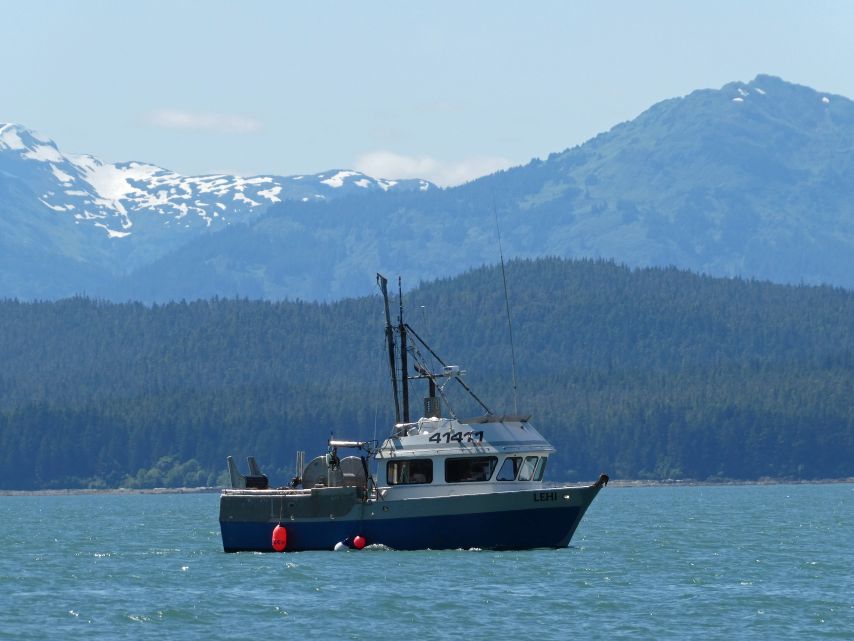
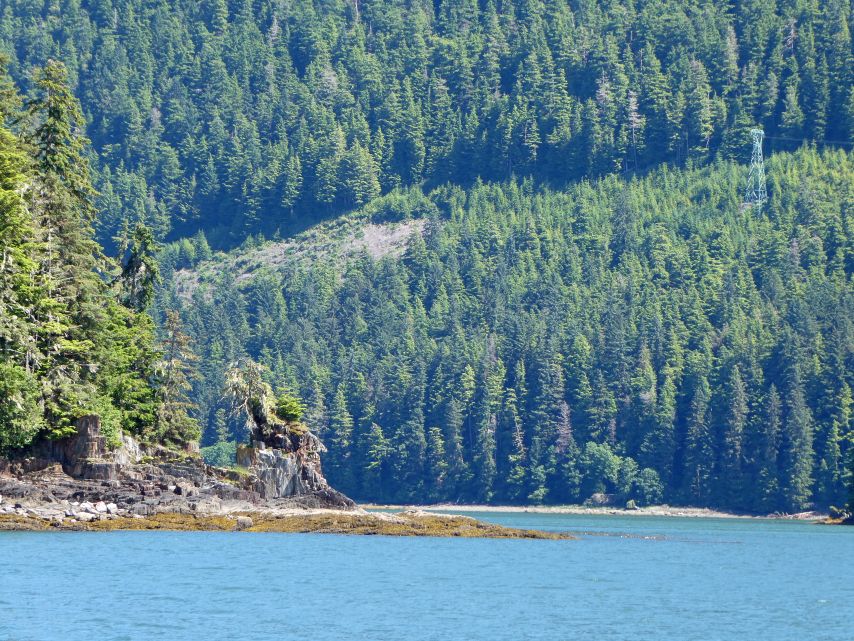
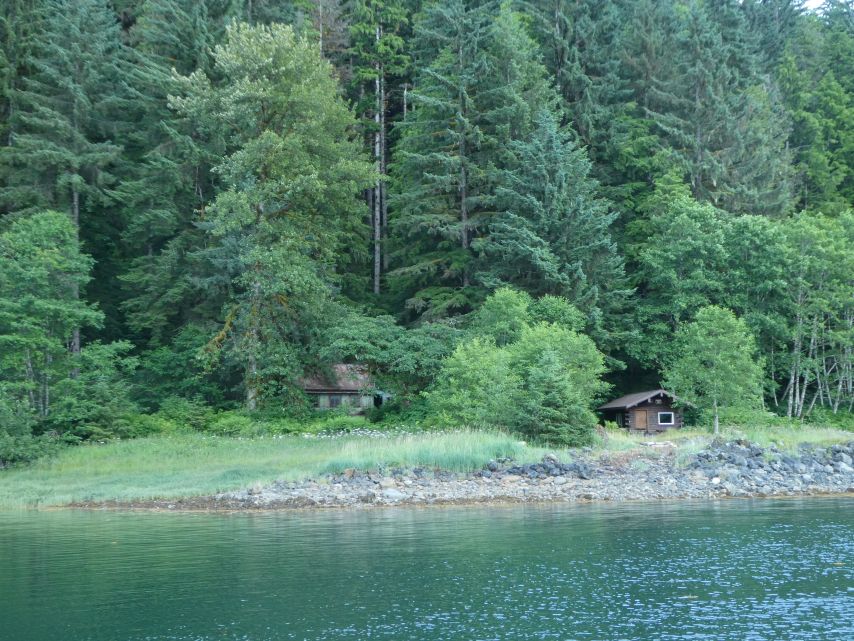
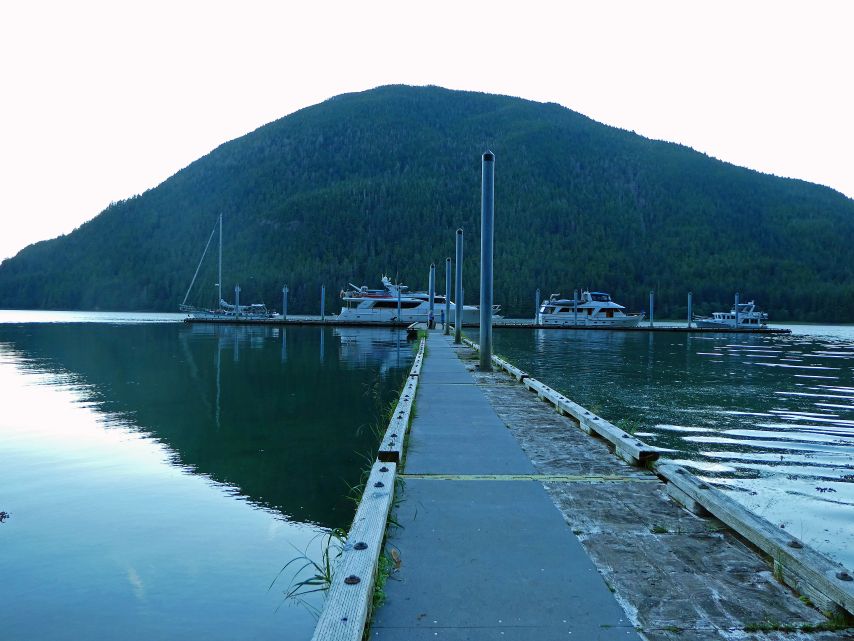
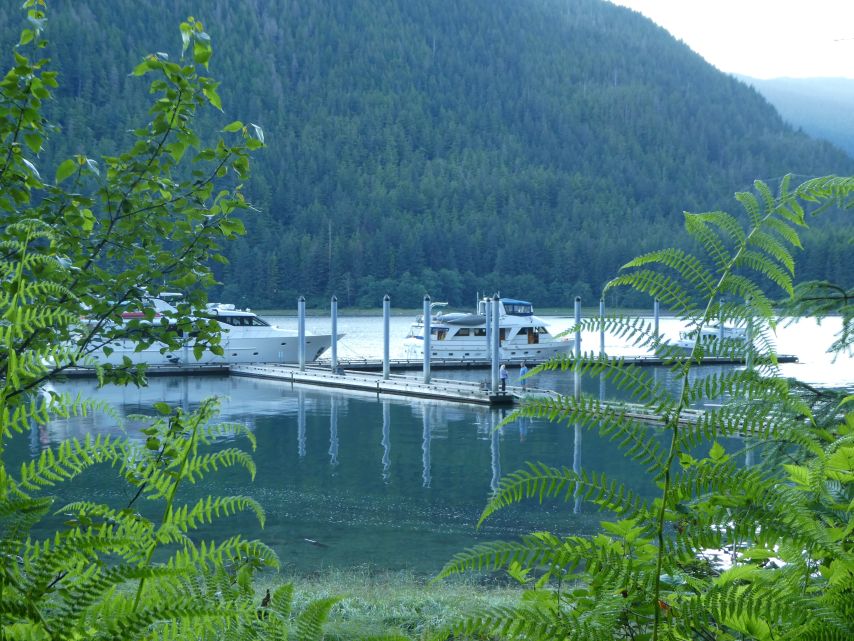
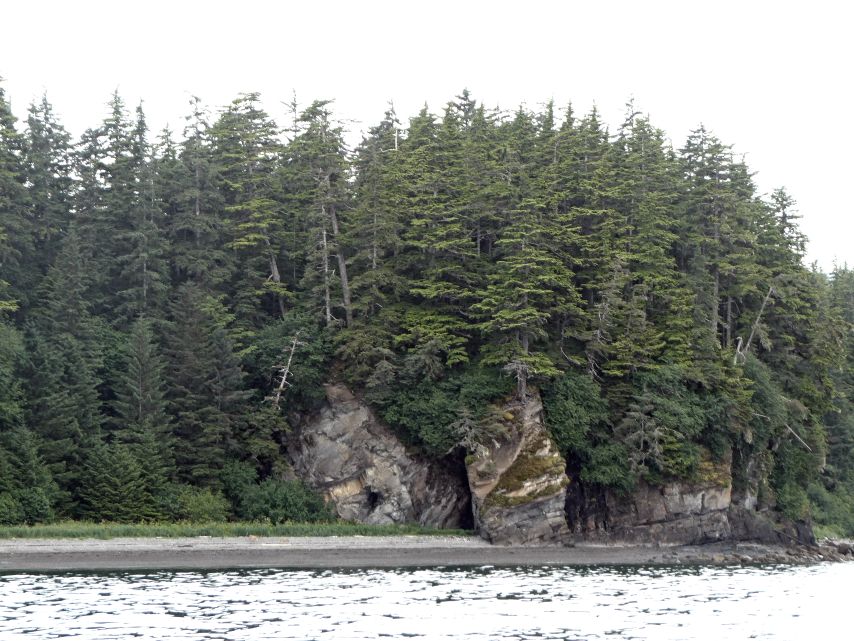
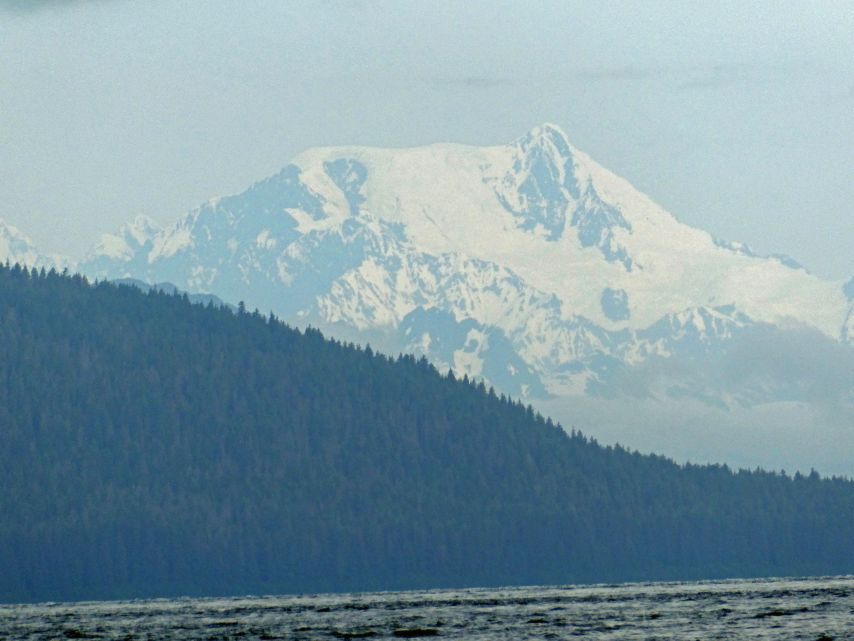
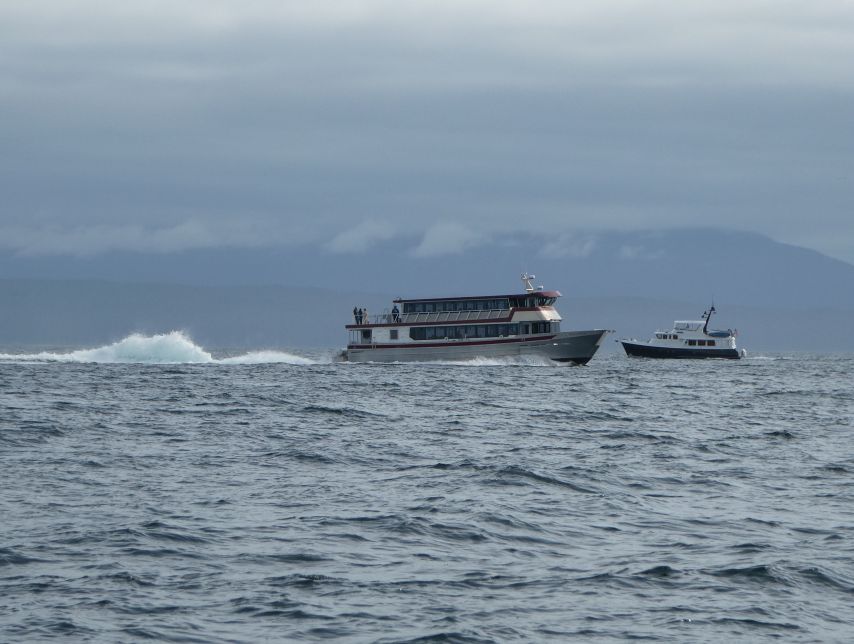
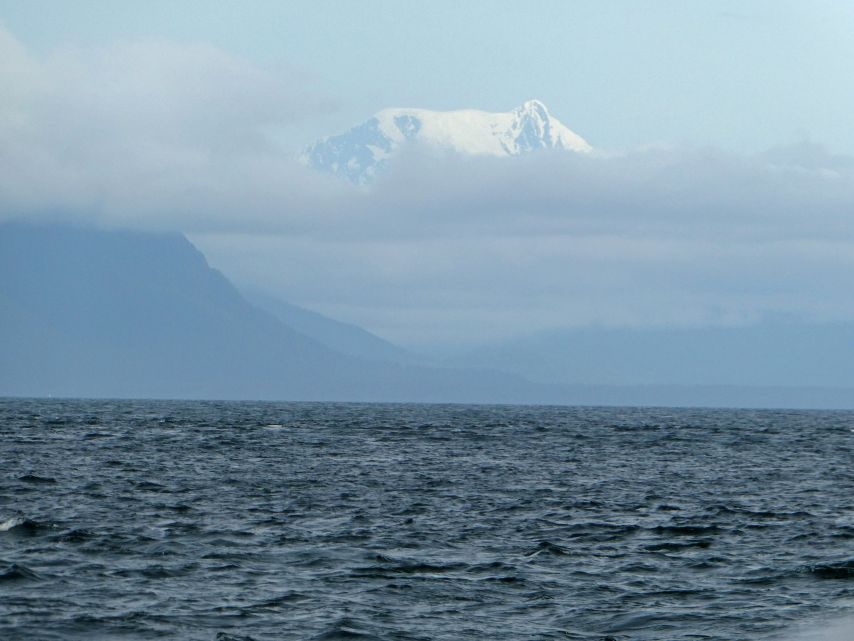
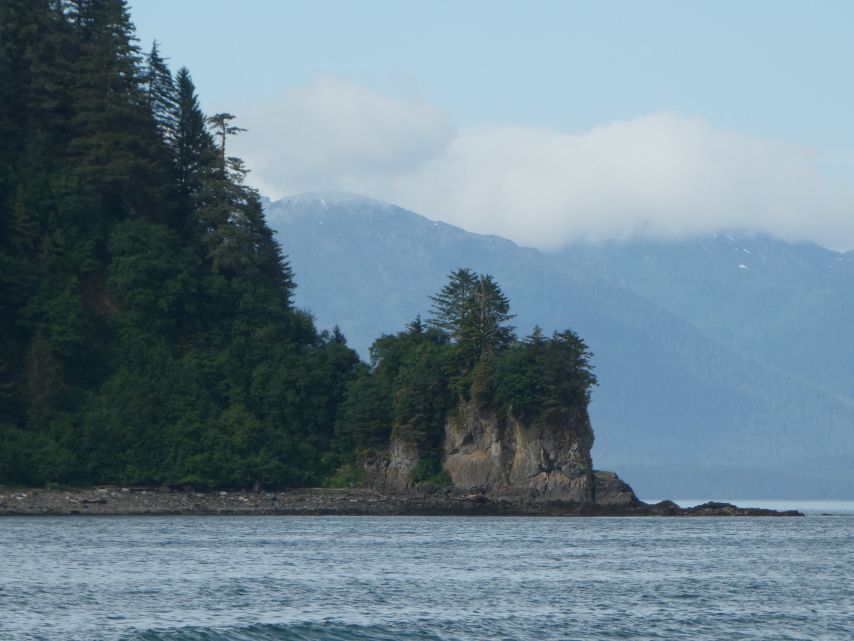
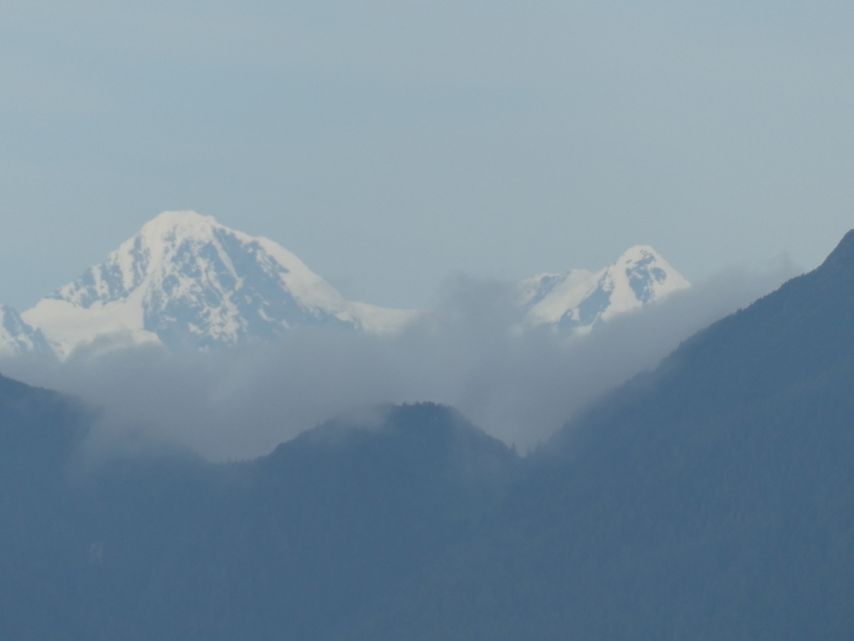
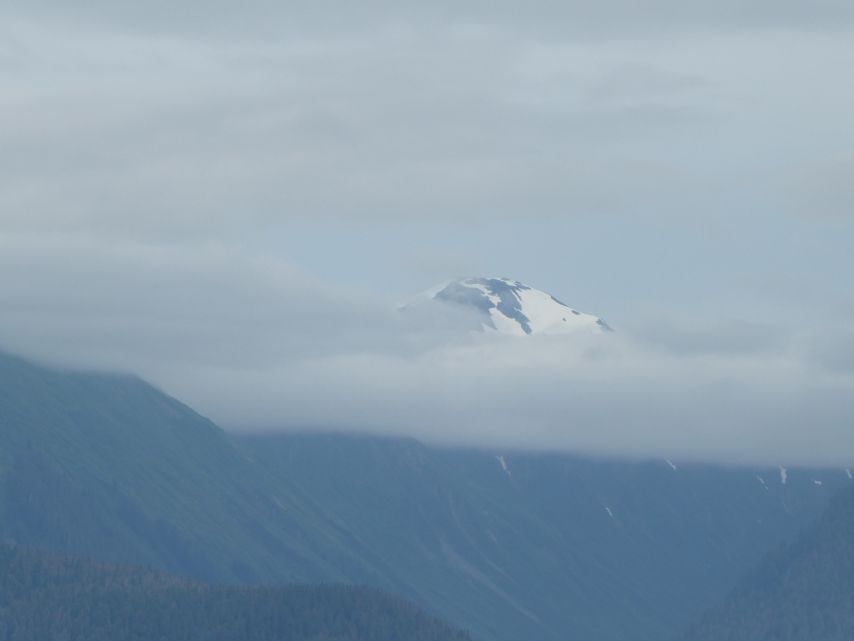
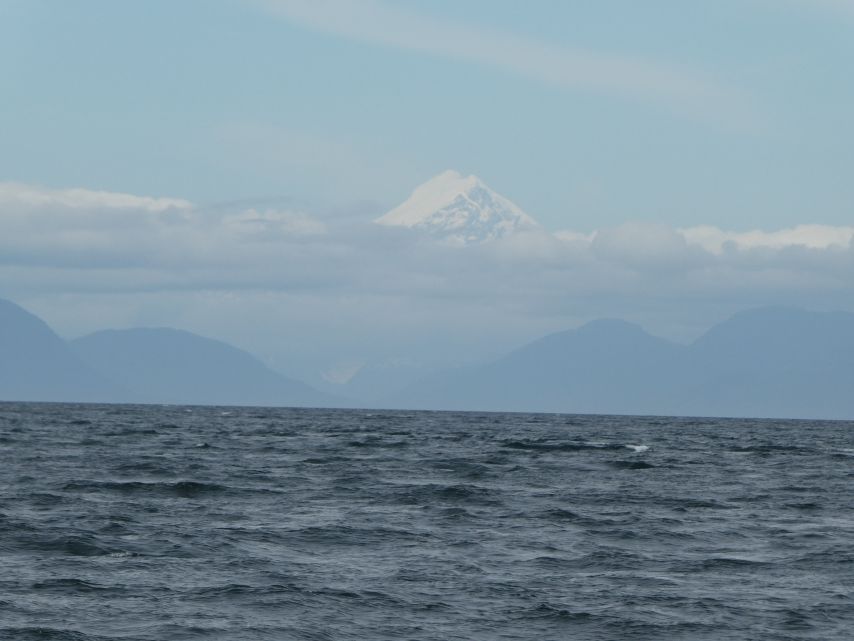
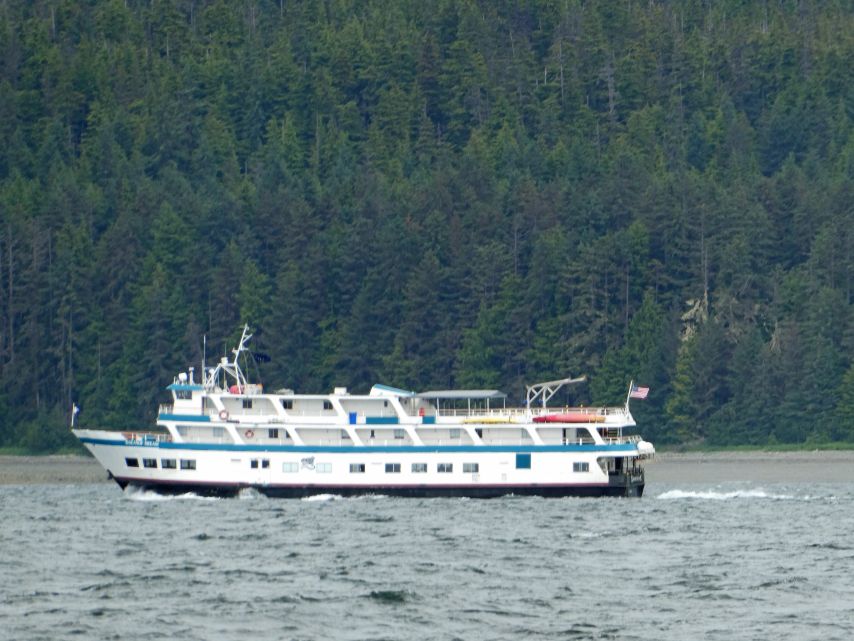
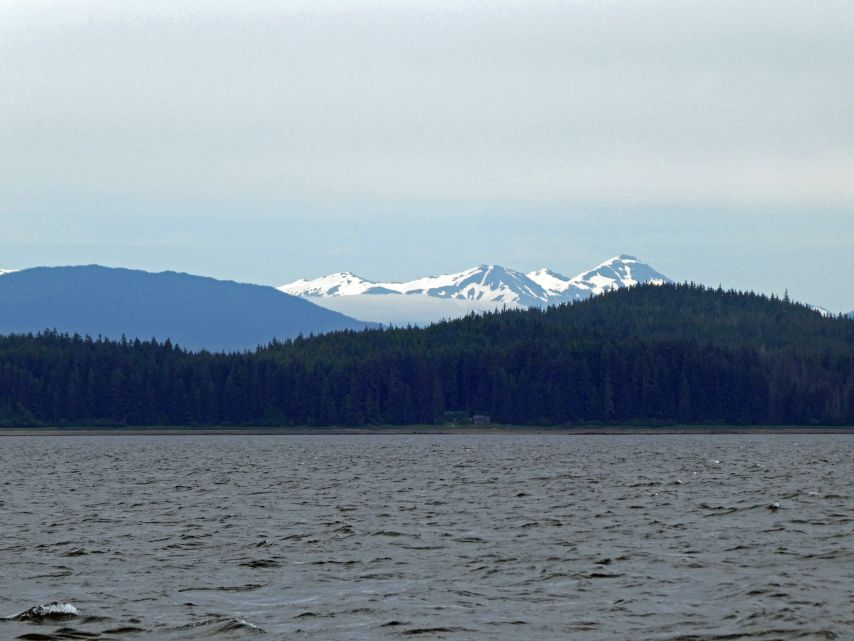
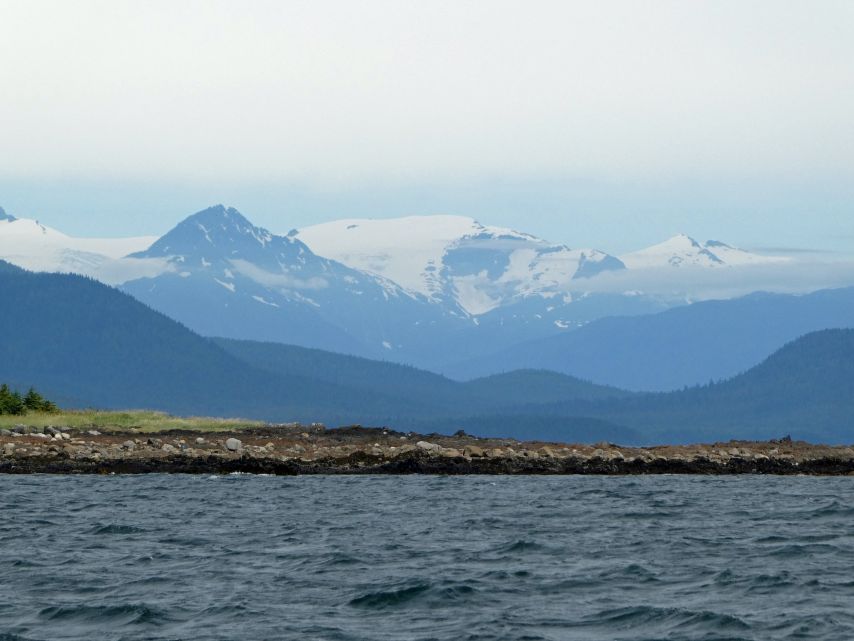
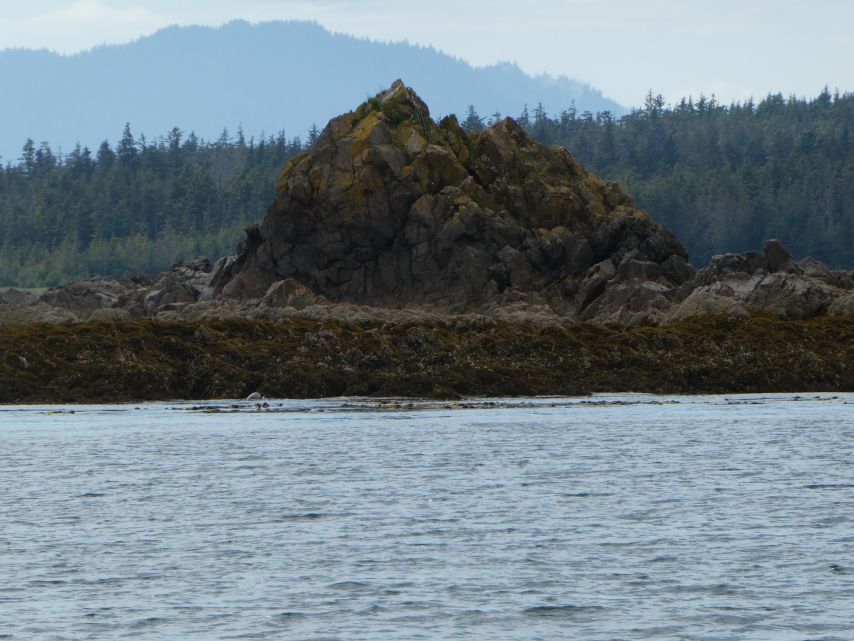
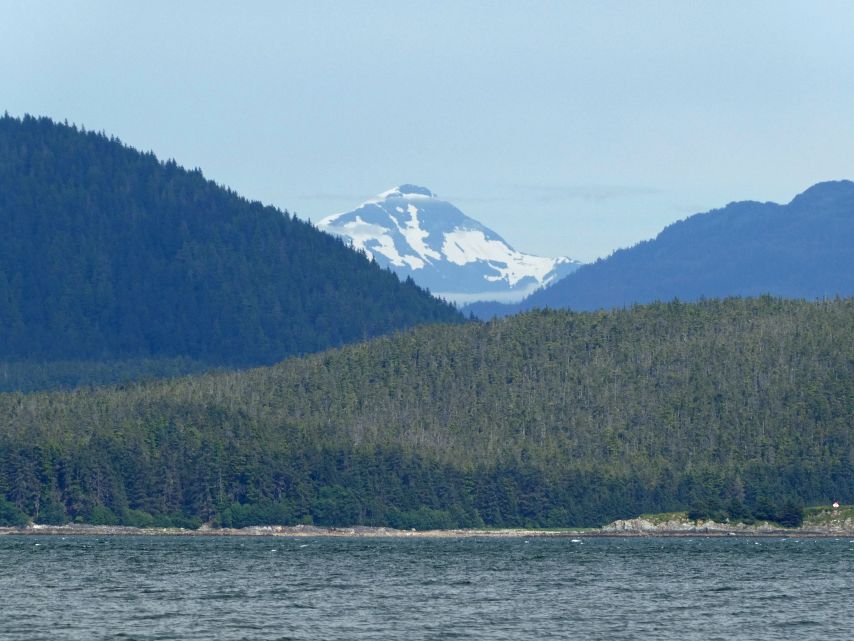
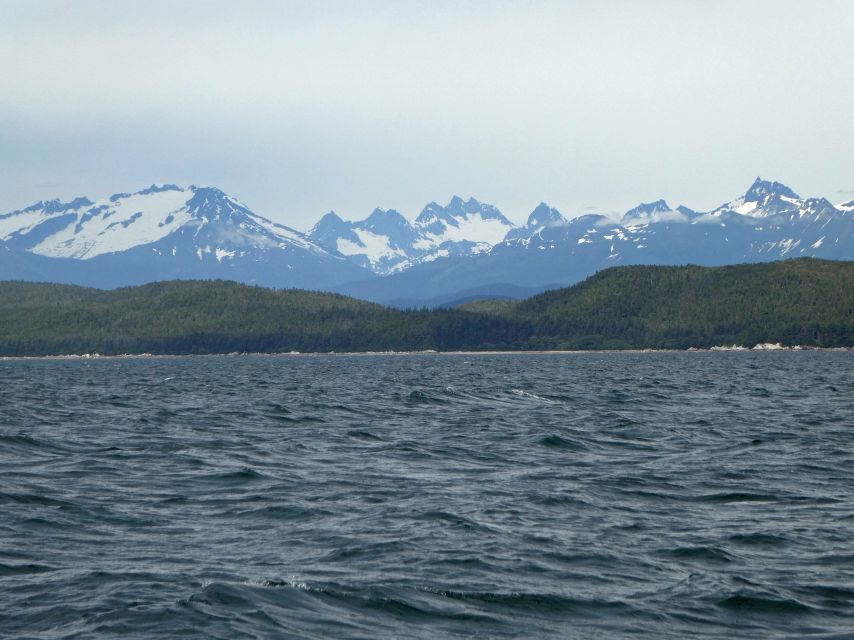
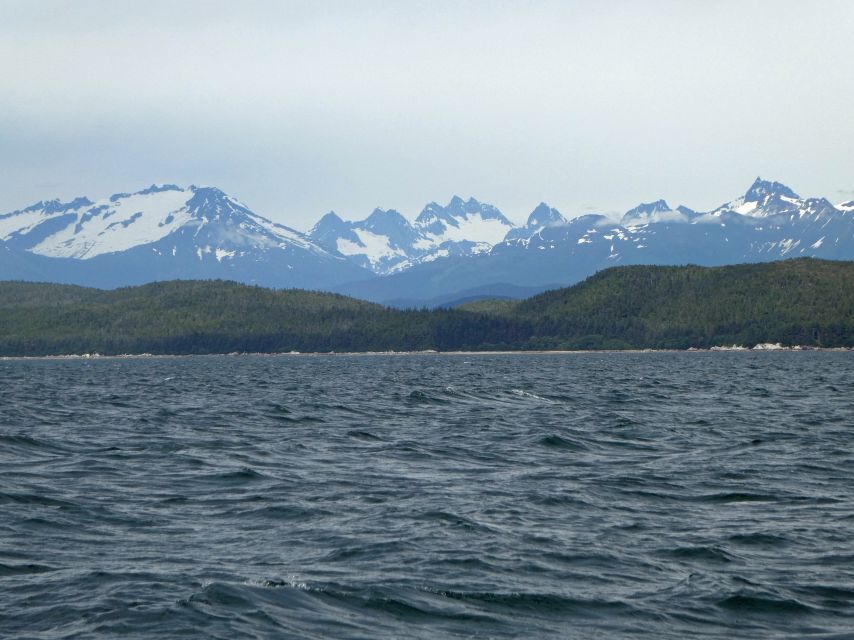
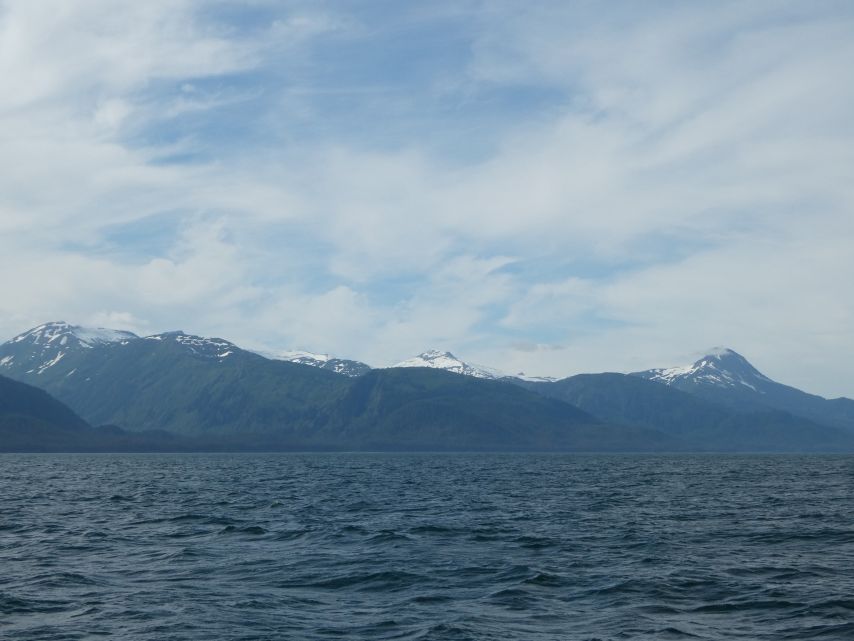
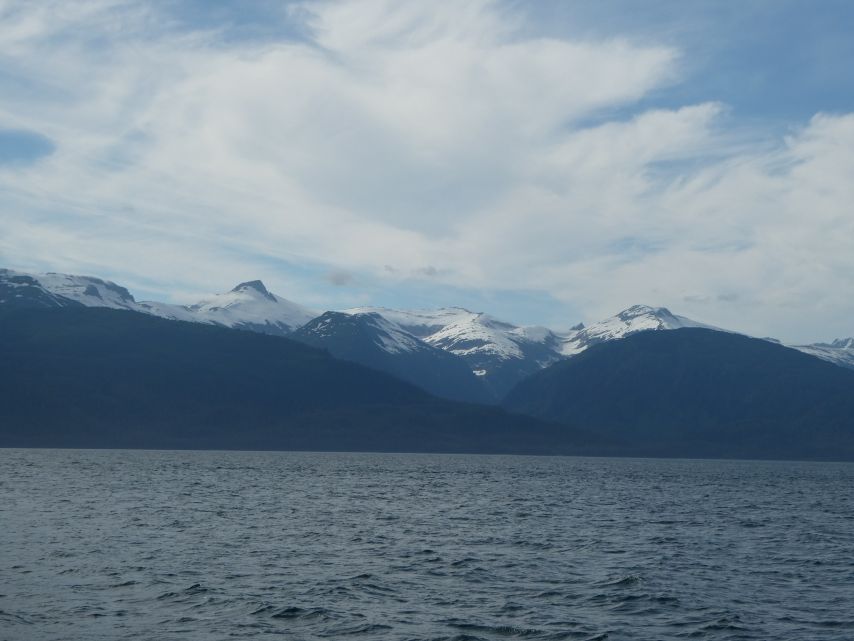
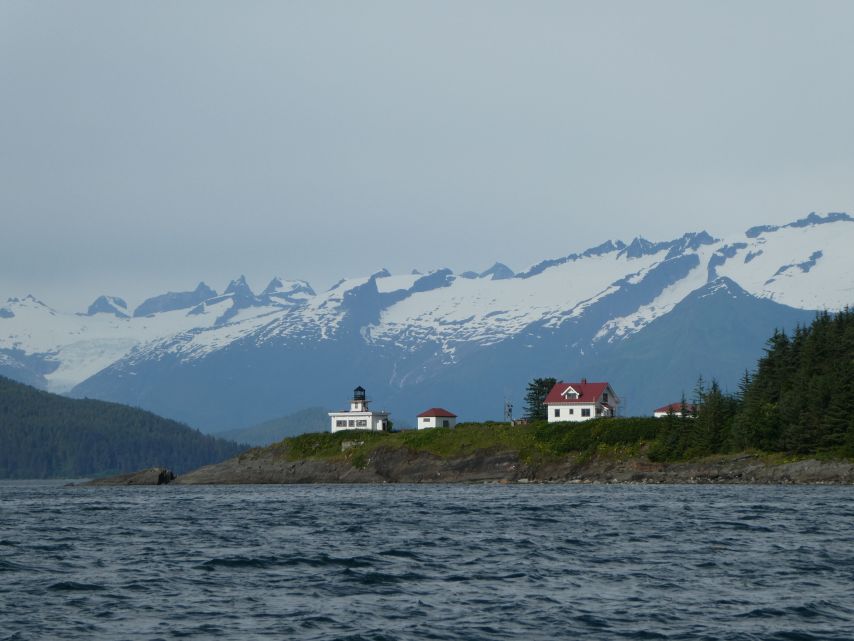
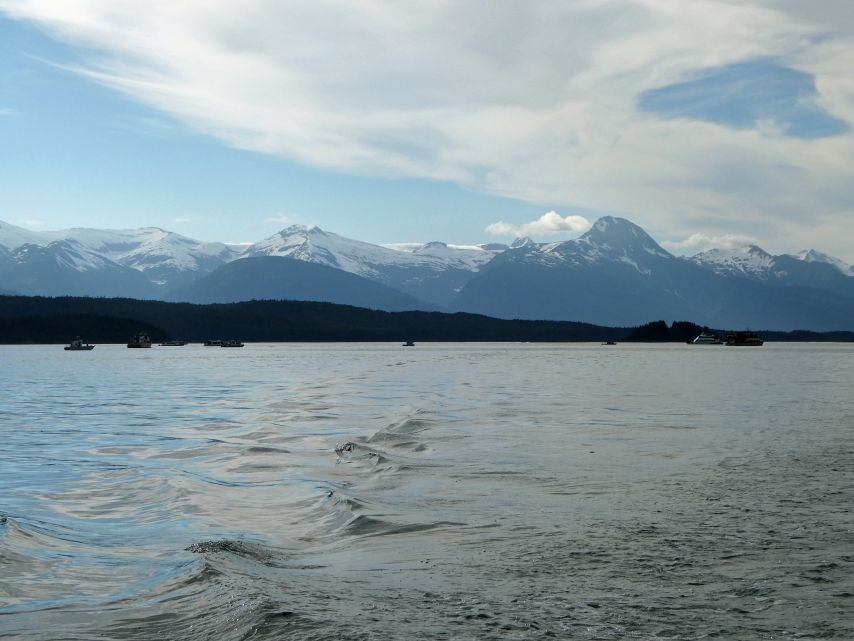
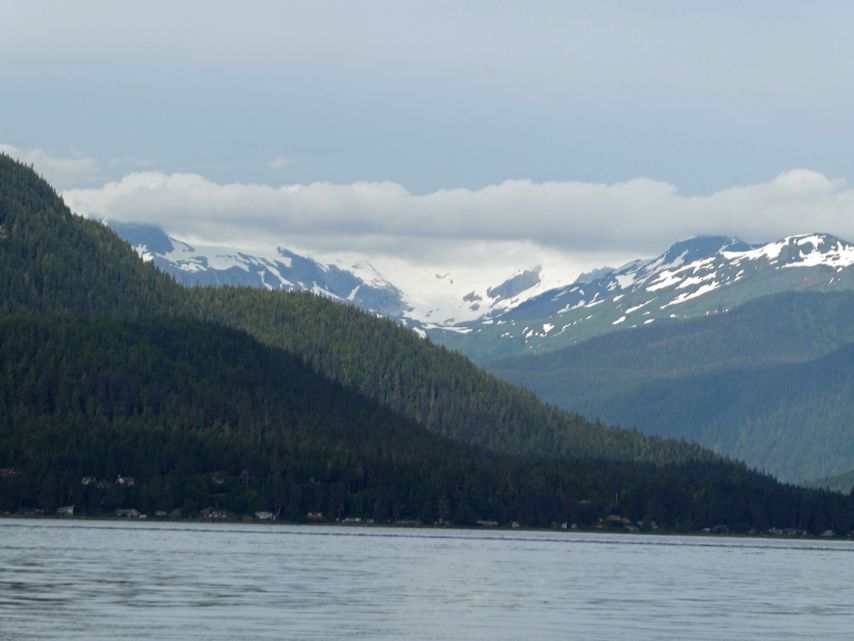
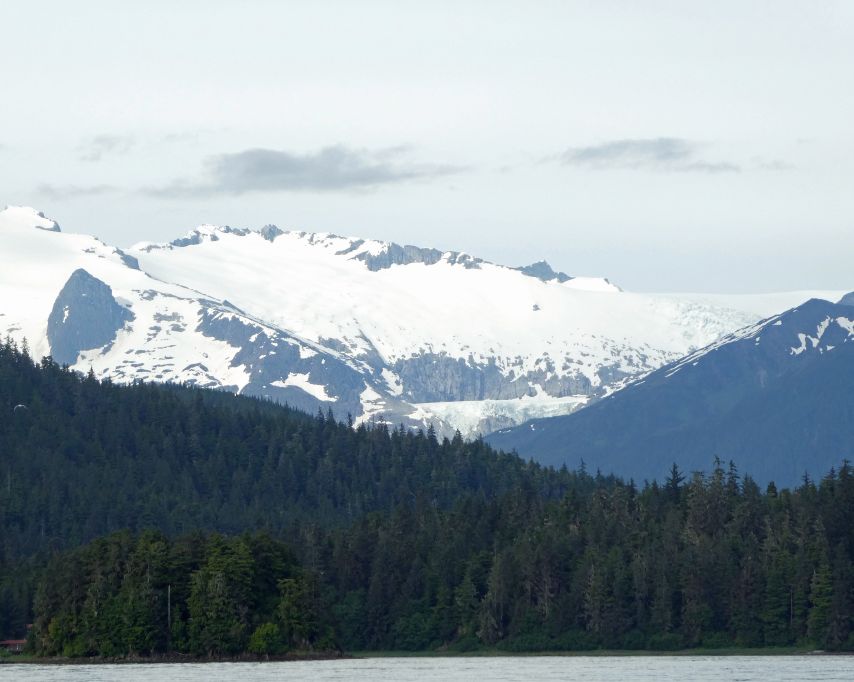
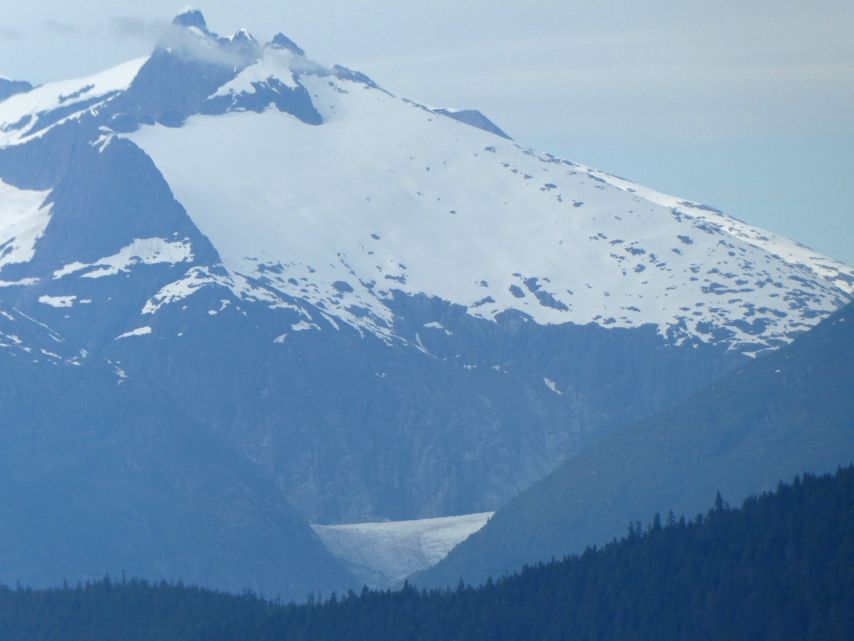
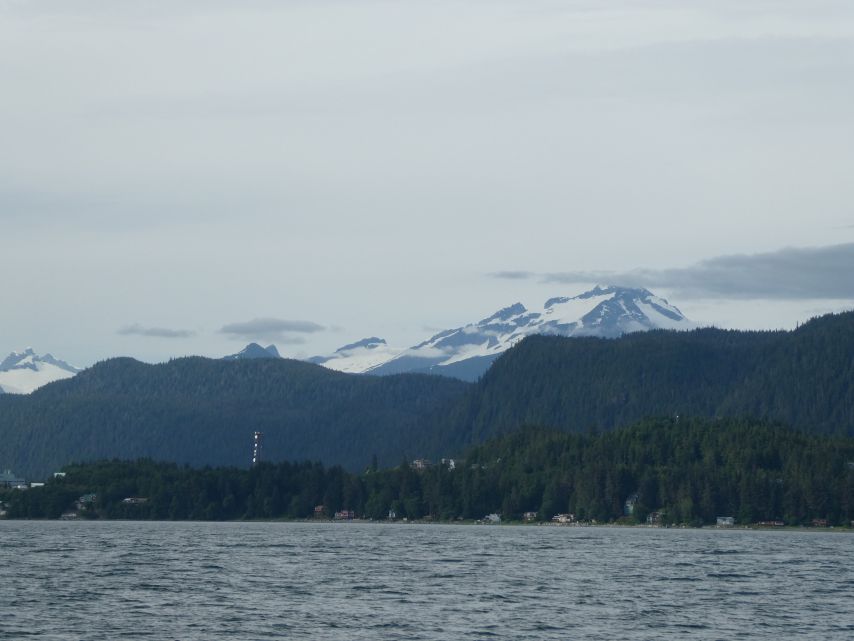
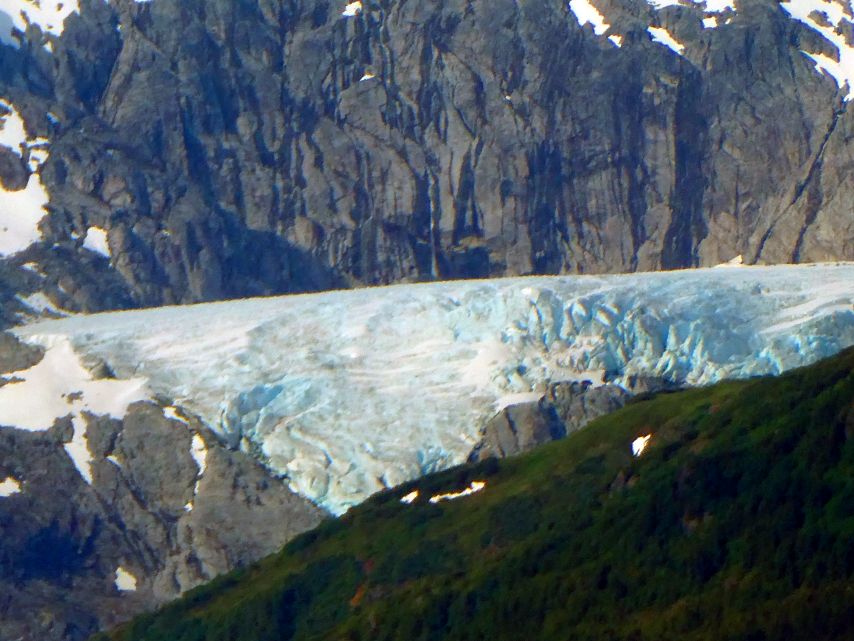
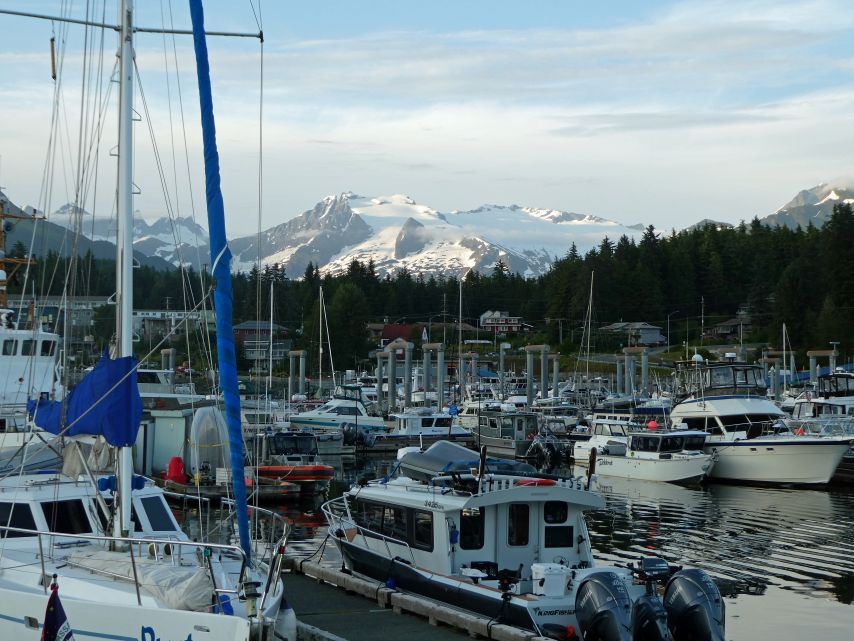
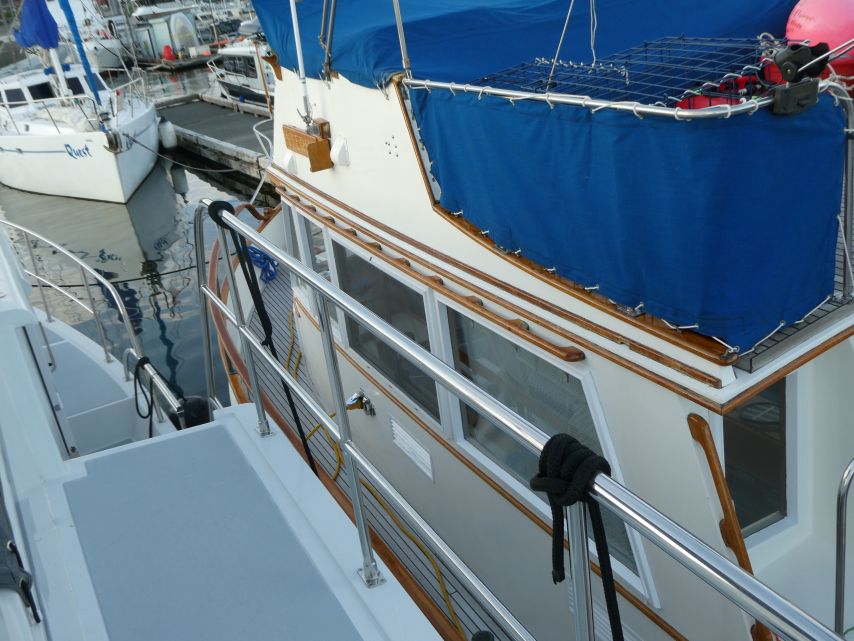
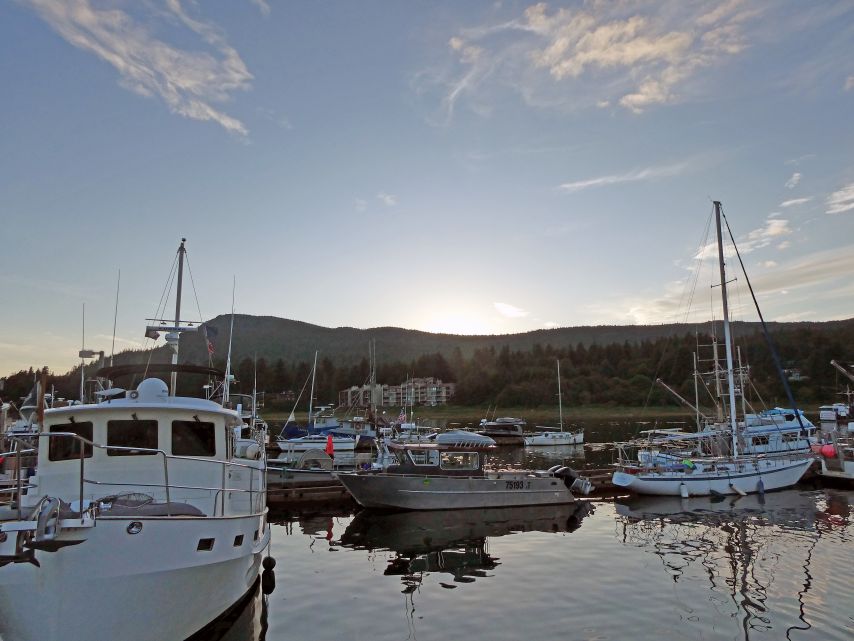
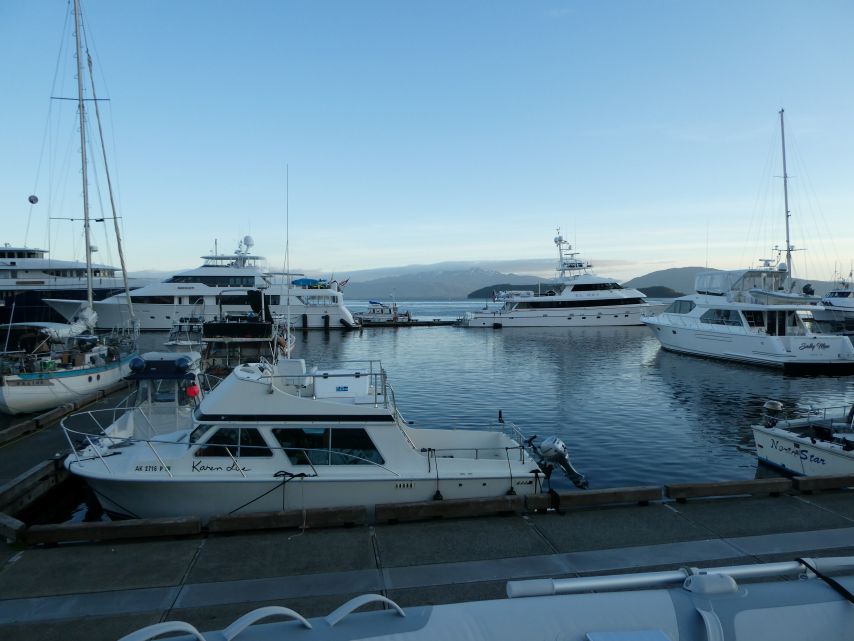
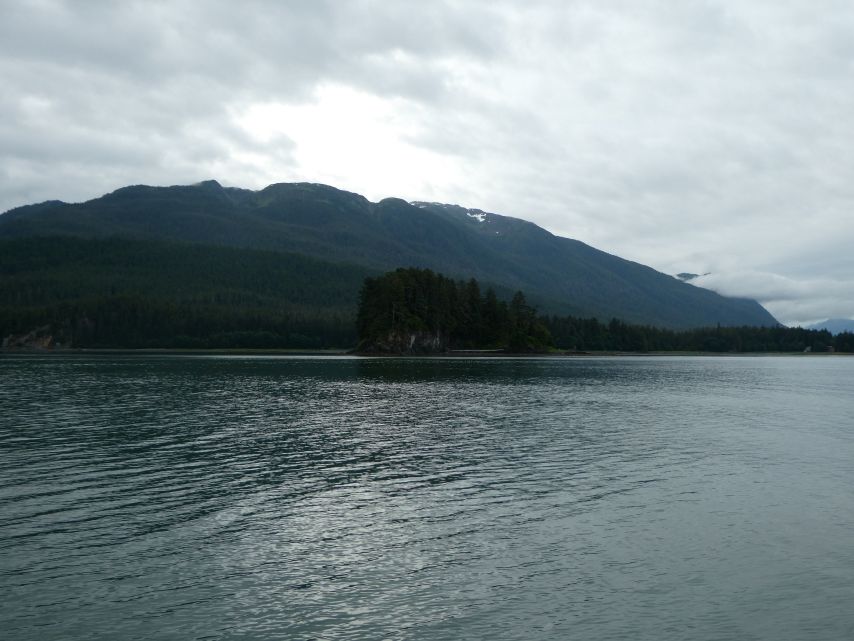
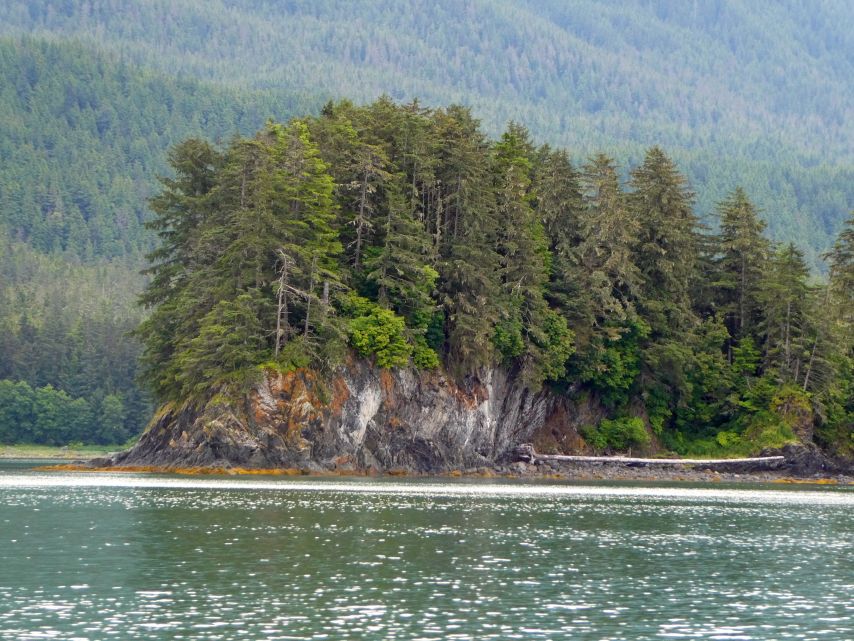
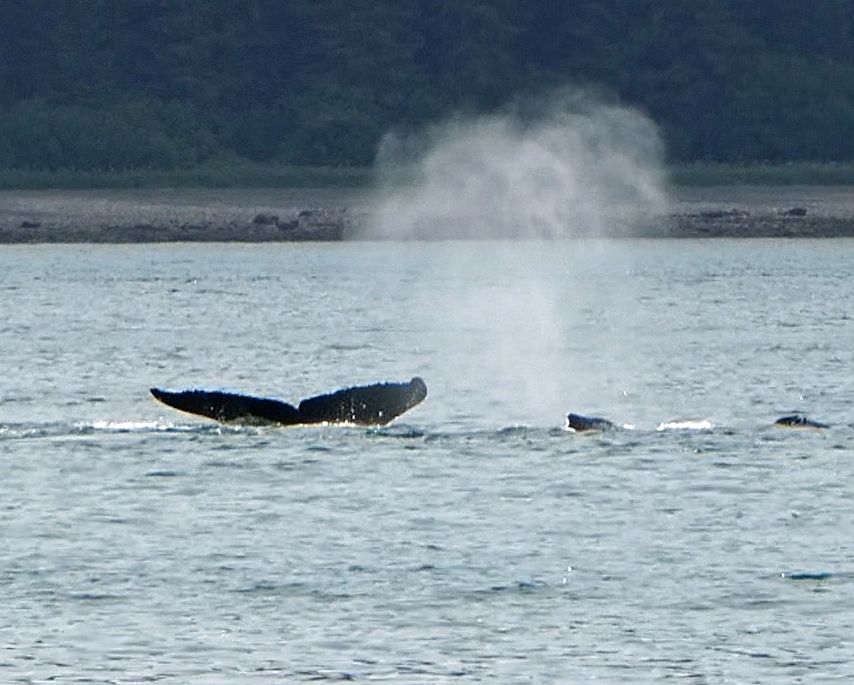
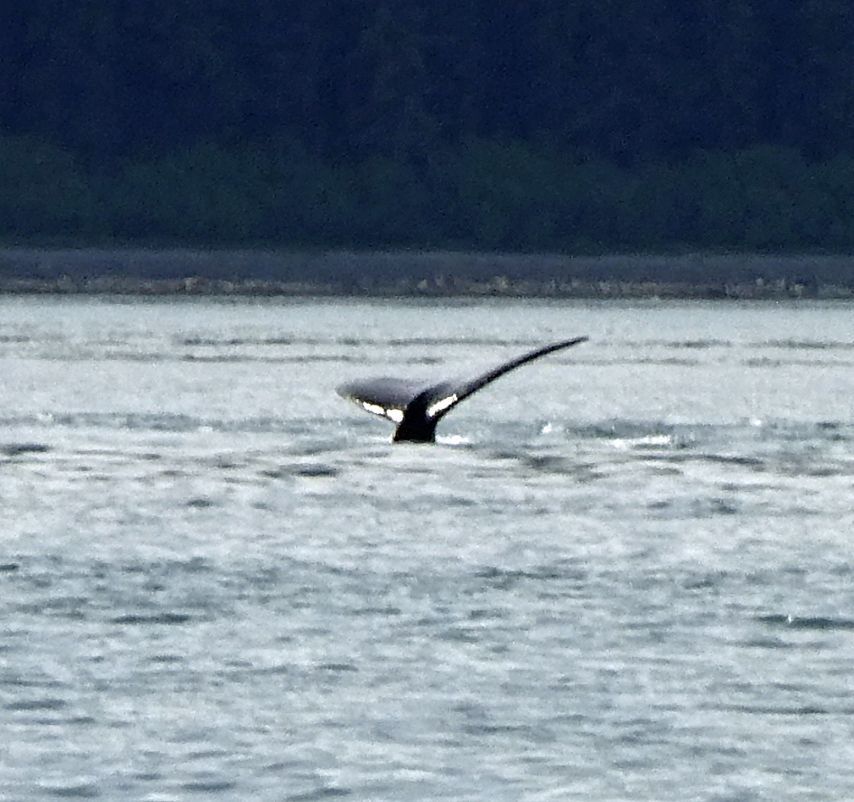
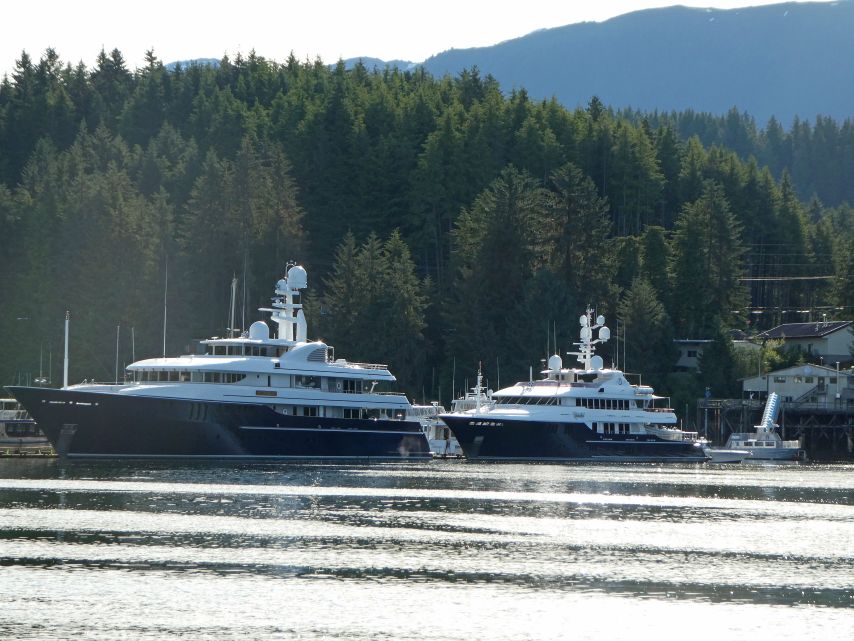
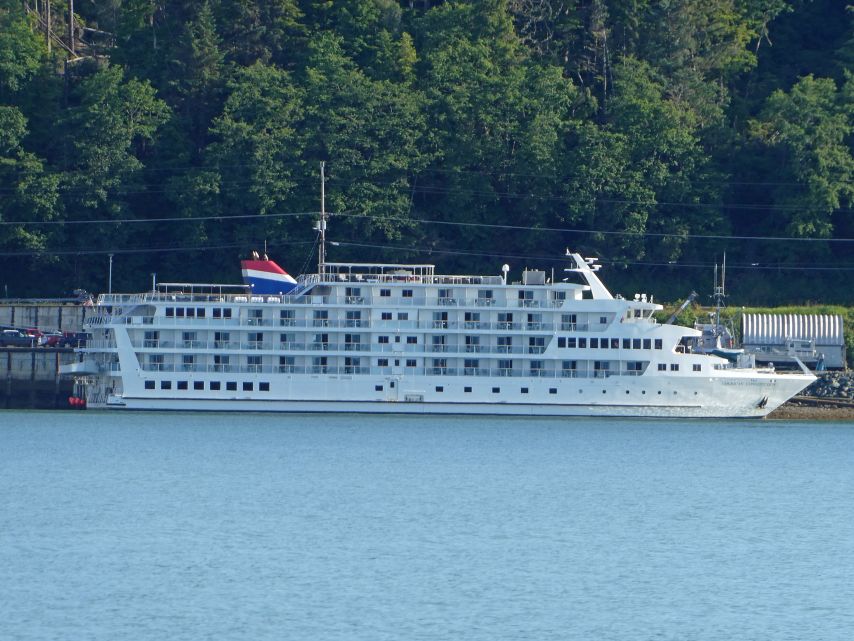
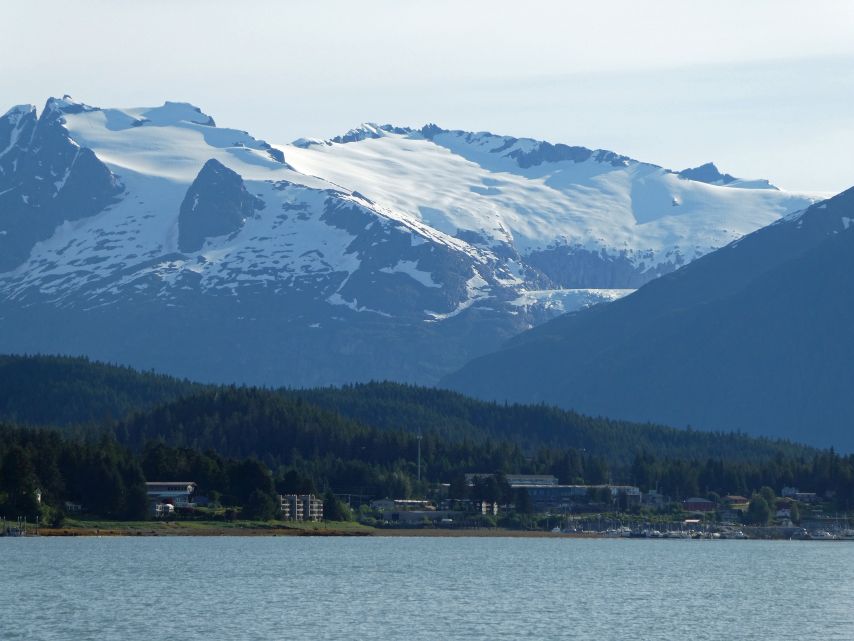
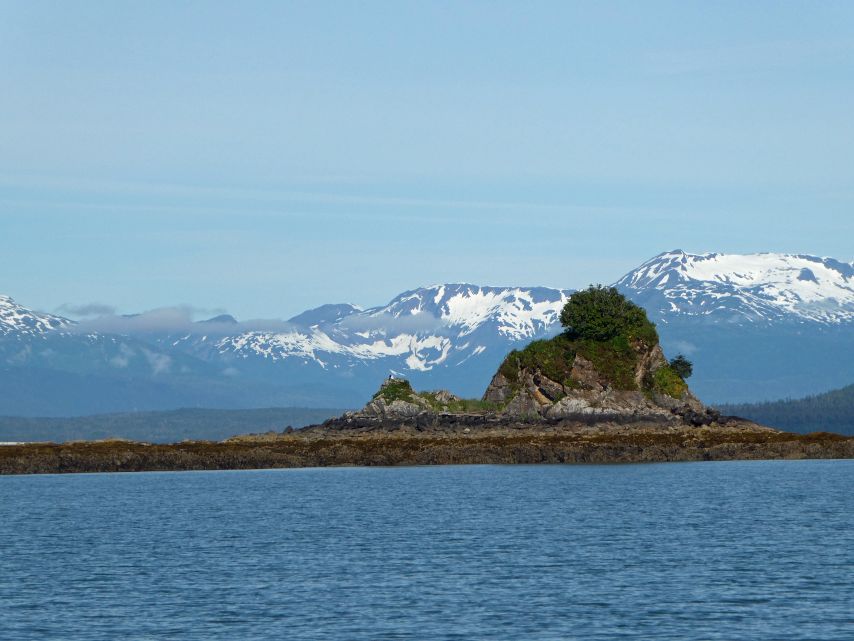
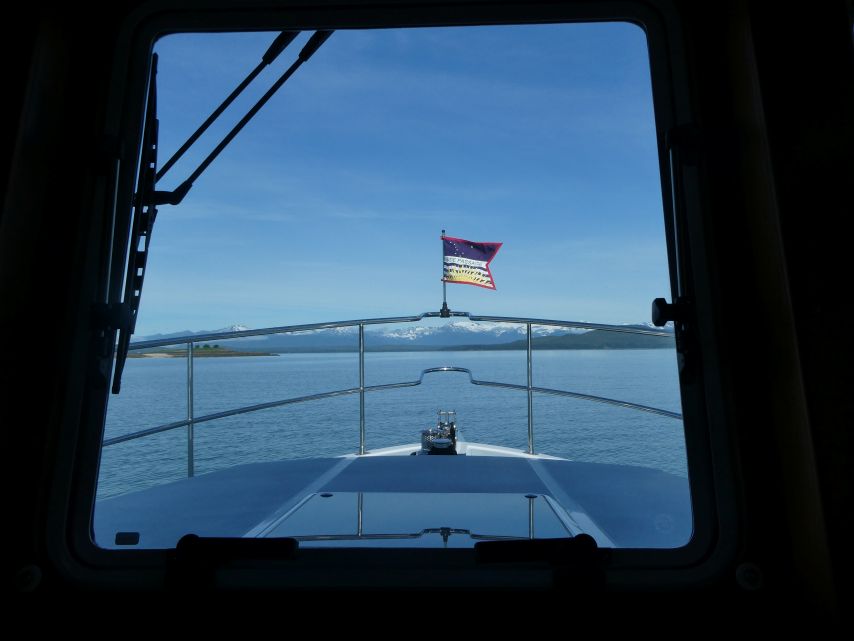
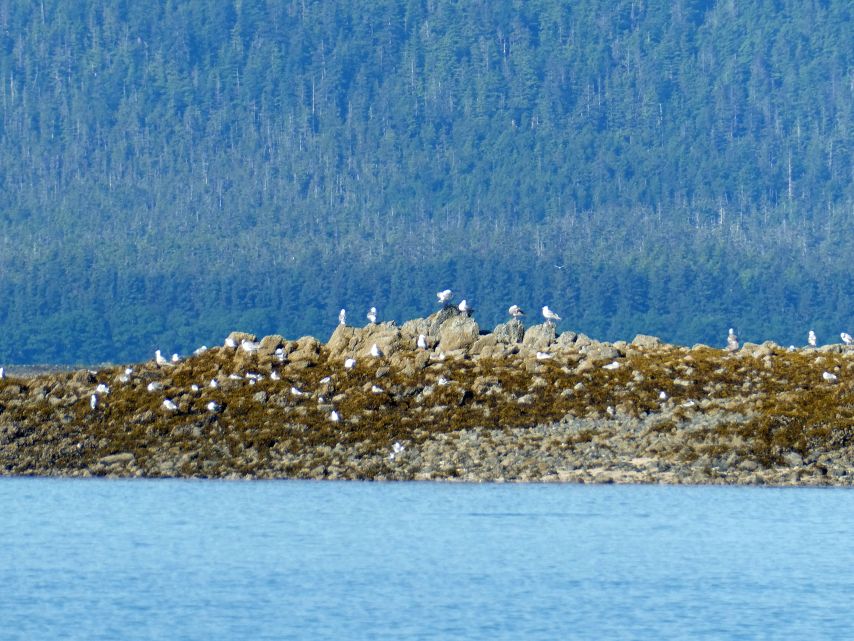
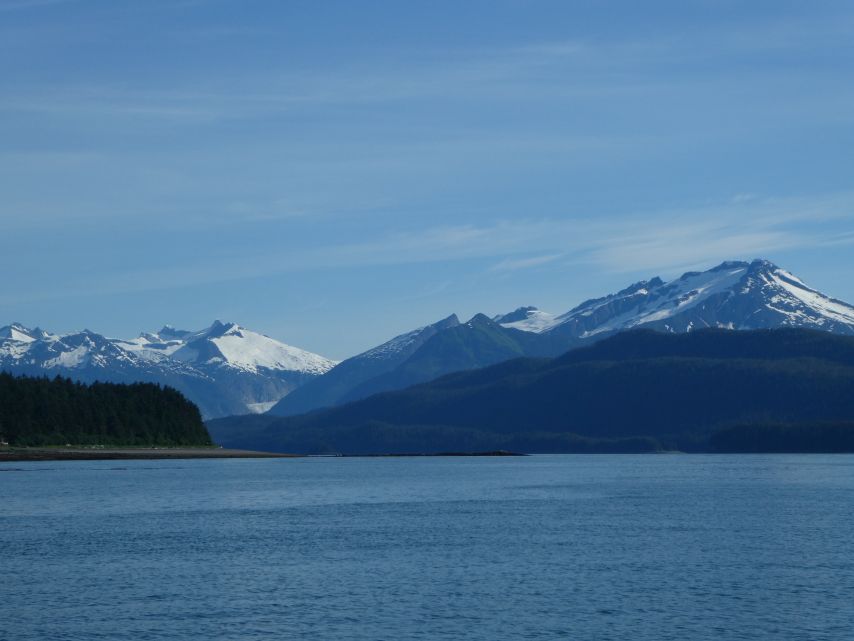
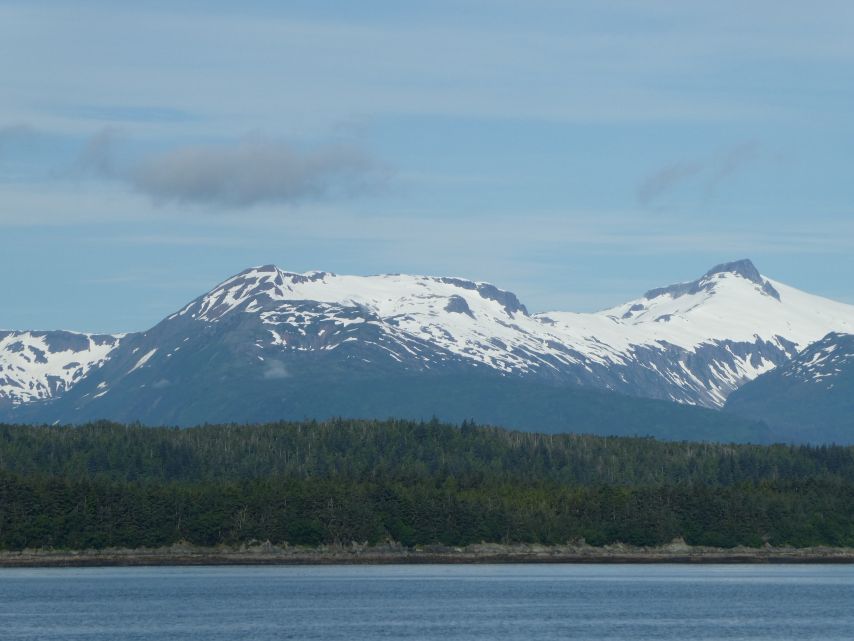
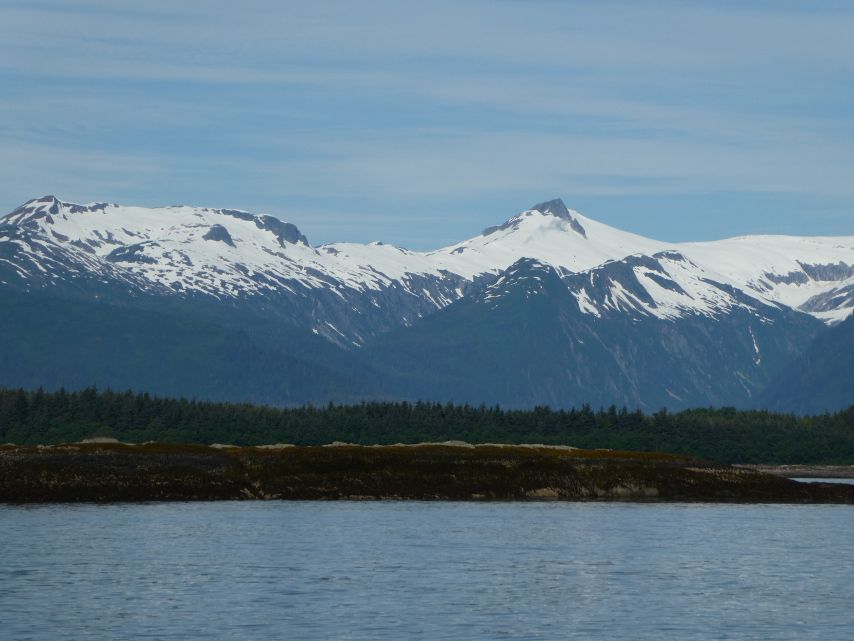
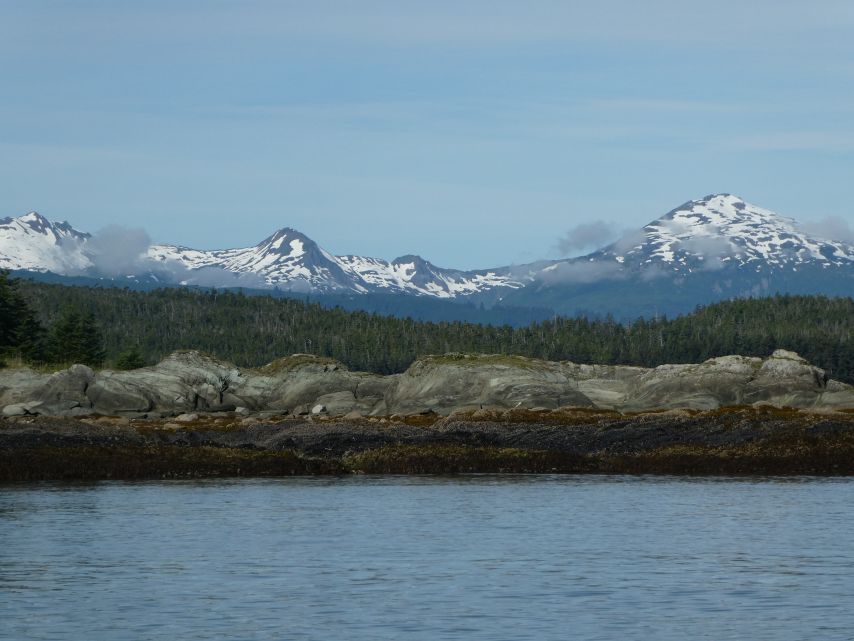
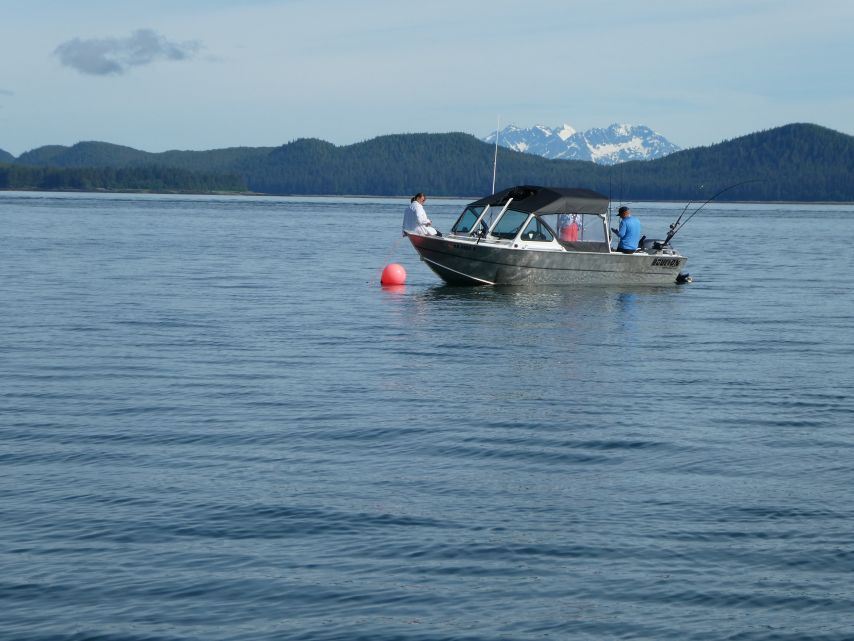
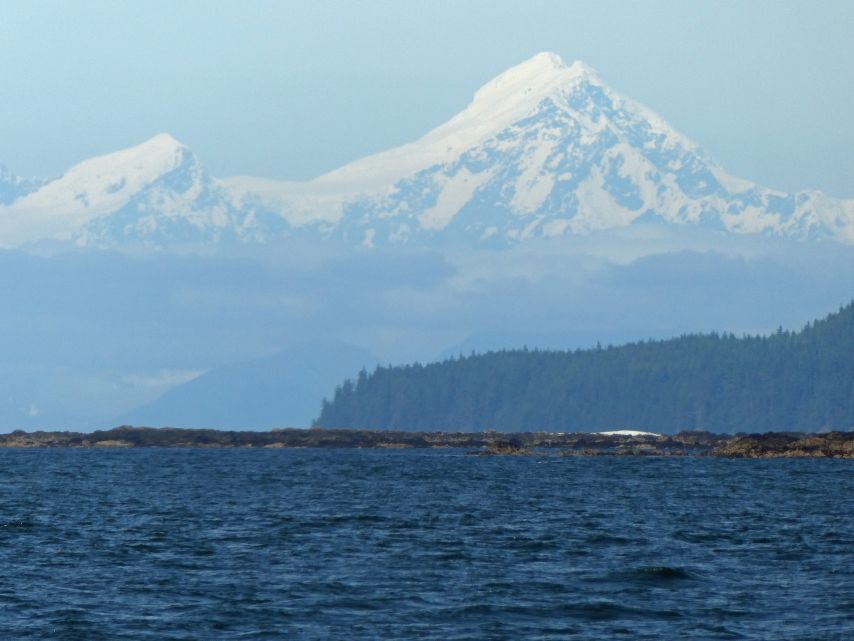
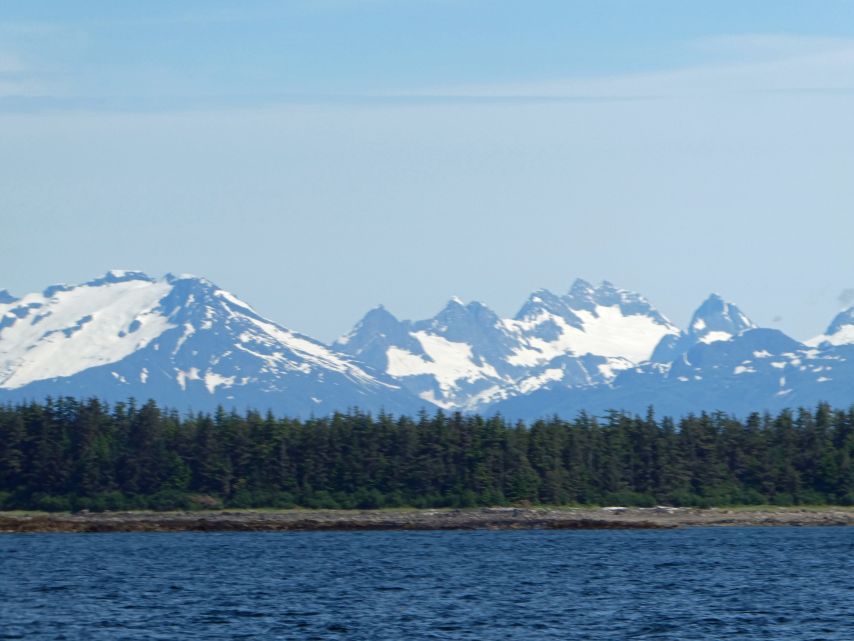
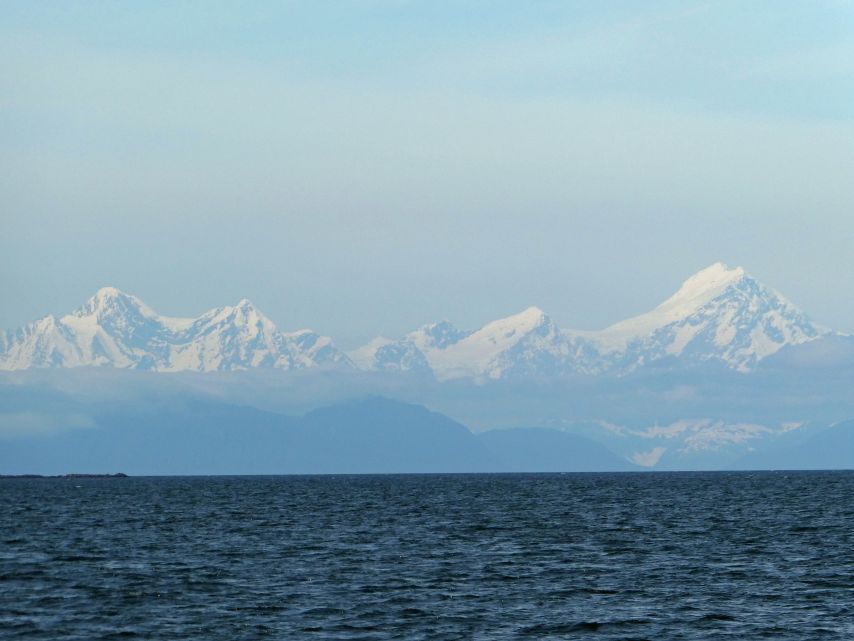
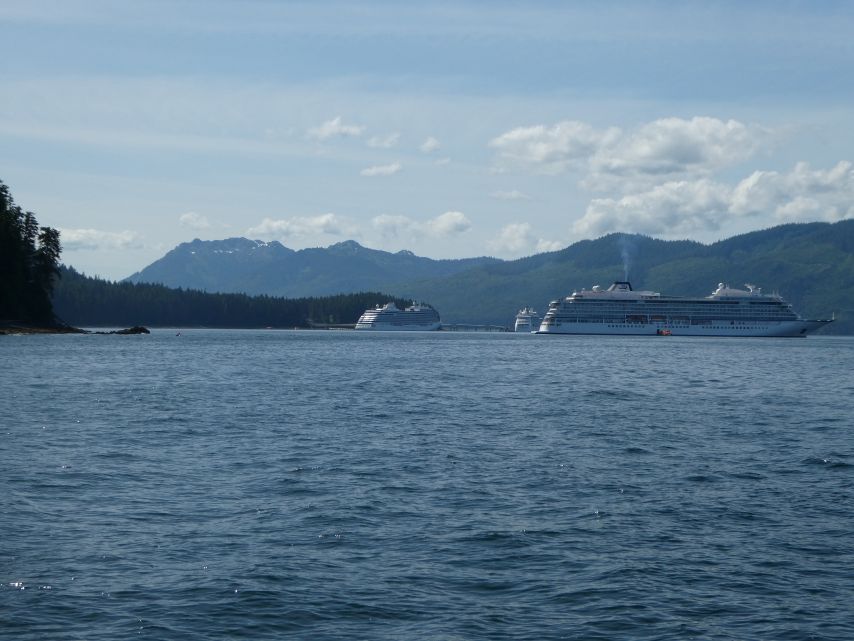
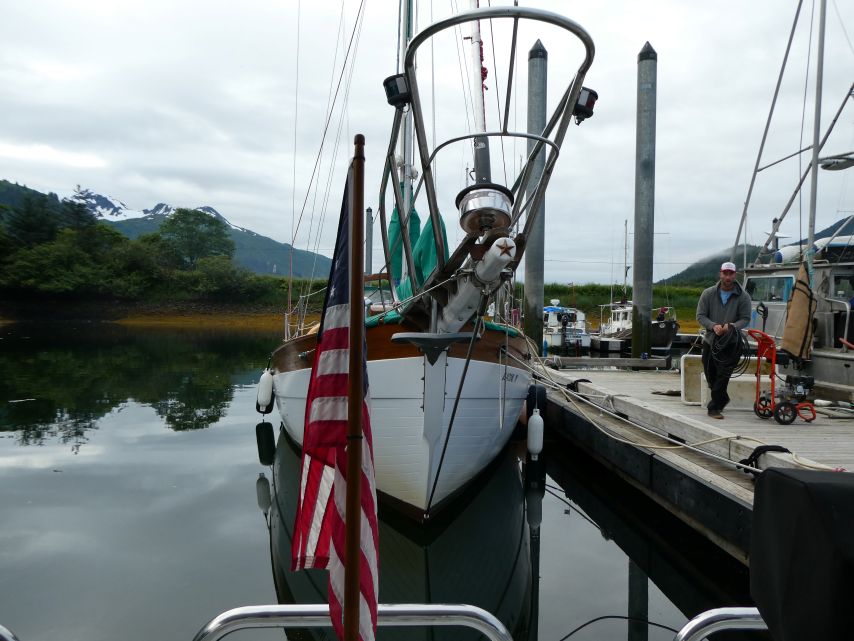
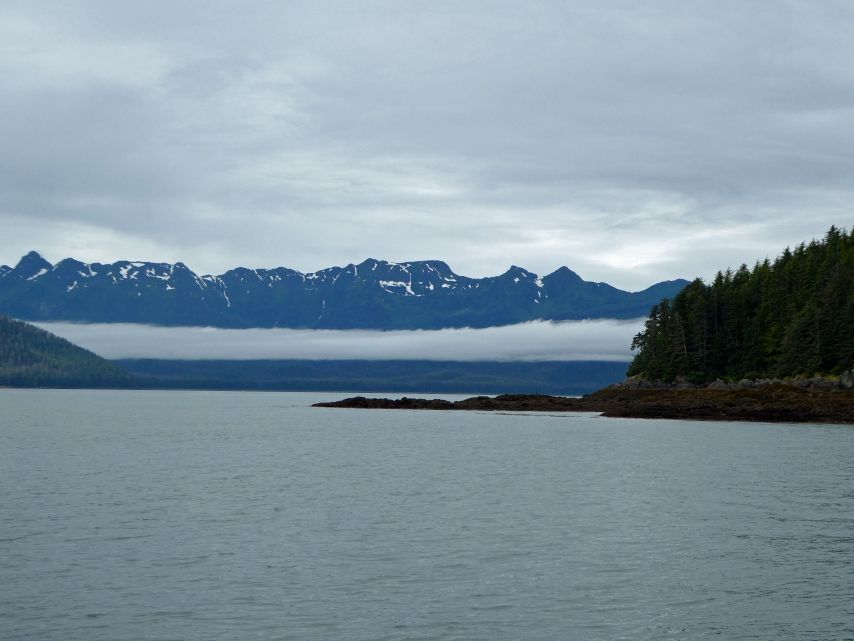
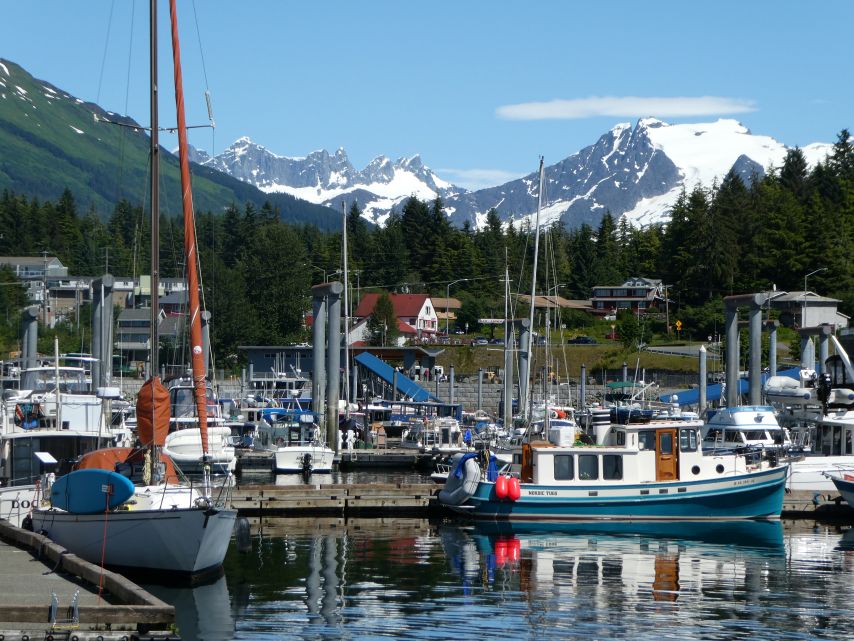
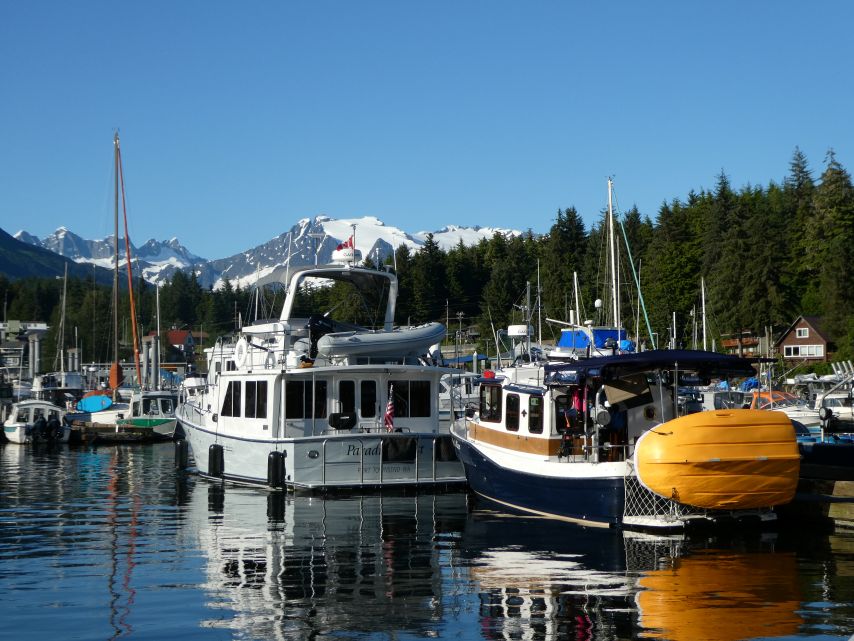
Petersburg’s dramatic tidal swings—from lows around -3 feet to highs exceeding 15—make timing essential. Slack tide this morning was at 9:30, the ideal moment for a departure, though I found myself up well before that, watching the sunrise. It’s hard to regret an early start when the light is so beautiful. We weren’t alone in setting off: the crew of Dangerous Adventure headed out toward LeConte Glacier, our friends aboard Inspiration went in search of fish, and we’re bound for Wrangell to take care of some routine boat maintenance.
SunriseInspirationDangerous Adventure
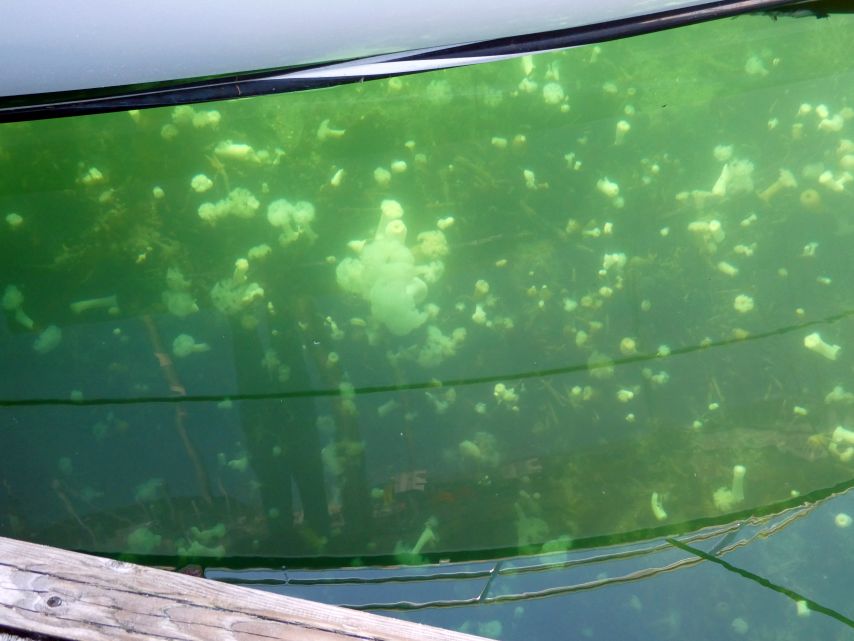
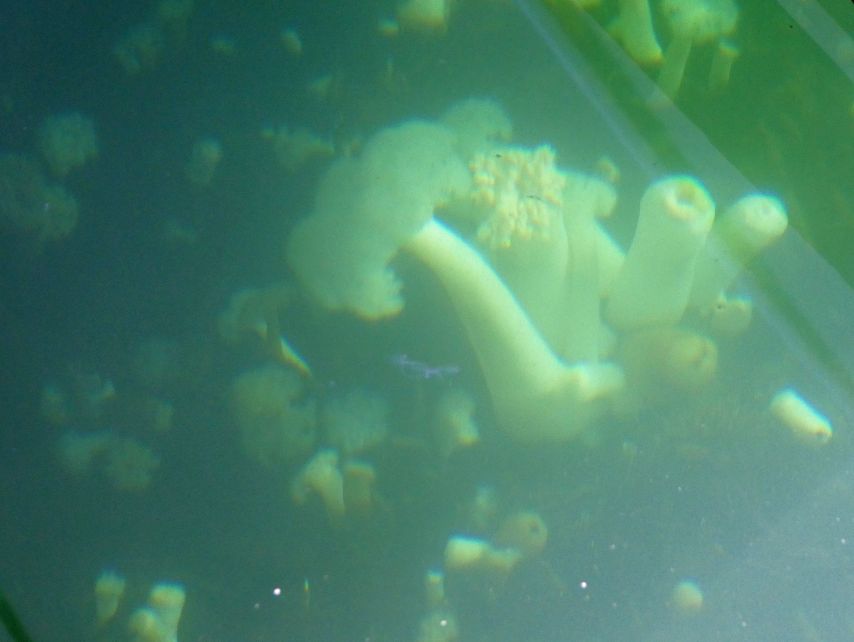
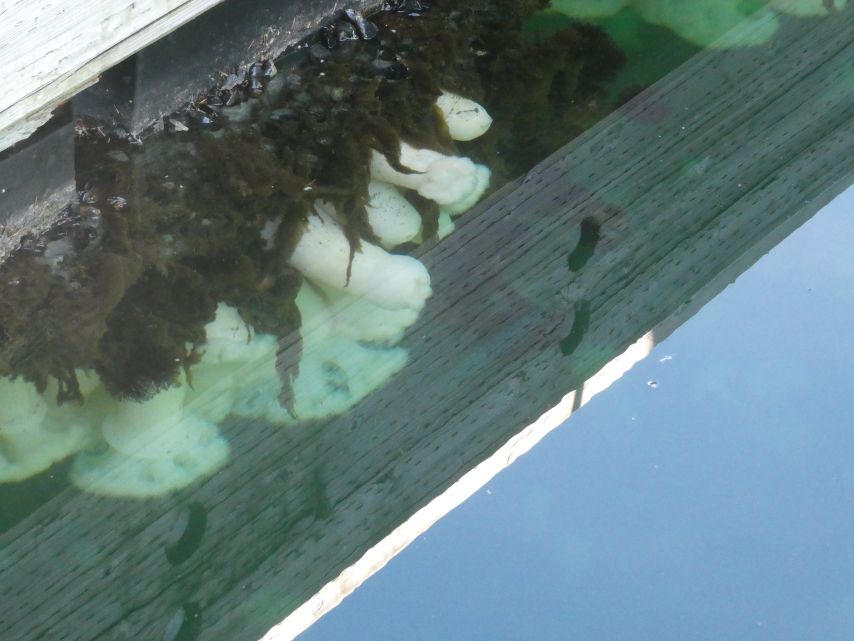
Under the surface of a quiet harbor, unexpected life takes shape. Sponges stretch into soft towers, filtering each passing current. Tunicates hang in clusters like translucent bulbs, anchored and absorbing. A lone seal glides through, pausing long enough to meet the eye before slipping into shadow. These scenes happen slowly, without fanfare—but they’re constant, resilient, and deeply alive. What’s overlooked from the dock above becomes a world of movement and survival beneath.
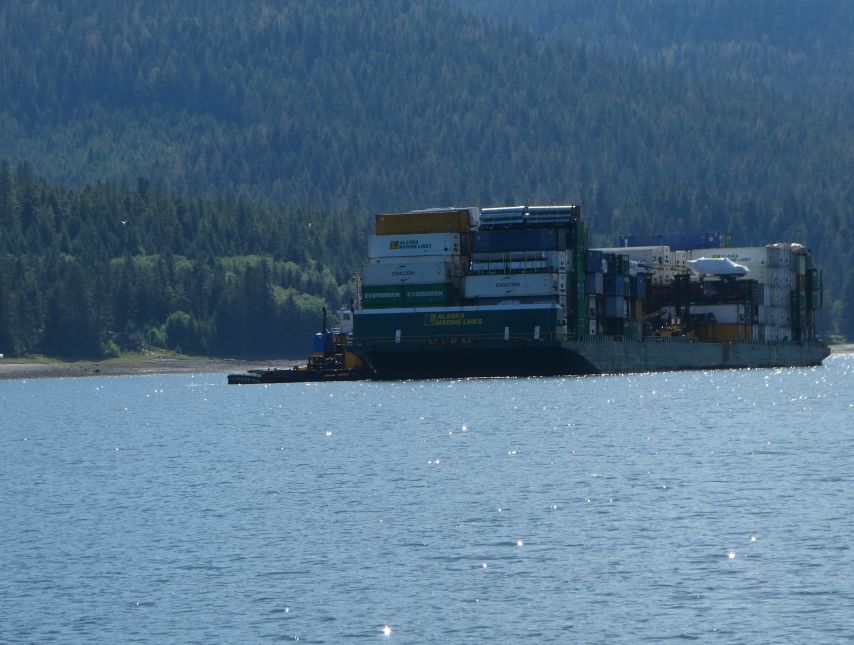
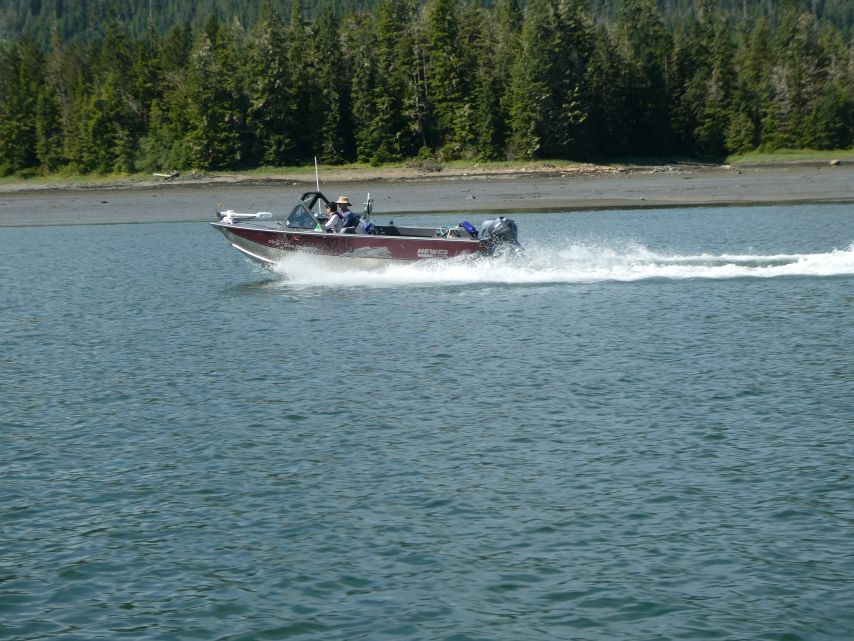
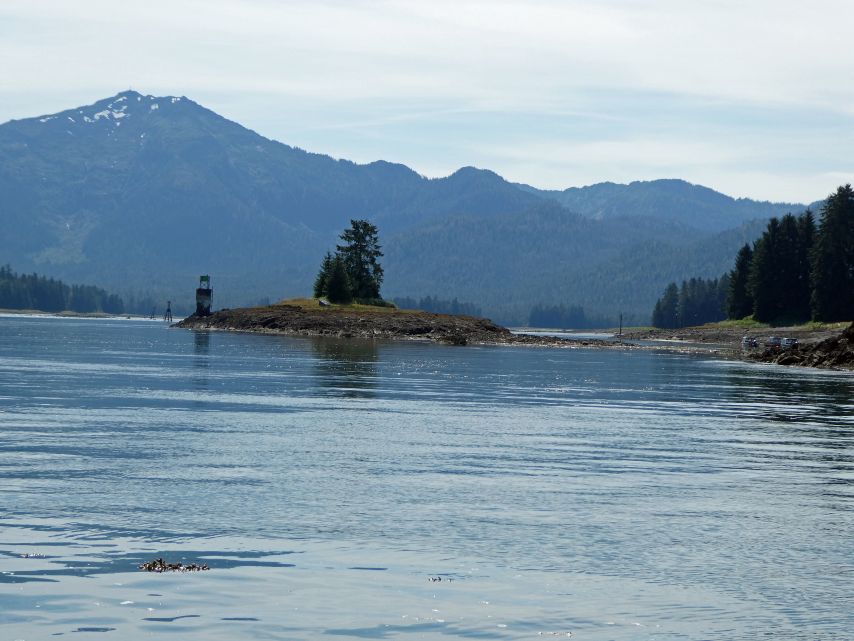
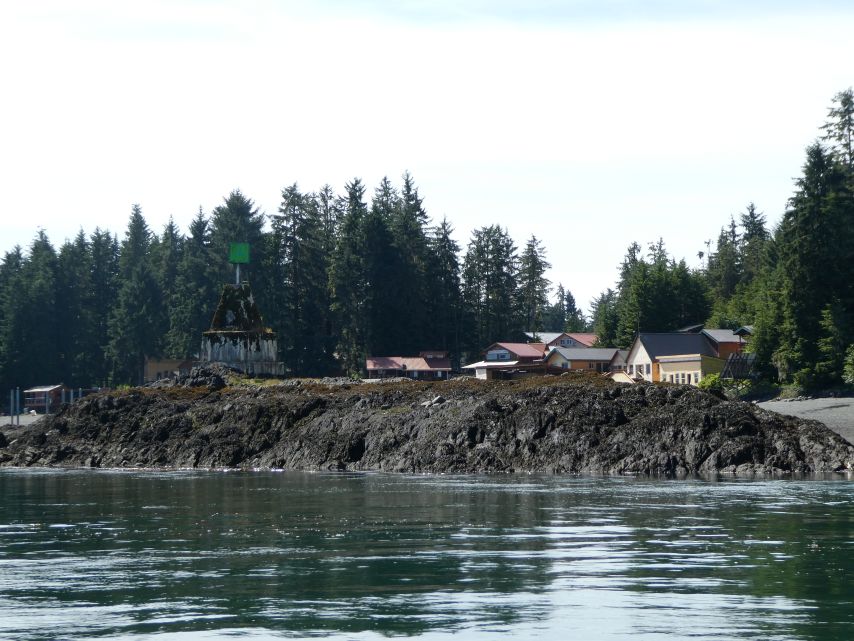
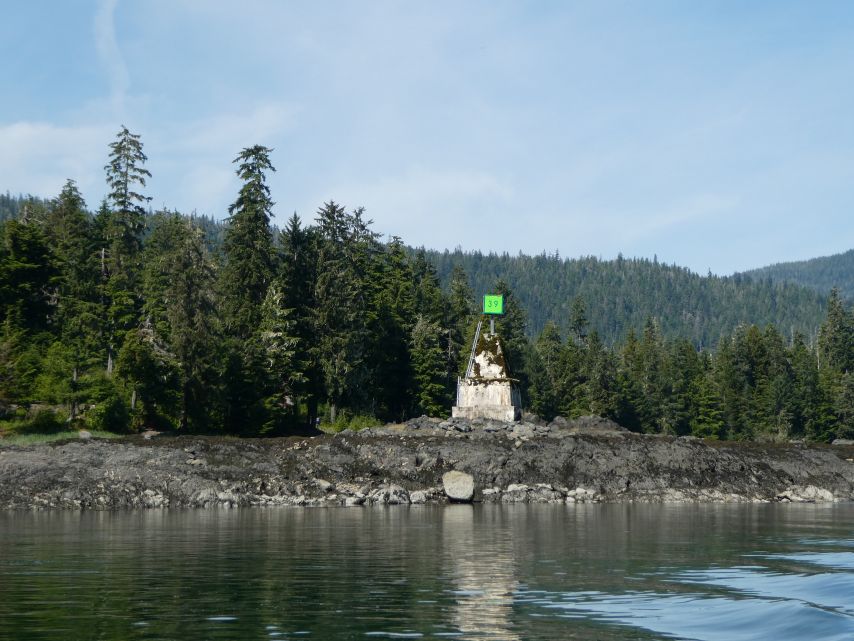
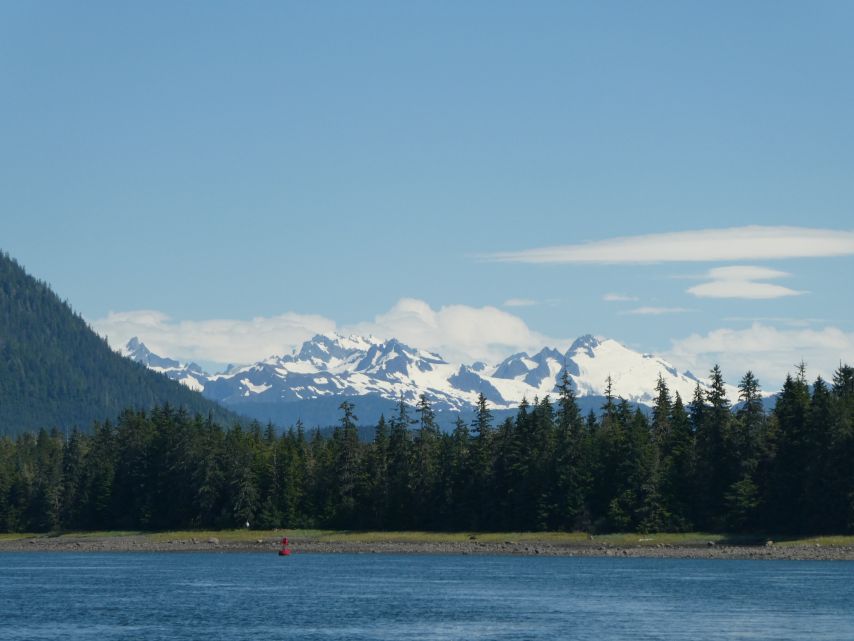
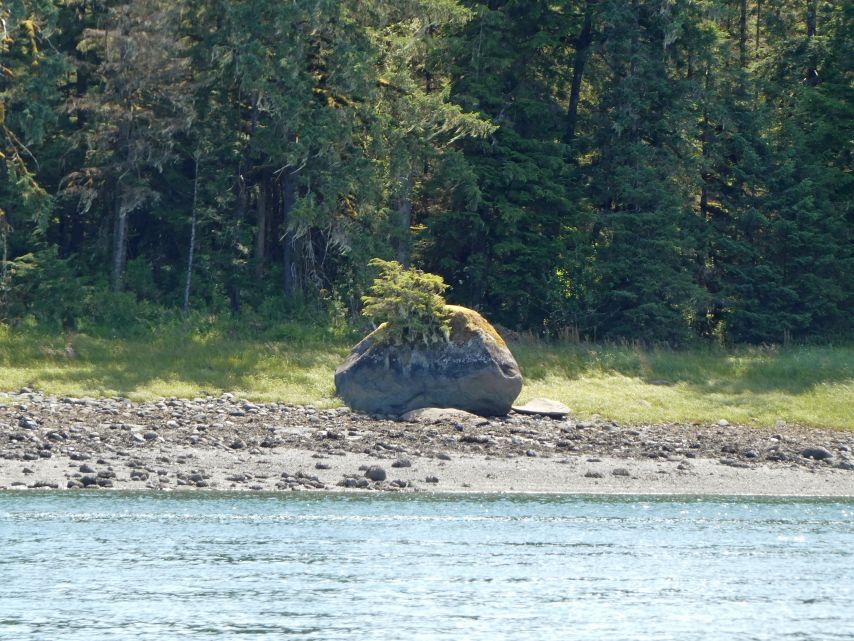
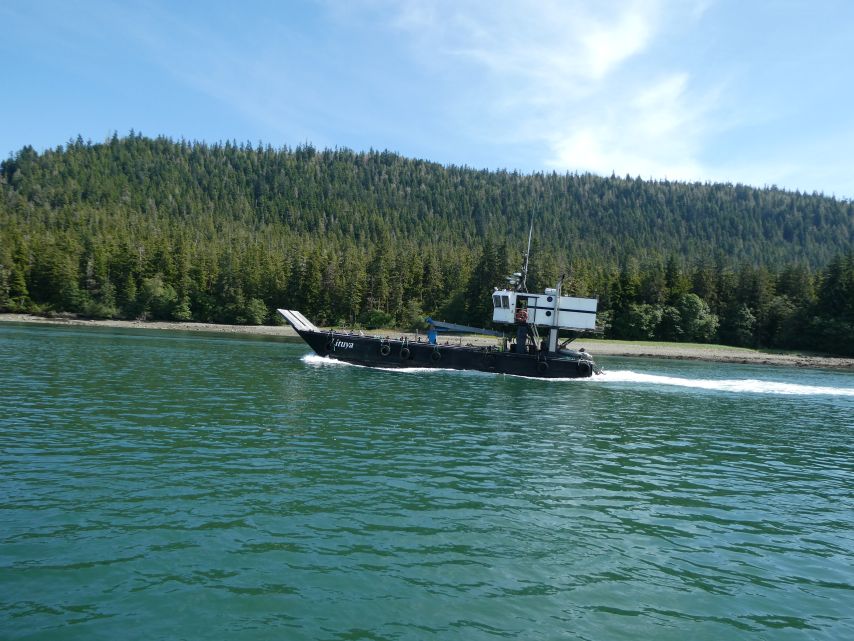
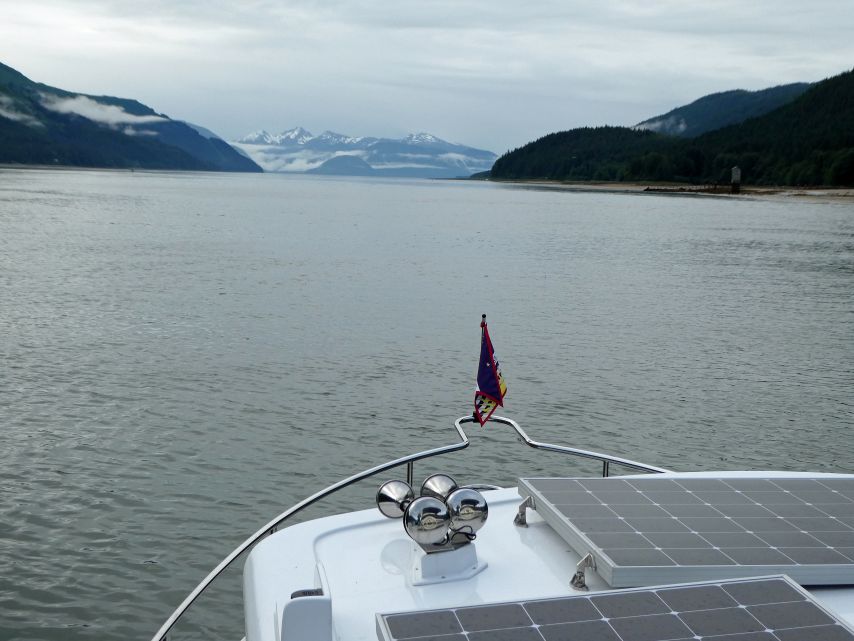
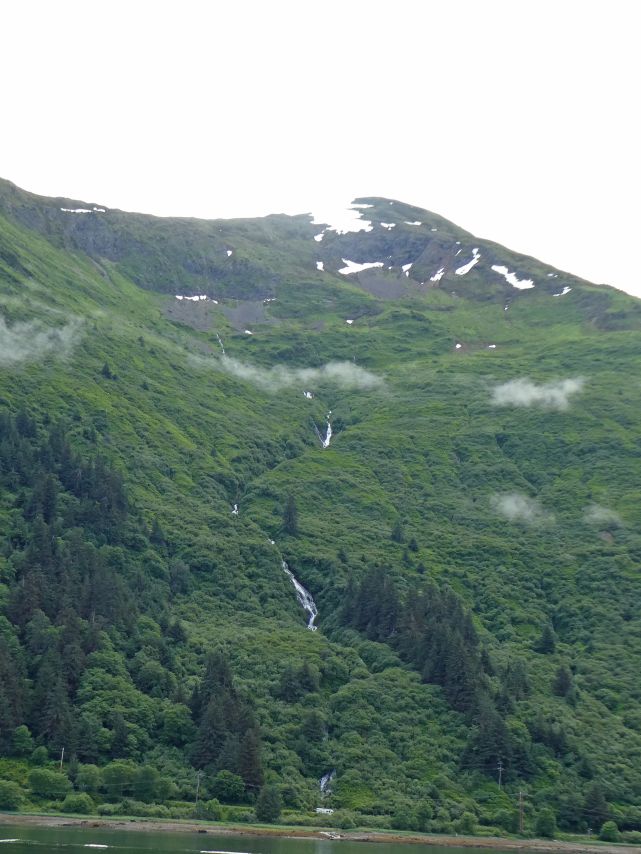
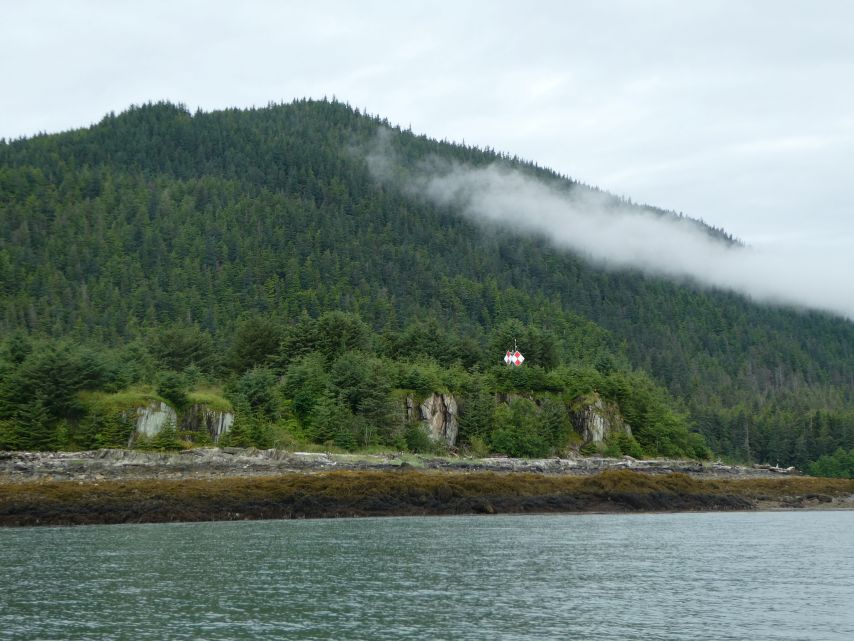
We slipped south through Wrangell Narrows on a bright, quiet Sunday—sunlight glinting off the water, the kind of day that makes you slow down and notice. Traffic was light: a dozen boats passed us from ahead, mostly small fishing vessels trailing behind. At low tide, the channel demanded extra attention. We kept a close eye on the markers and shoals, especially as we passed a tug and barge idling off to the side, likely waiting for deeper water.
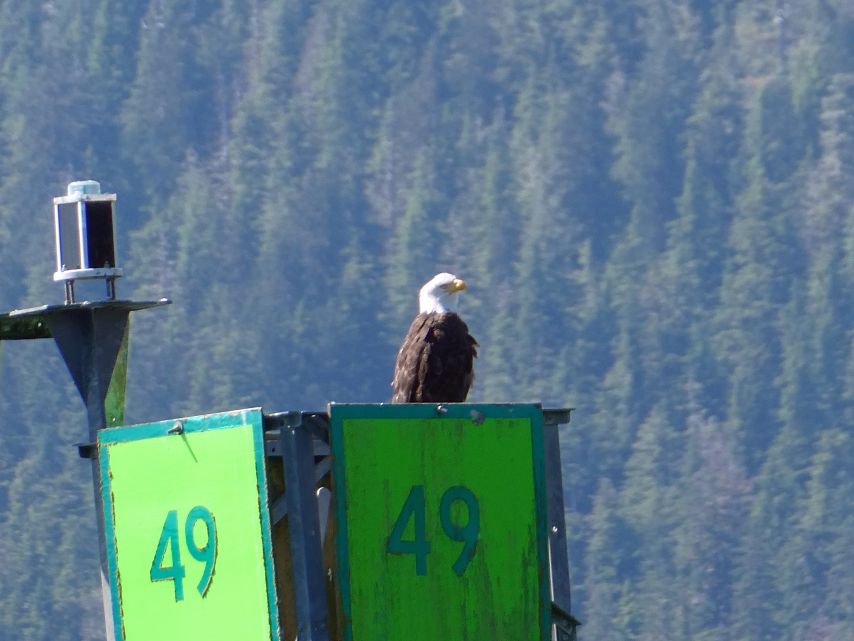
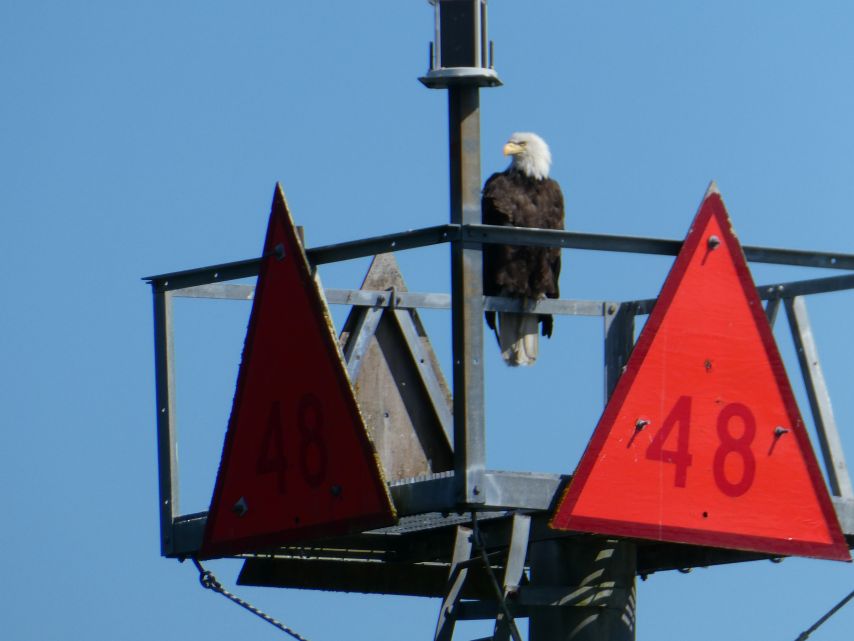
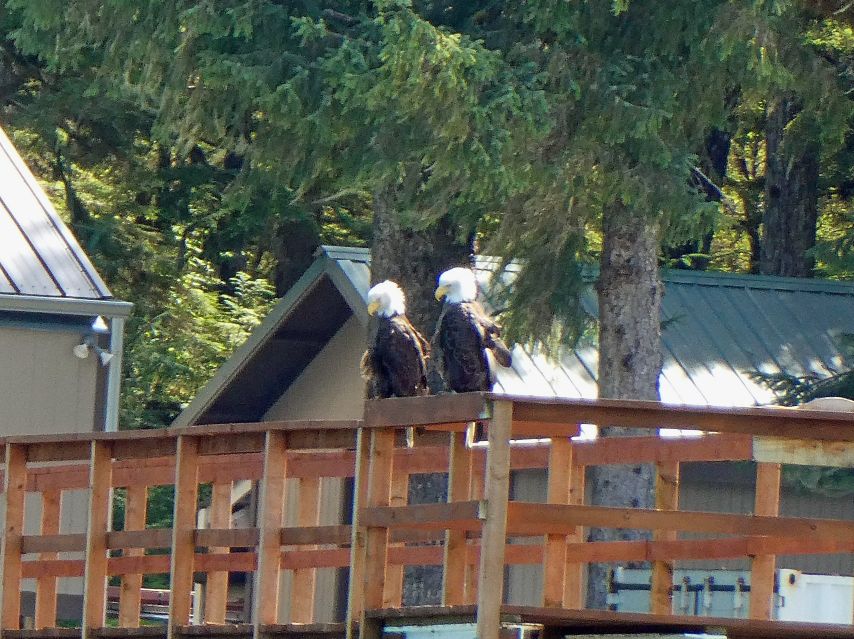
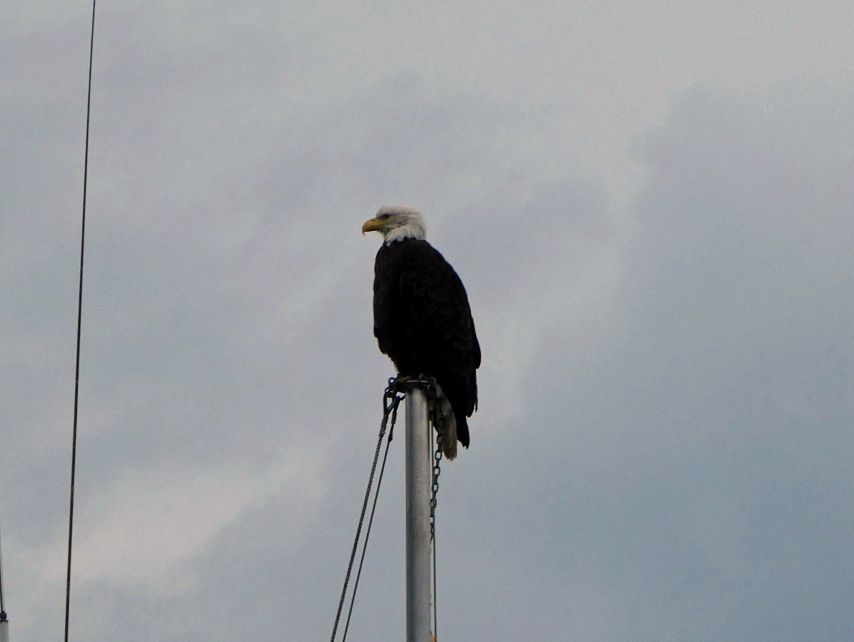
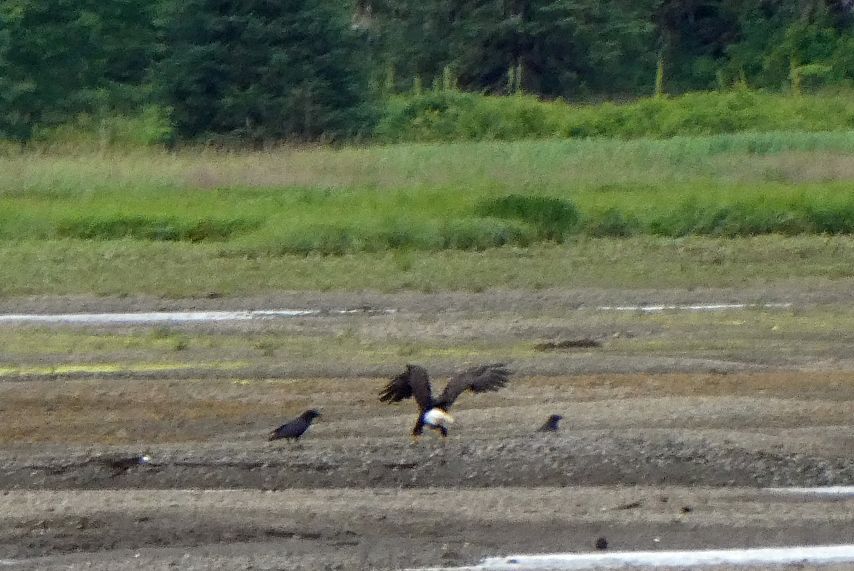
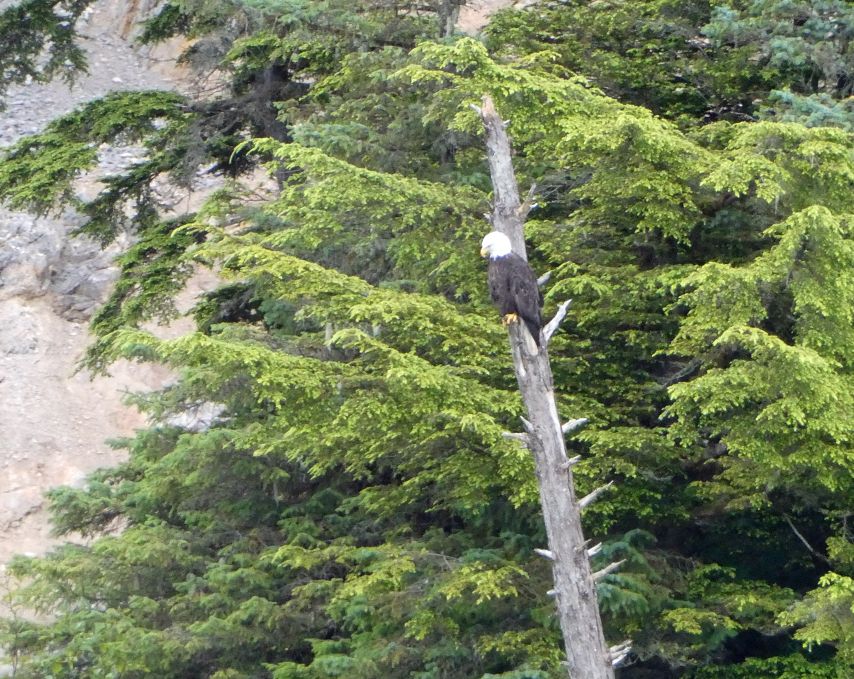
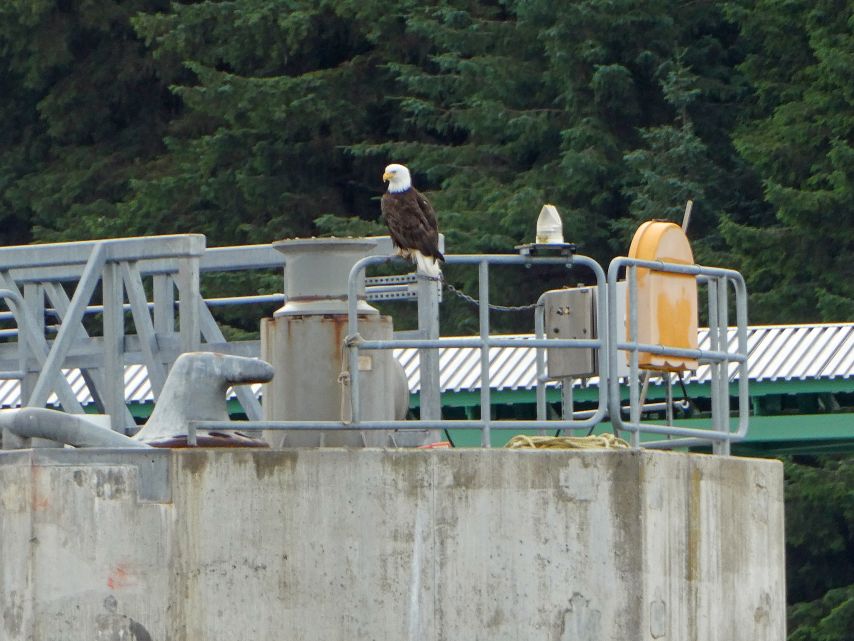
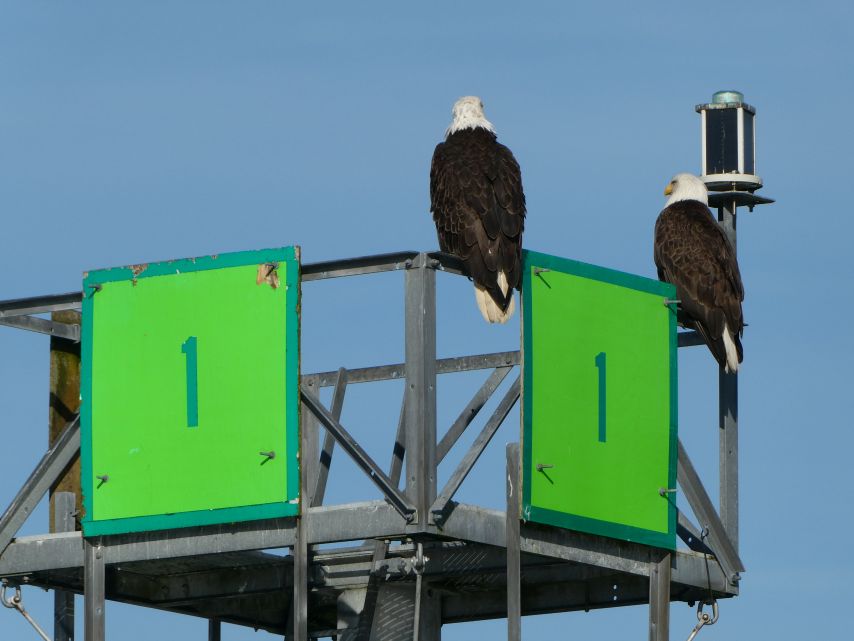
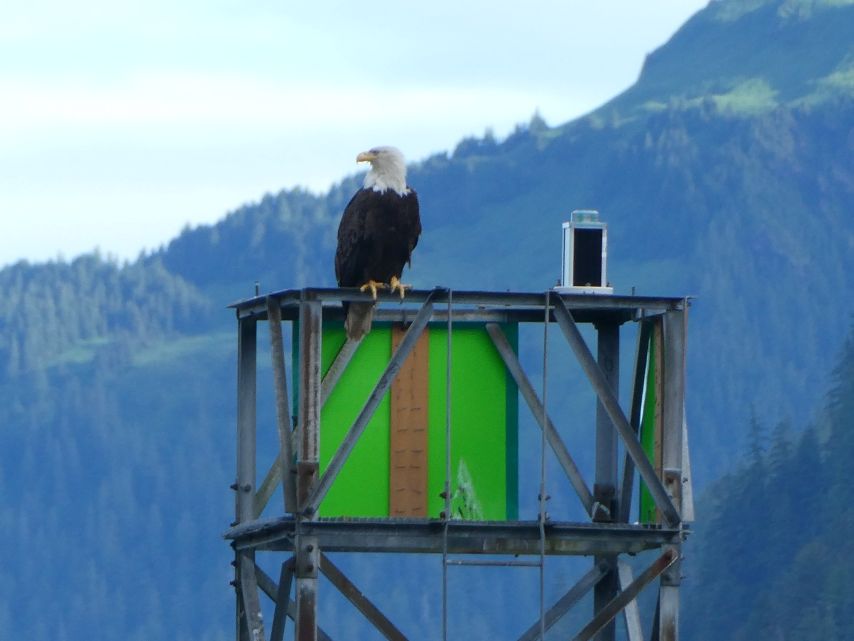
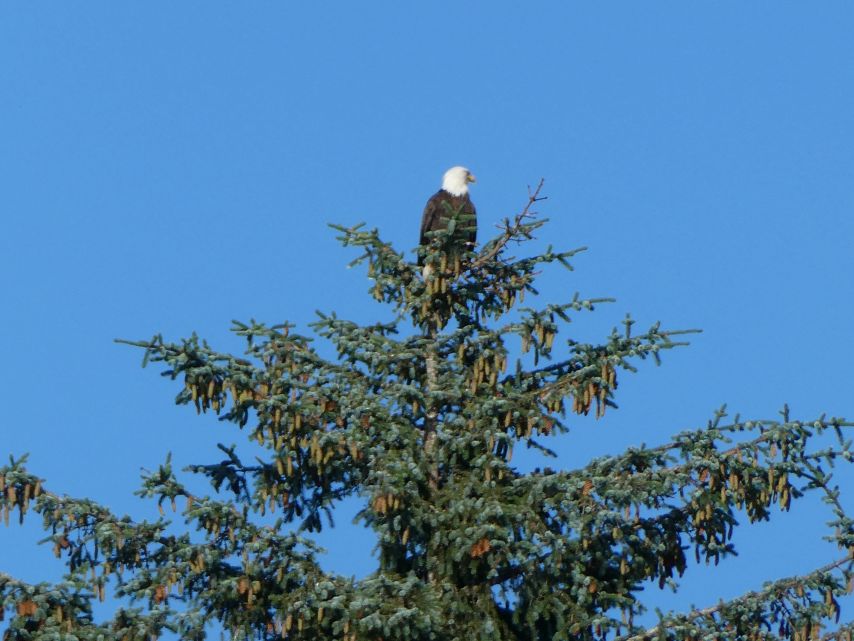
Eagles perched on the navigational aids, fewer than we’d seen heading north. Maybe they’re on the move—migrating or shifting territories as the season turns. The stillness gave space to wonder. With the tide low and the sun high, the narrows felt like a corridor of pause and presence. It was a wonderful trip—unhurried, observant, and quietly memorable.
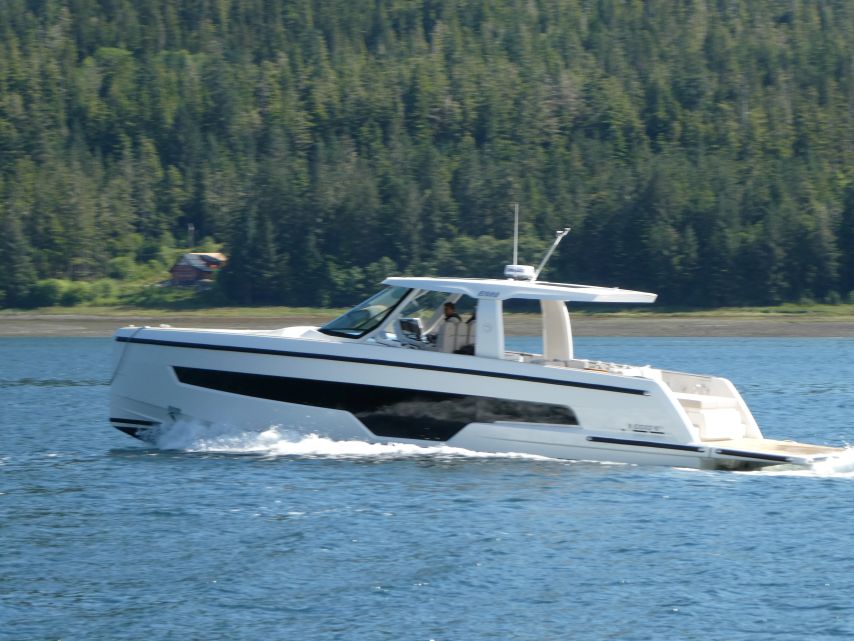
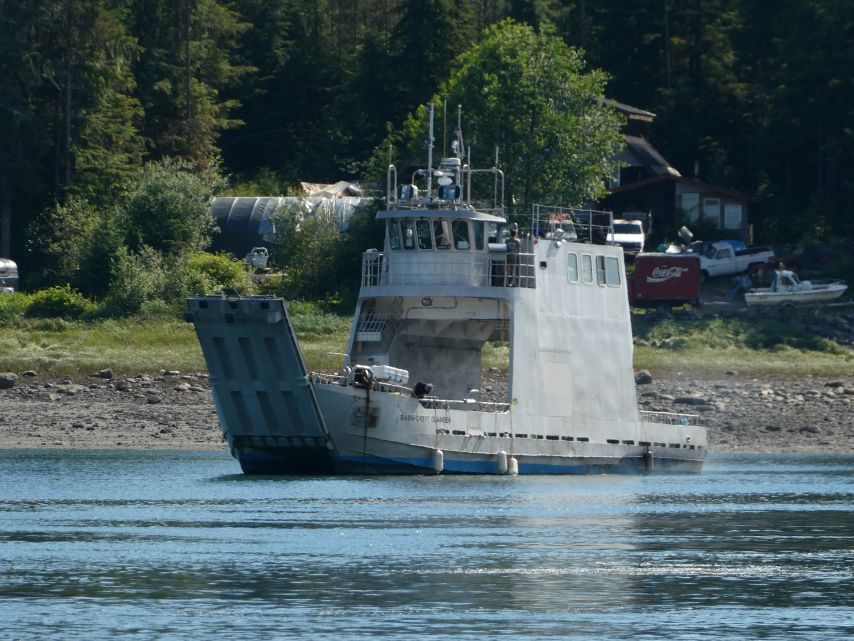
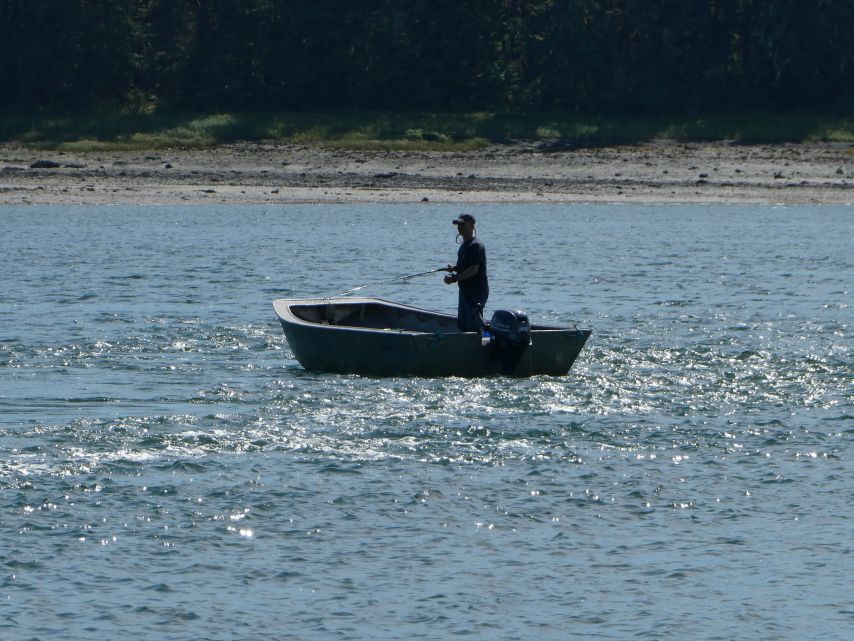
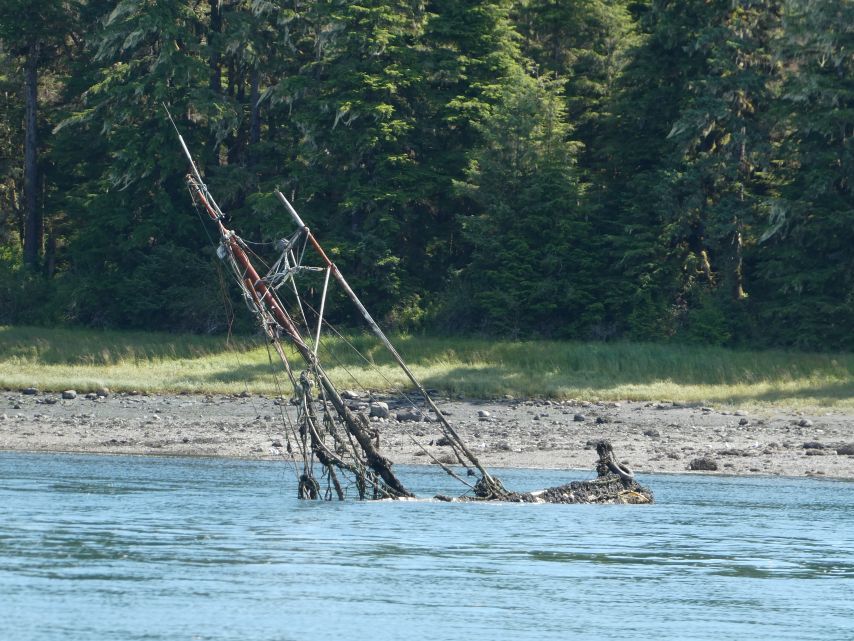
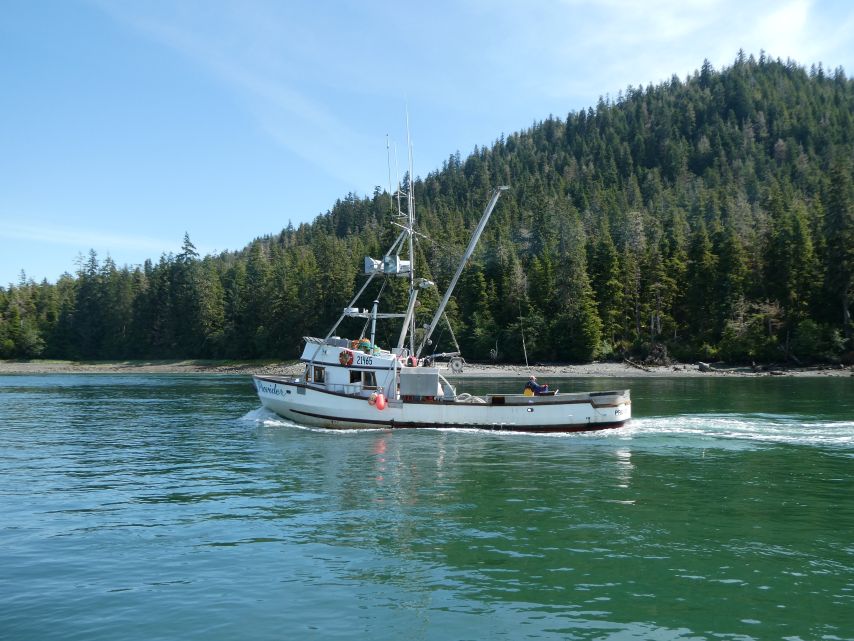
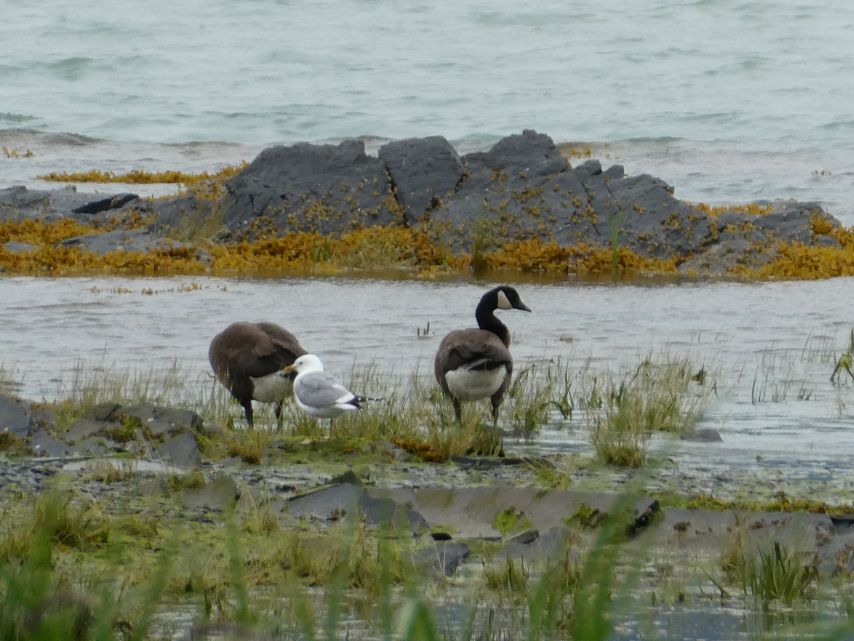
American OdysseyPacific Titan/bargeNorth StarEstelHewers CraftRain Forest GuardianChristmas IslandRock IslandMarker 39His Cast, His KingdomSentinels of the RailingSnow capped Mountain Rocktop RebelSunken Fishing BoatProviderLituyaRiding the MastWelcome to Wrangell Canadian Geese Sunset
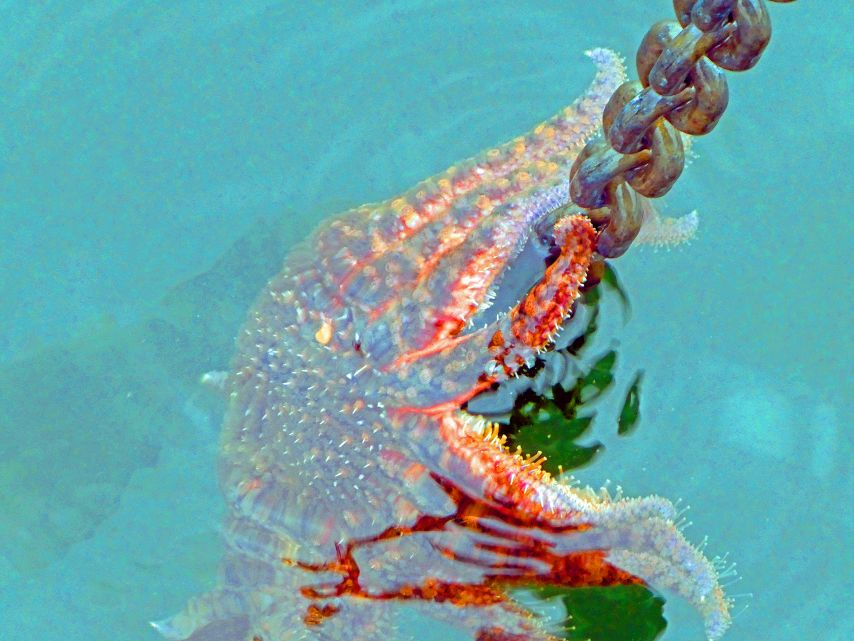
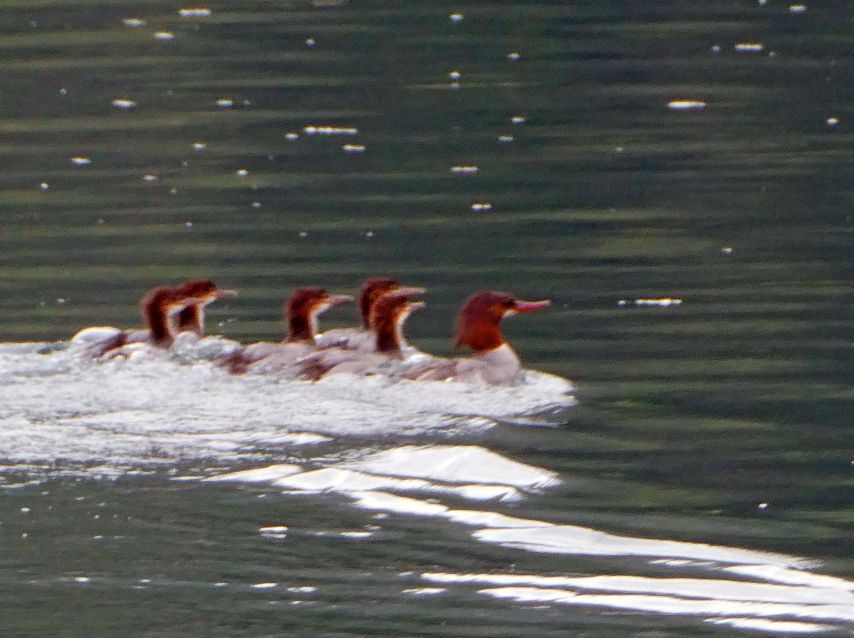
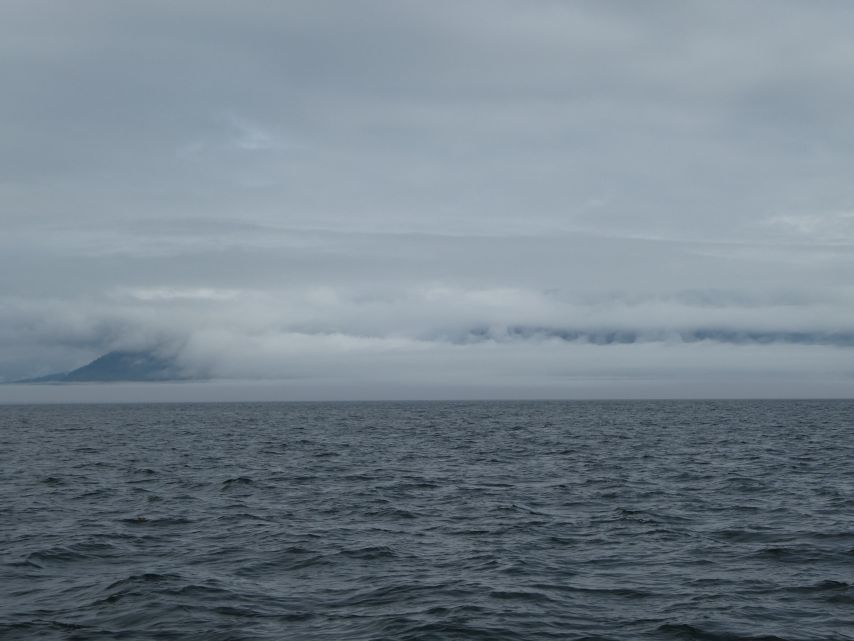
We lifted anchor in the hush of morning, the line dripping seawater and the surprise of a bright orange starfish clinging to its length—like the bay itself reluctant to let us go. Mallards paddled purposefully across our bow, their small wakes stitching silver trails into the mirror-slick surface. Overhead, clouds clung to the shoulders of the mountains, soft and low, as if the peaks themselves were exhaling.
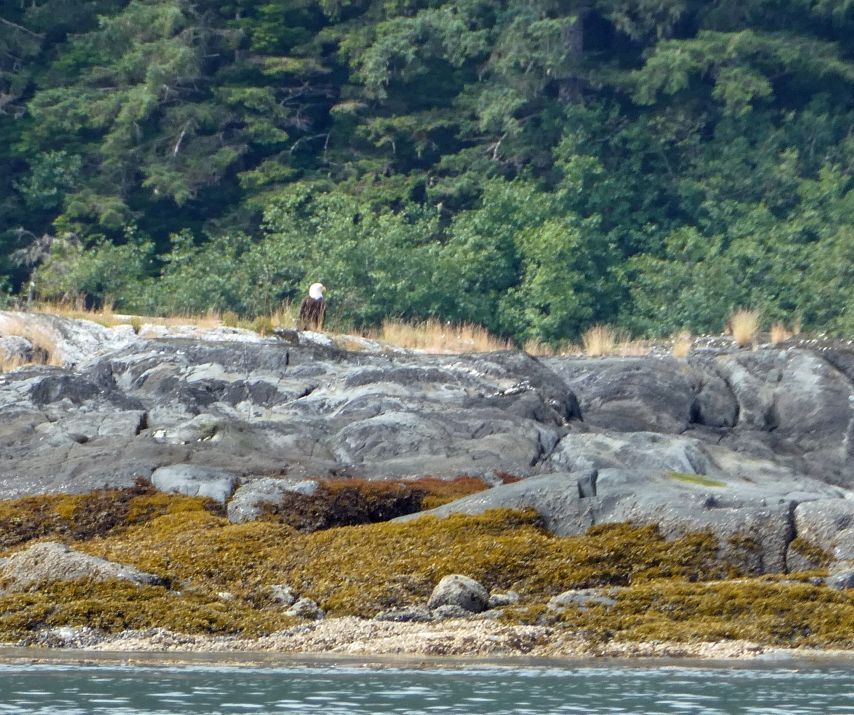
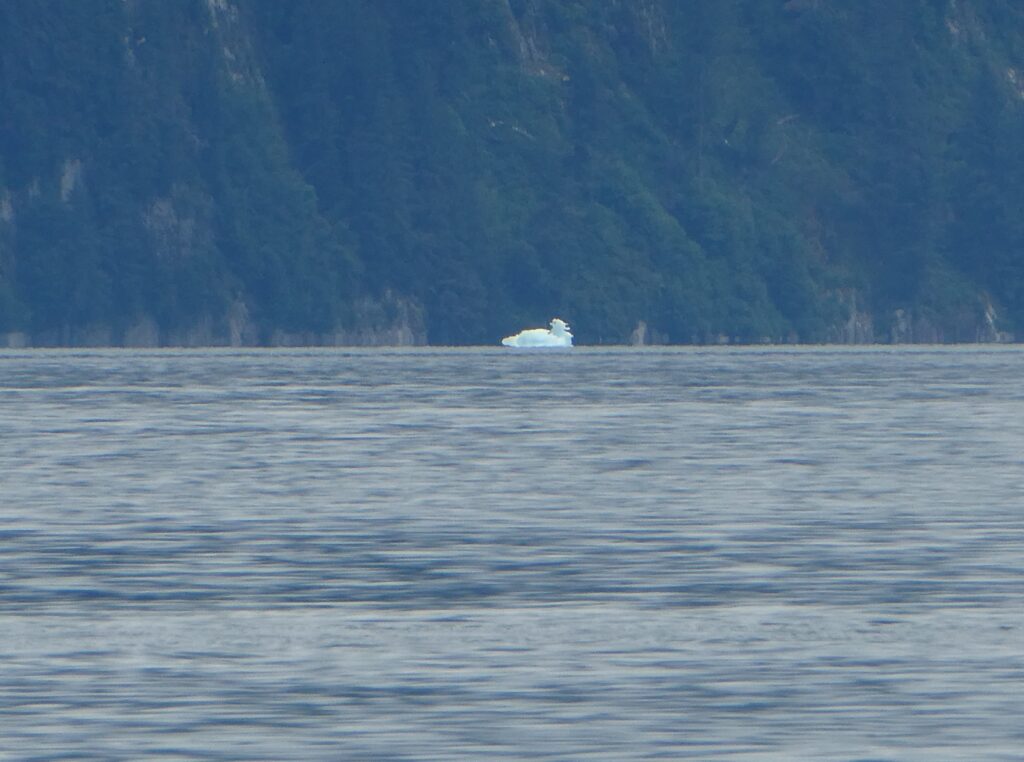
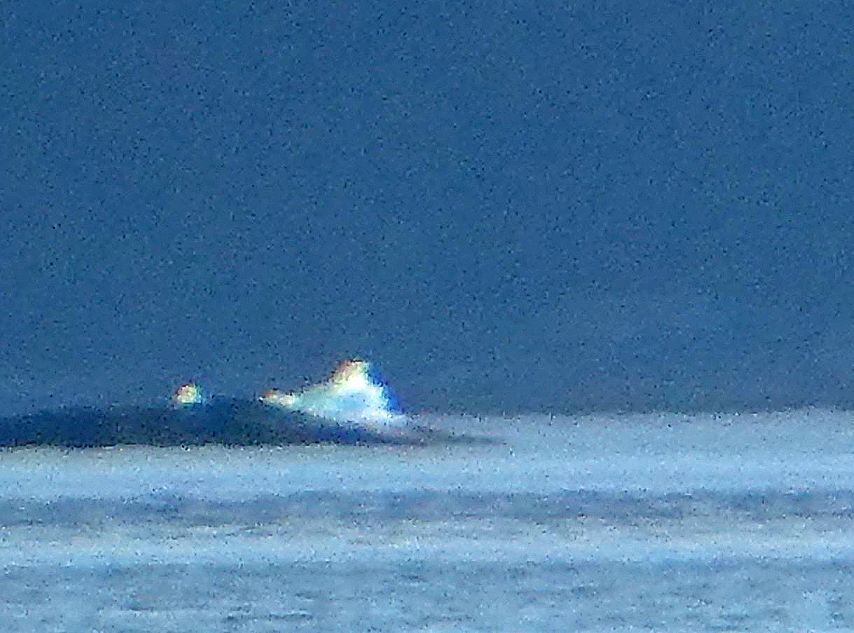
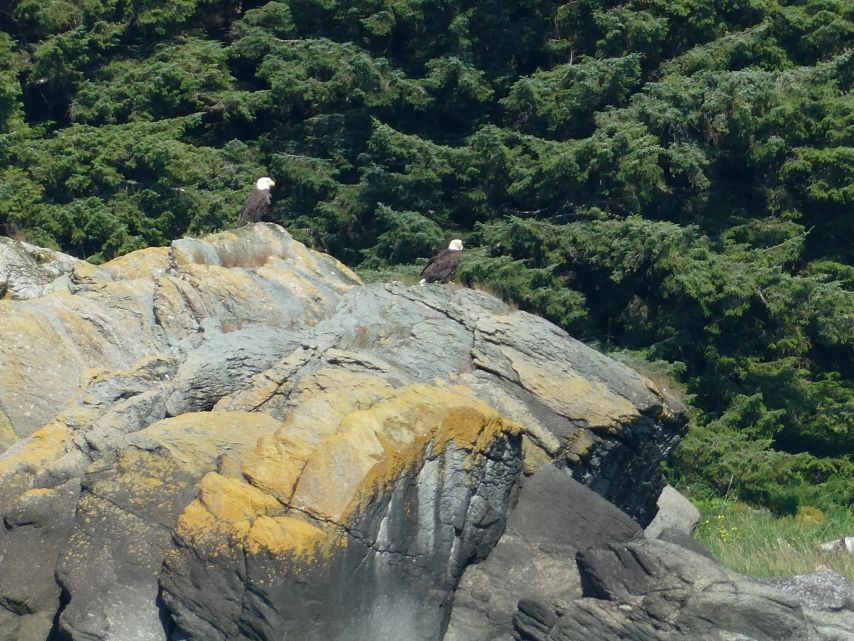
Eagles stood sentinel on barren rocks, solemn as old kings watching a changing tide. Their stillness lent weight to our own quiet departure—no fanfare, just the rhythm of engine and tide. The swell opened gradually toward LeConte Bay, and there, drifting like a dream, we met an iceberg. Its silent presence punctuated our passage, a final crystalline farewell.
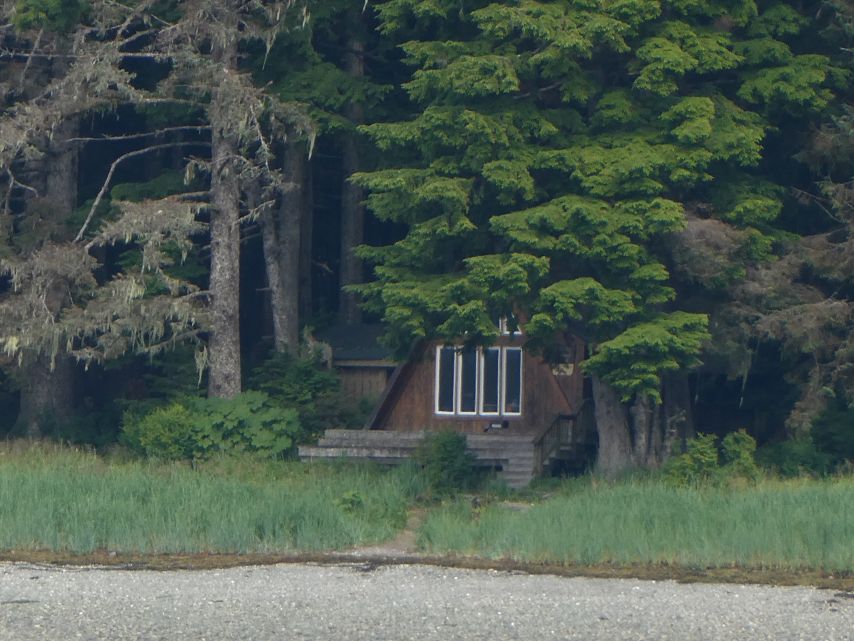
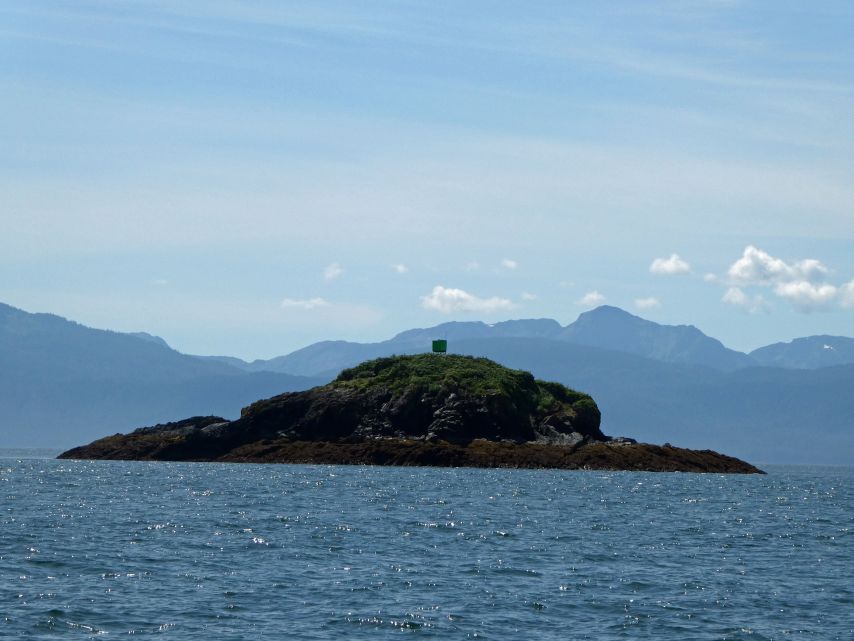
Anchor Line StarfishMallard Ducks CrossingPortage Bay CabinLeaving Portage BayLow Clouds over the PassEagle RockIceberg across the ChannelClouds Hug the MountainsS/V Odyssey
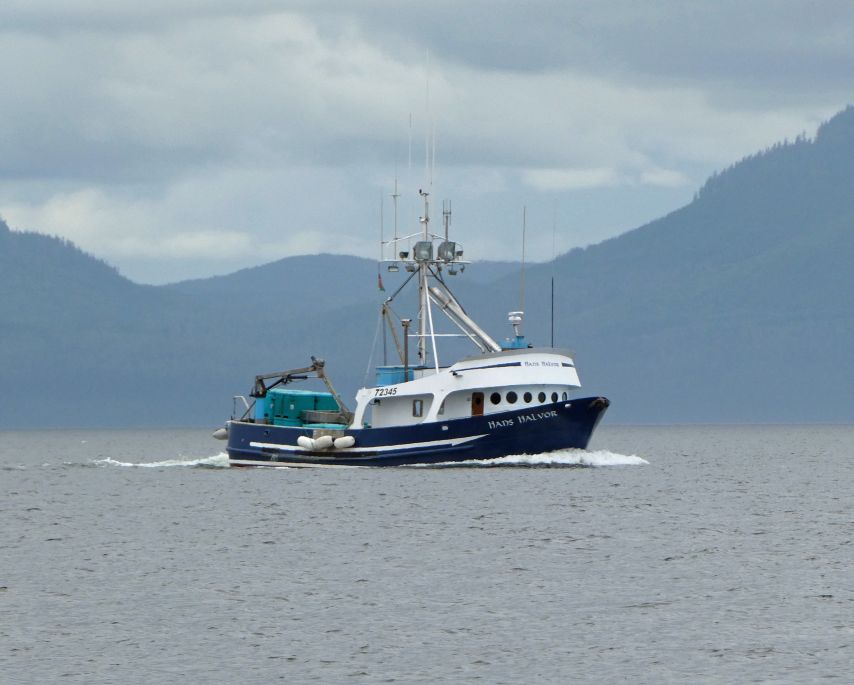
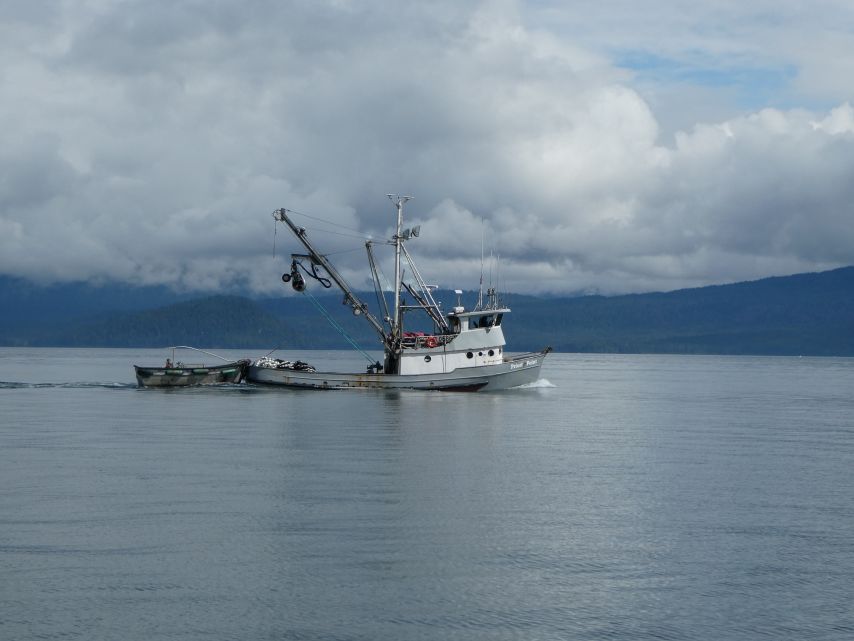
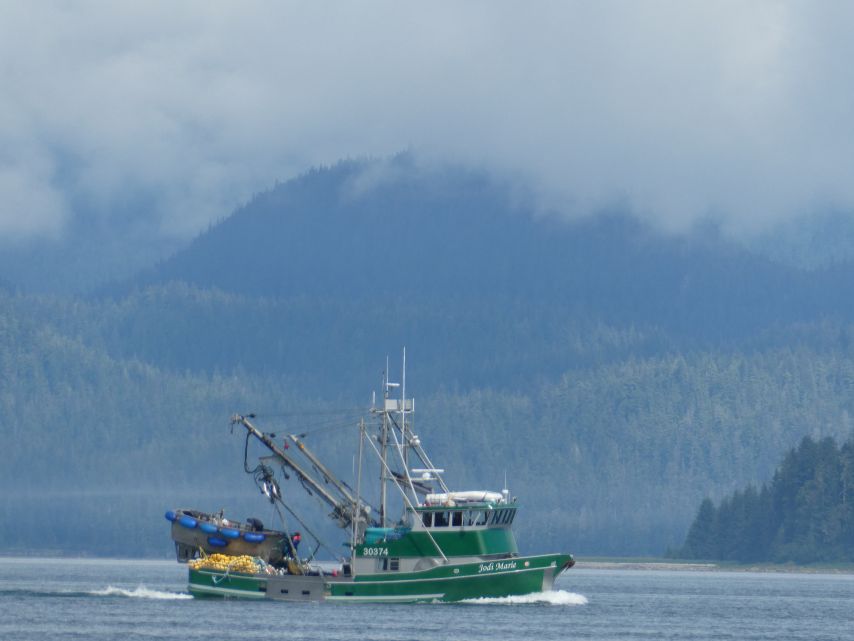
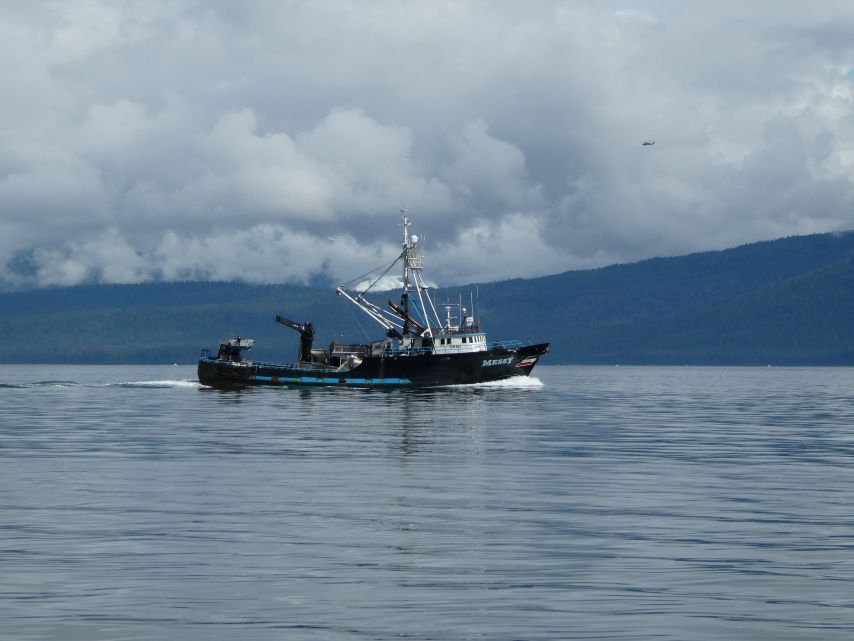
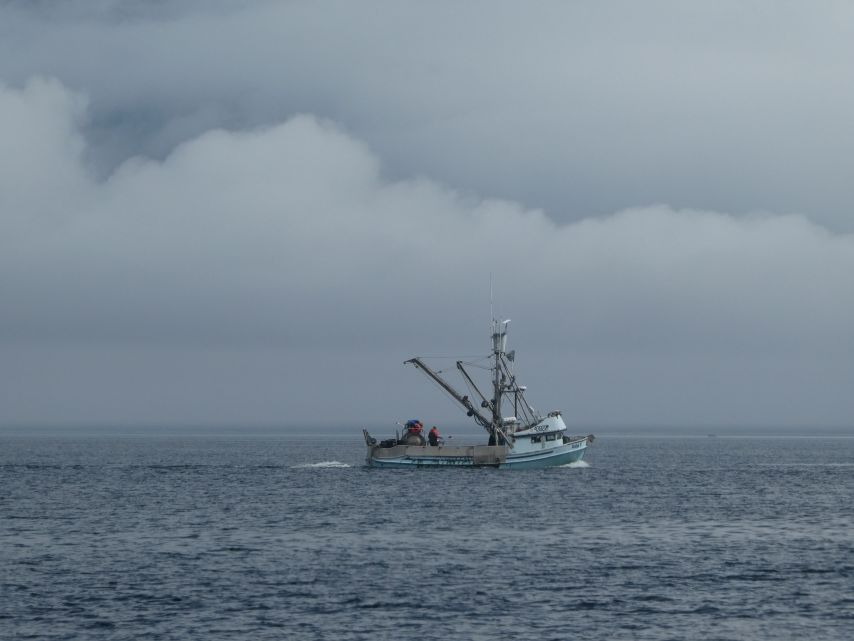
At 12:00 pm on Friday, July 25, the summer salmon openers in Southeast Alaska quietly drew to a close, and all around us—on the sparkling water en route to Petersburg—a steady parade of gillnetters, troll boats, and purse seiners made their final runs. Here are just a few that slipped past our bow.
Hans HalvorPrist PointJodi MarieMessyKaijavTntangiri F
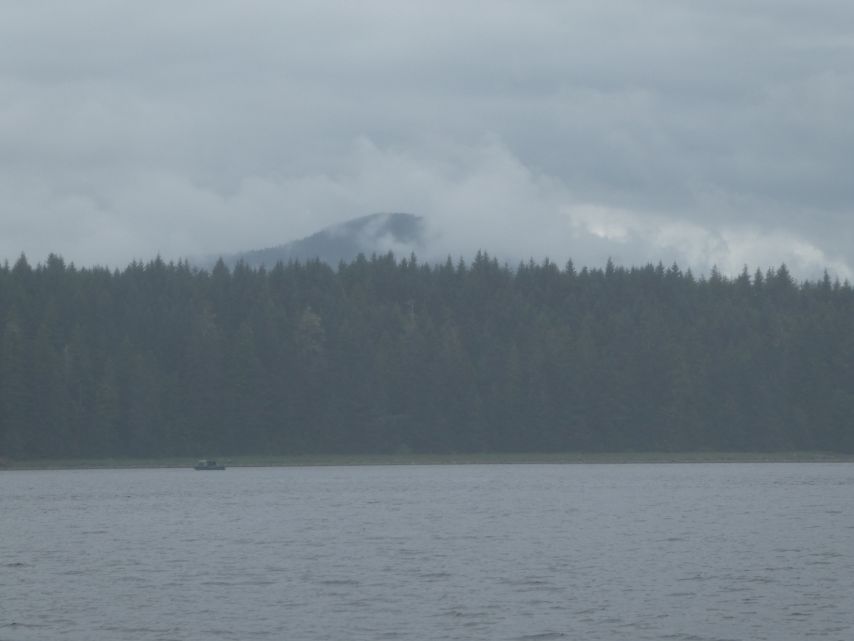
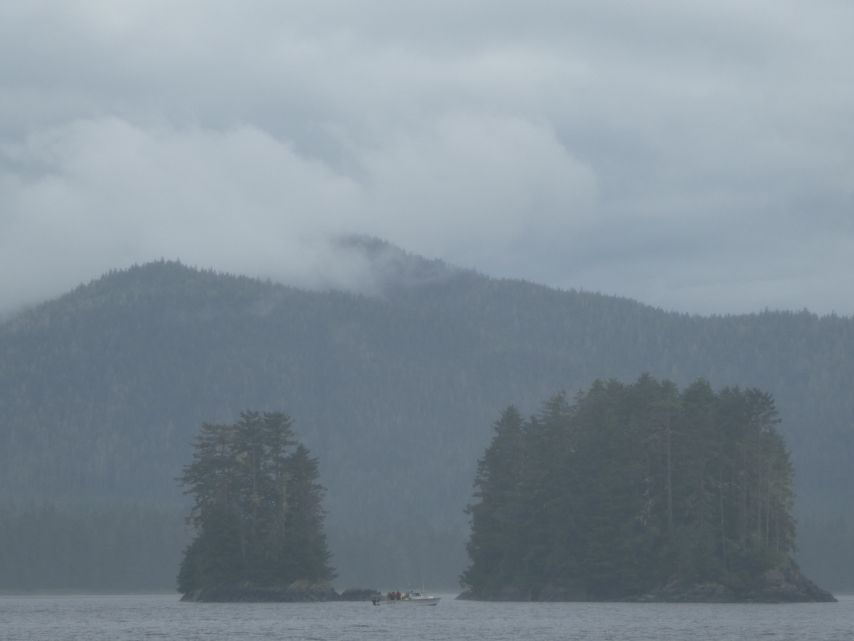
The morning unfolded with the mountains wrapped in misty silence, their peaks veiled in fog like a secret yet to be told. Yet on the water, the air was clear—glassy and still—as we eased out of Mole Bay.
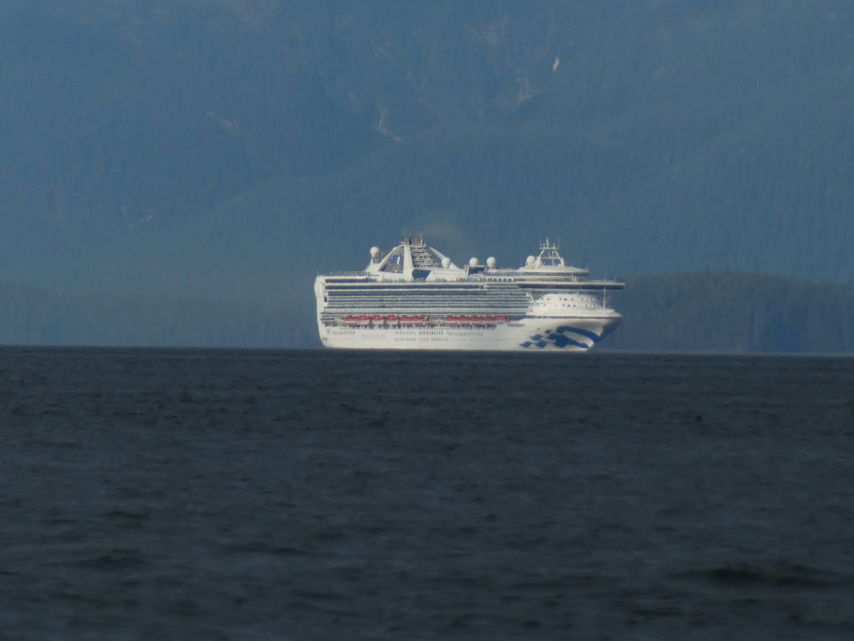
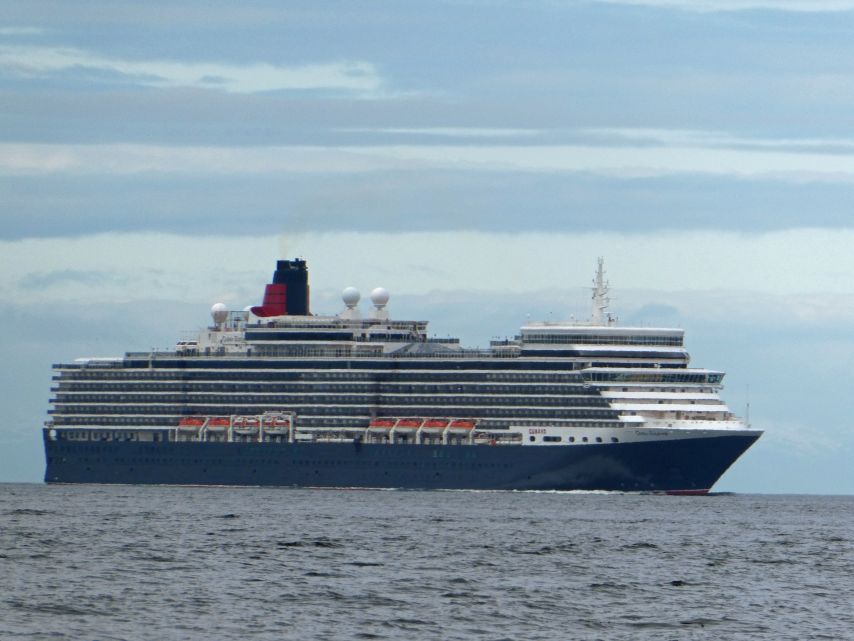
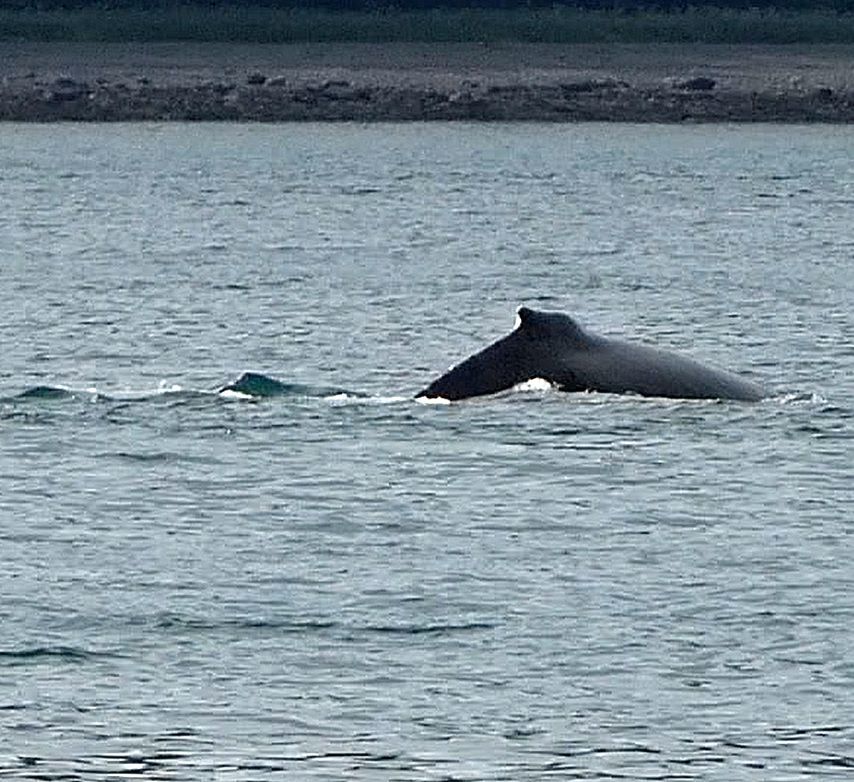
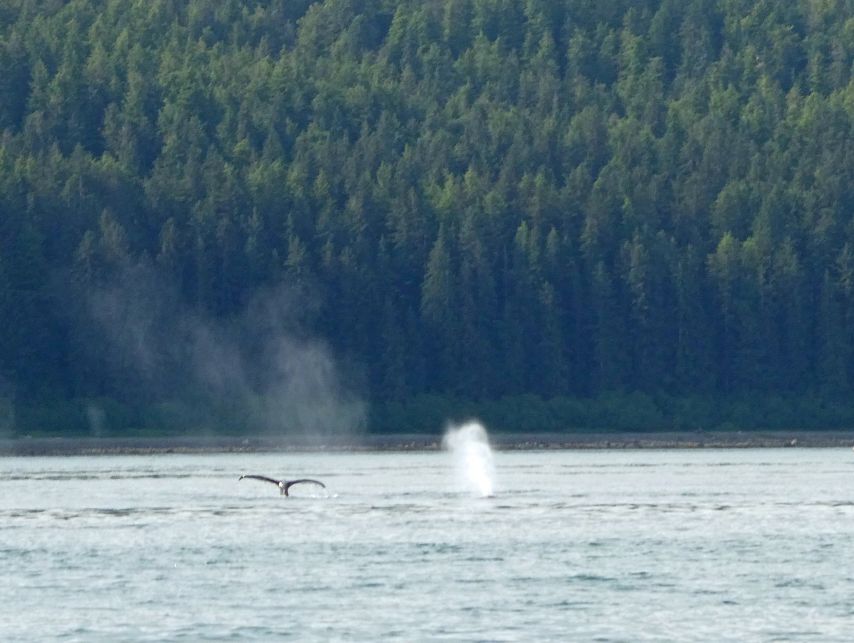
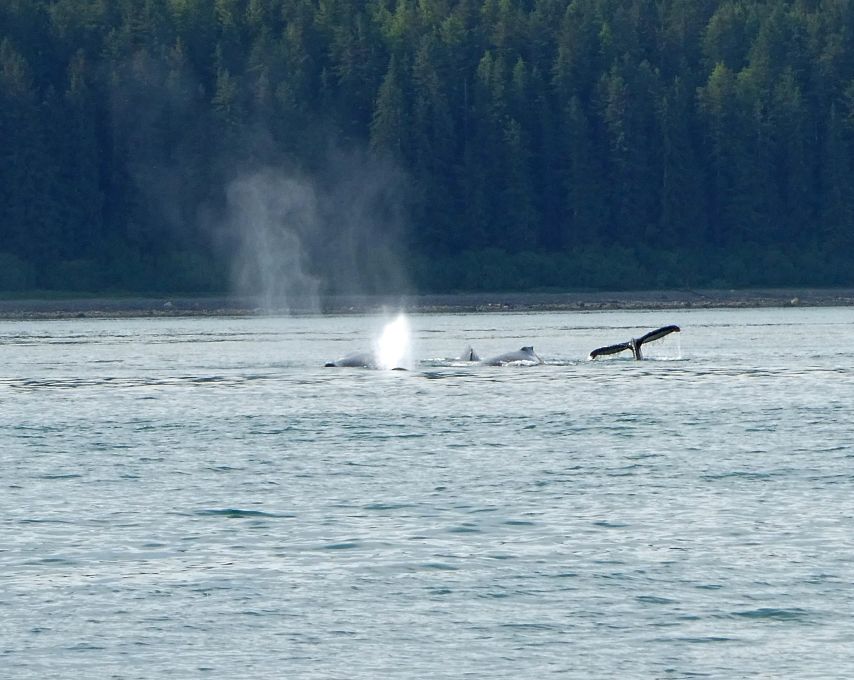
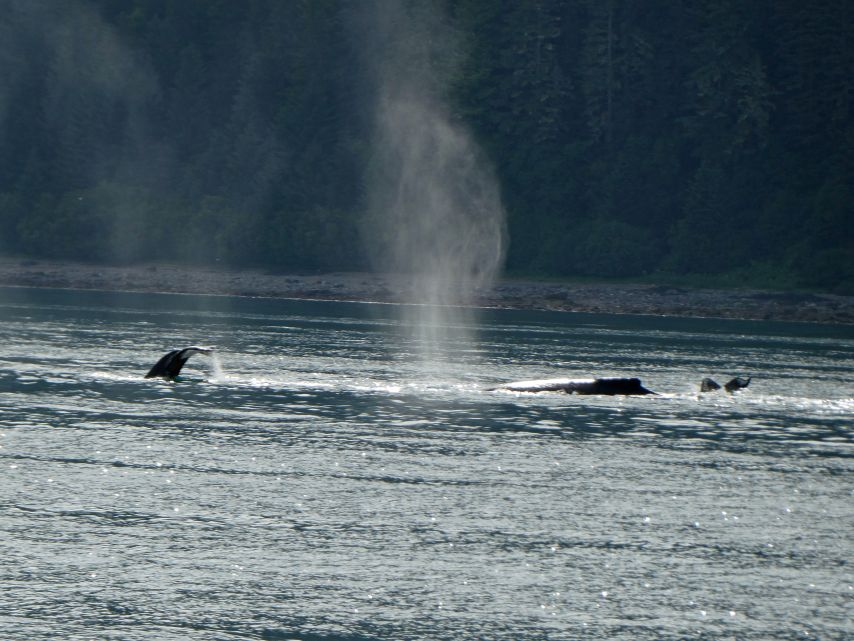
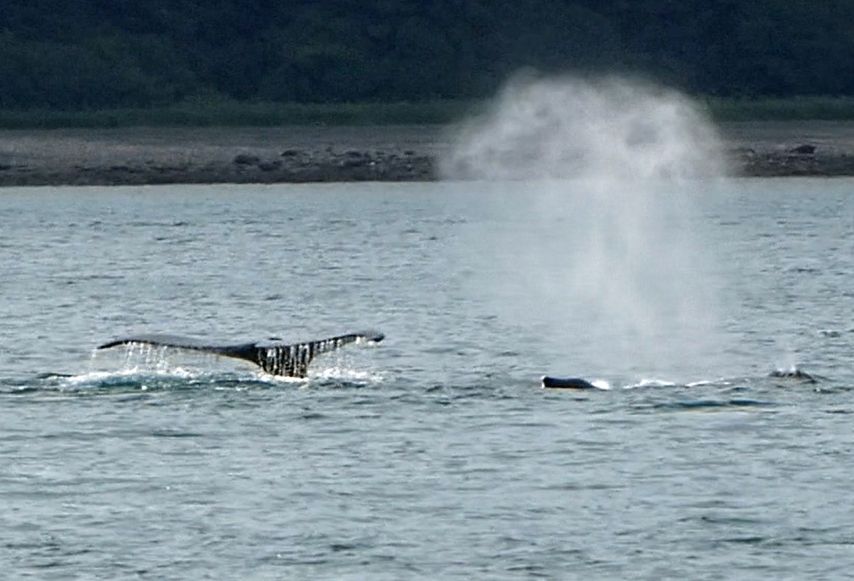
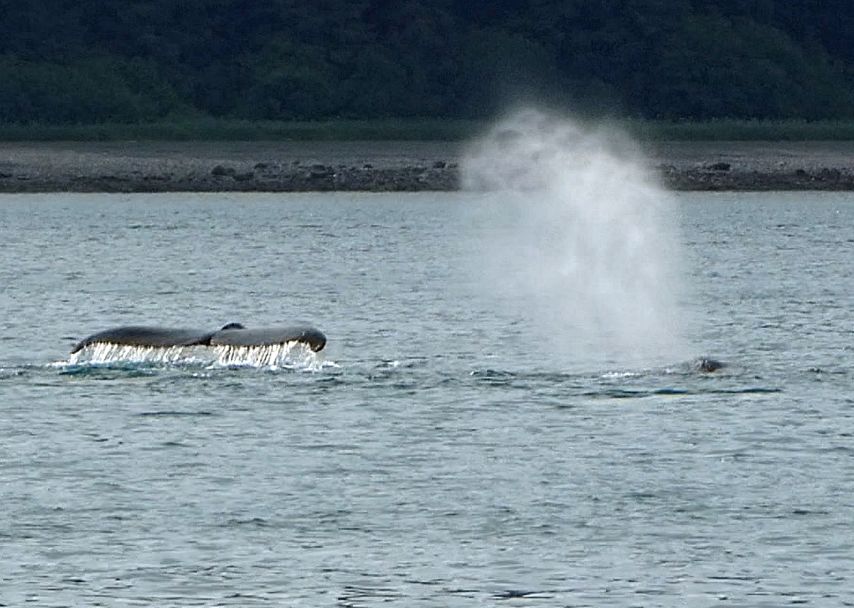
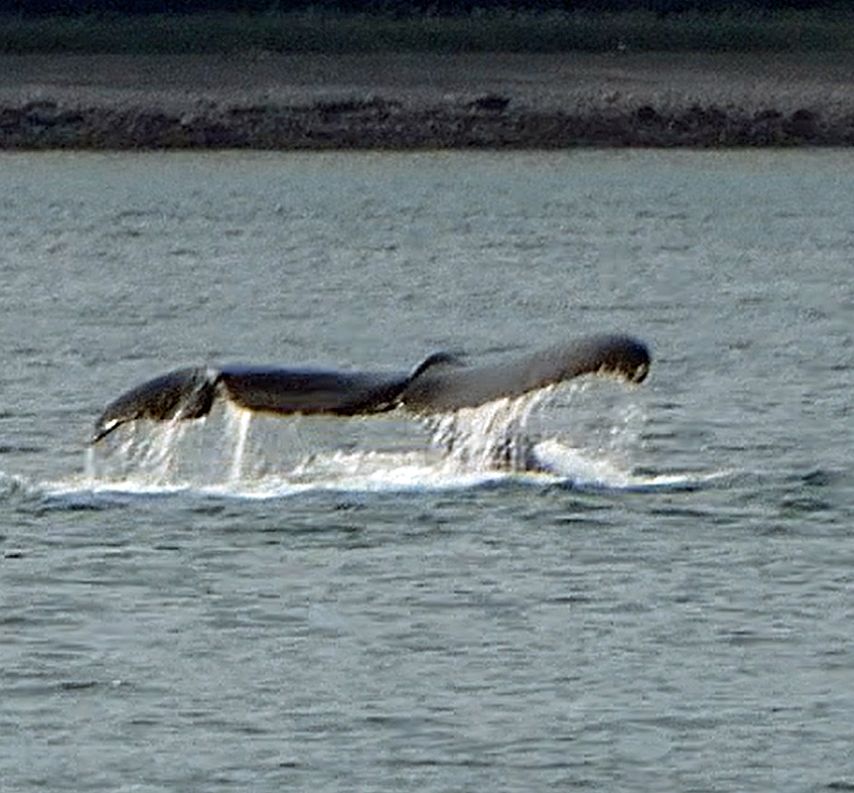
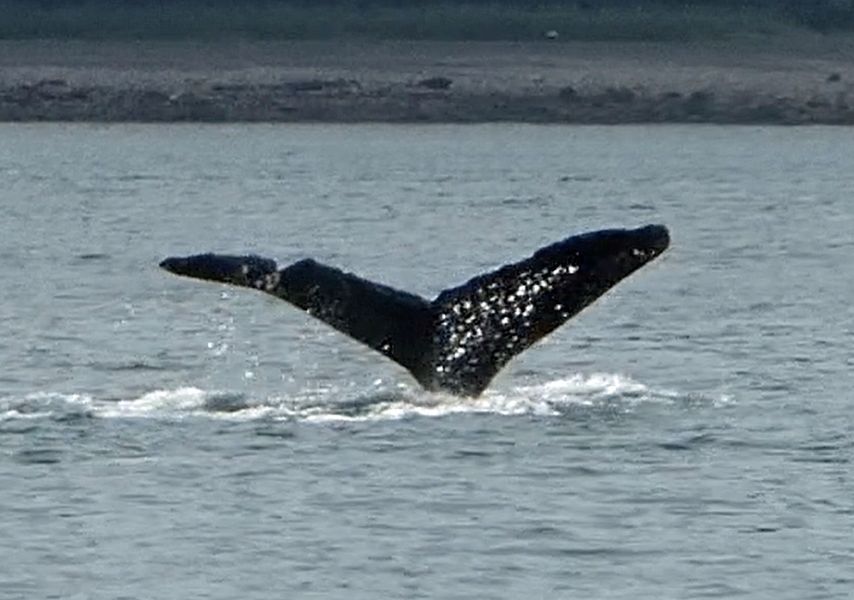
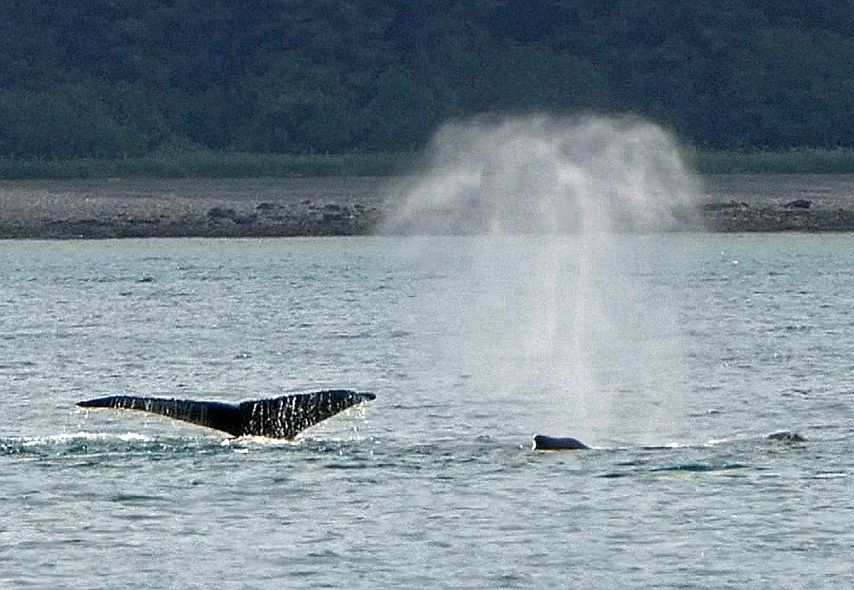
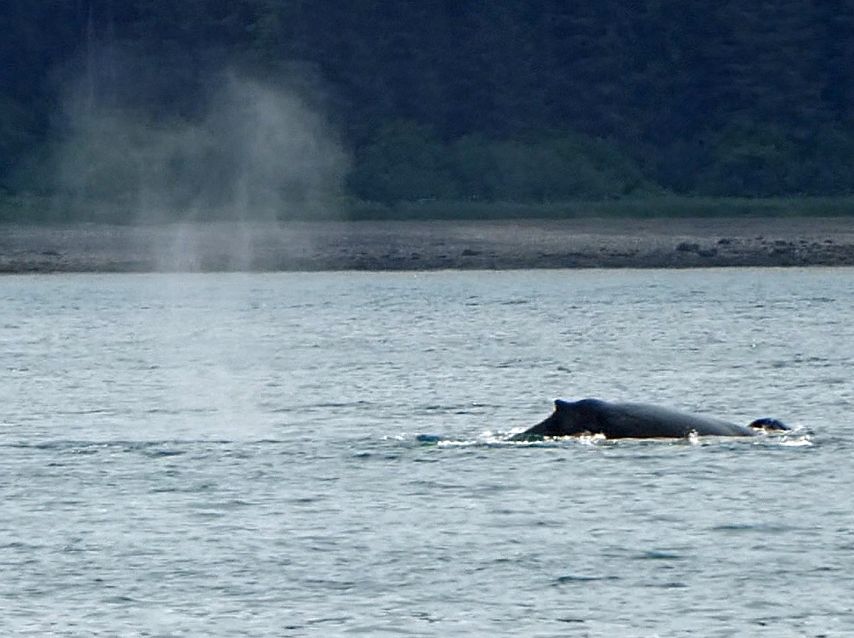
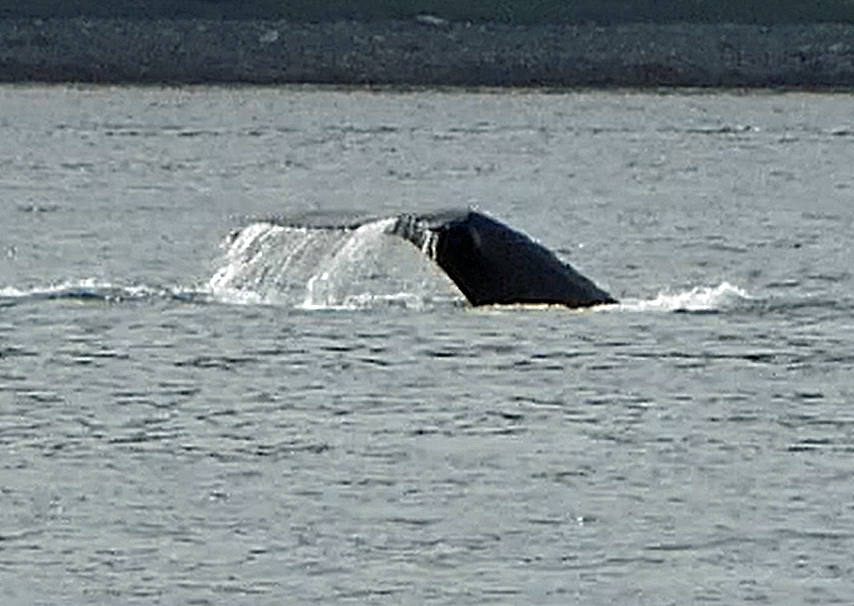
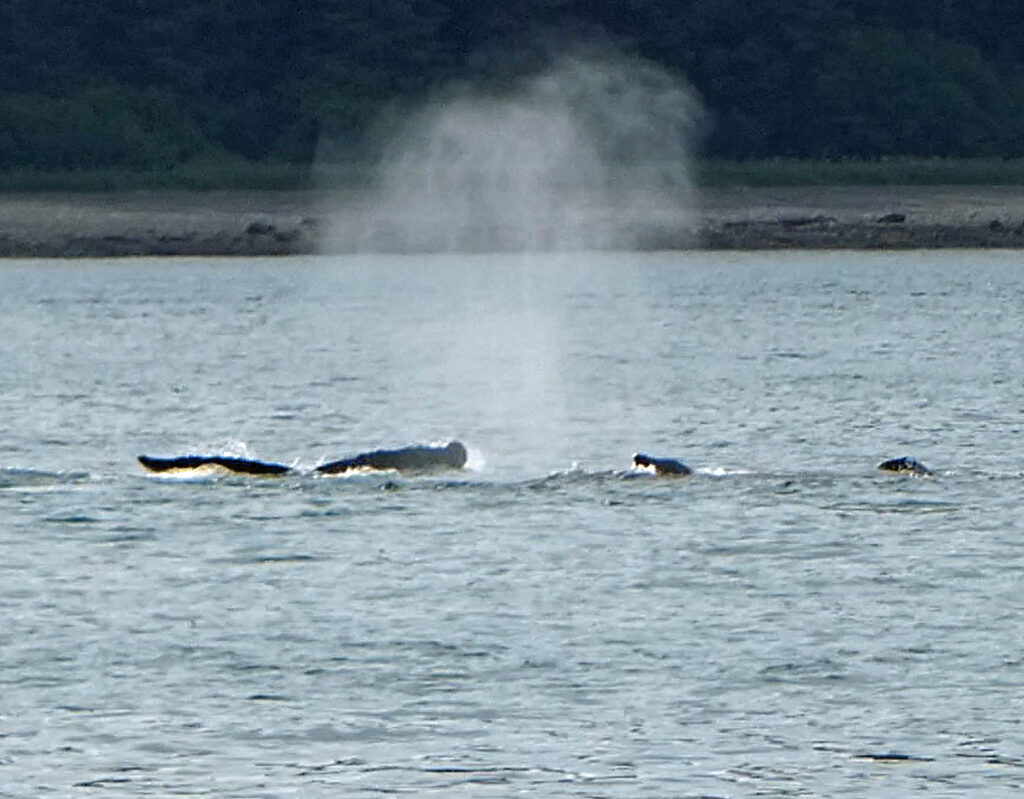
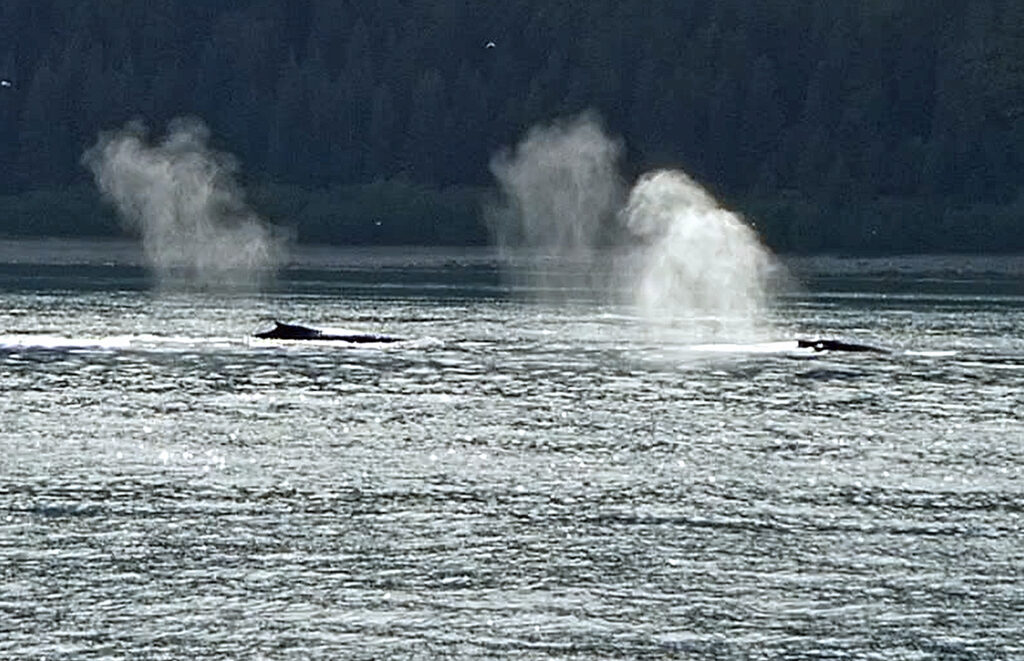
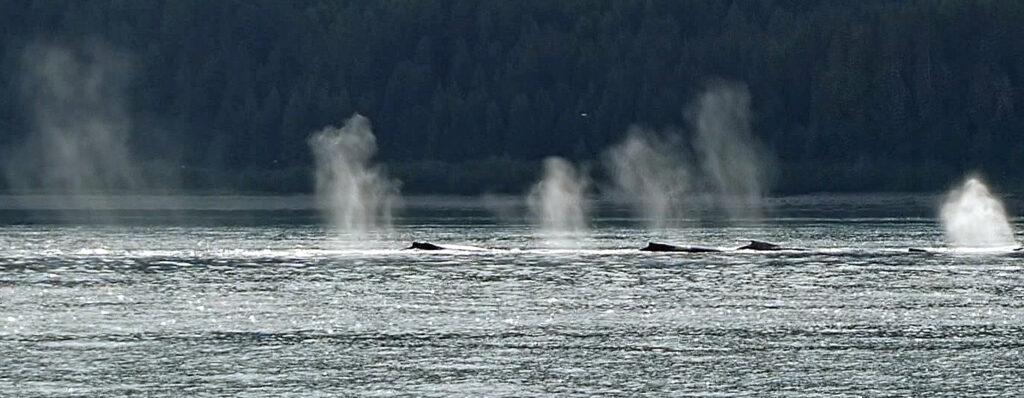
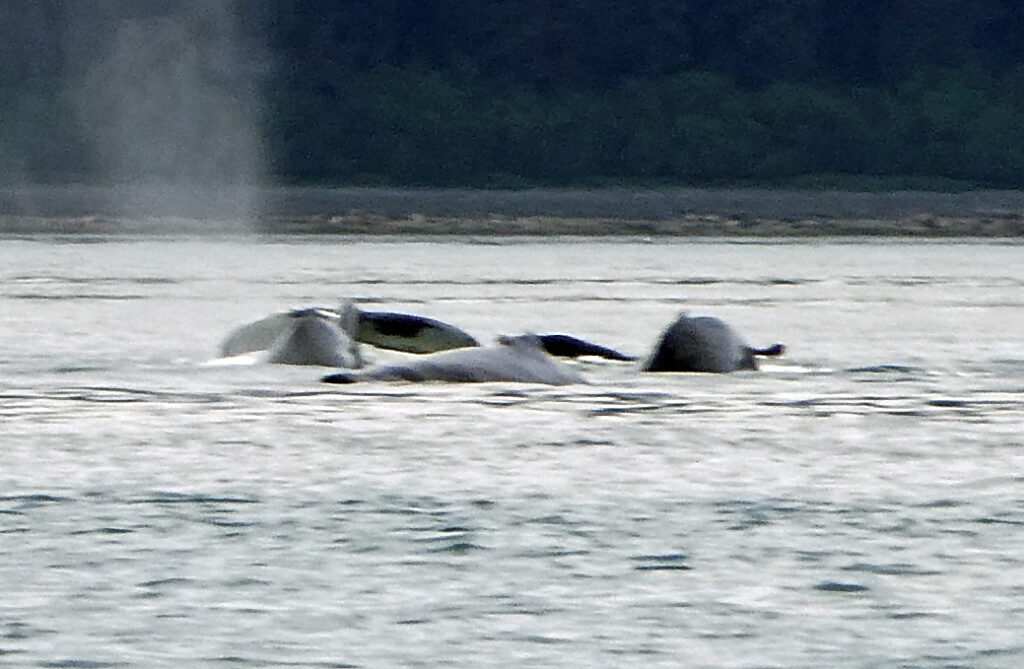
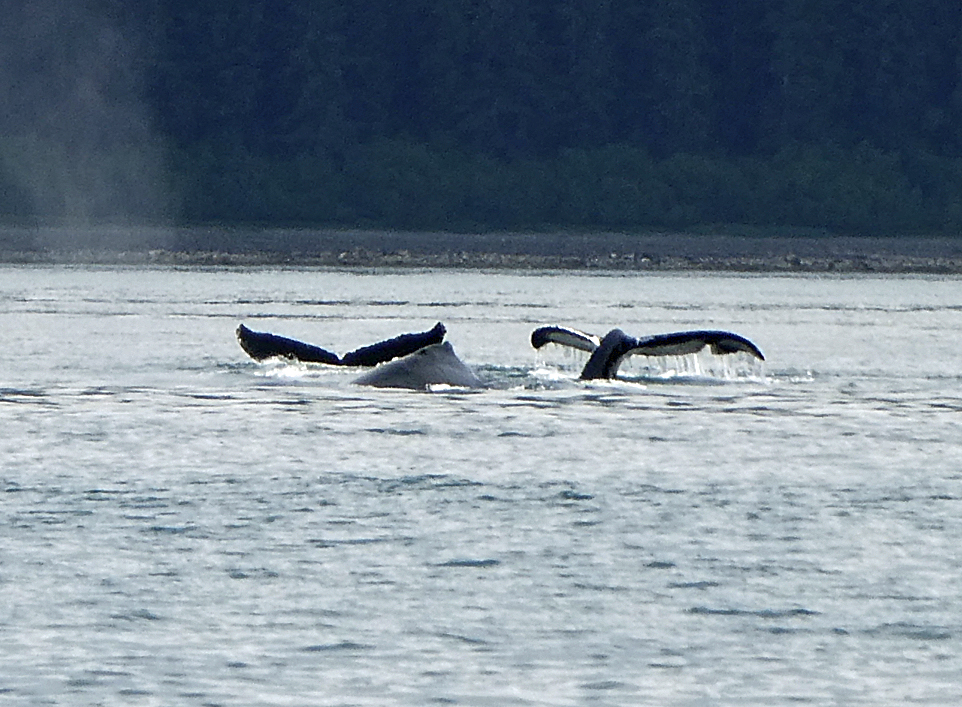
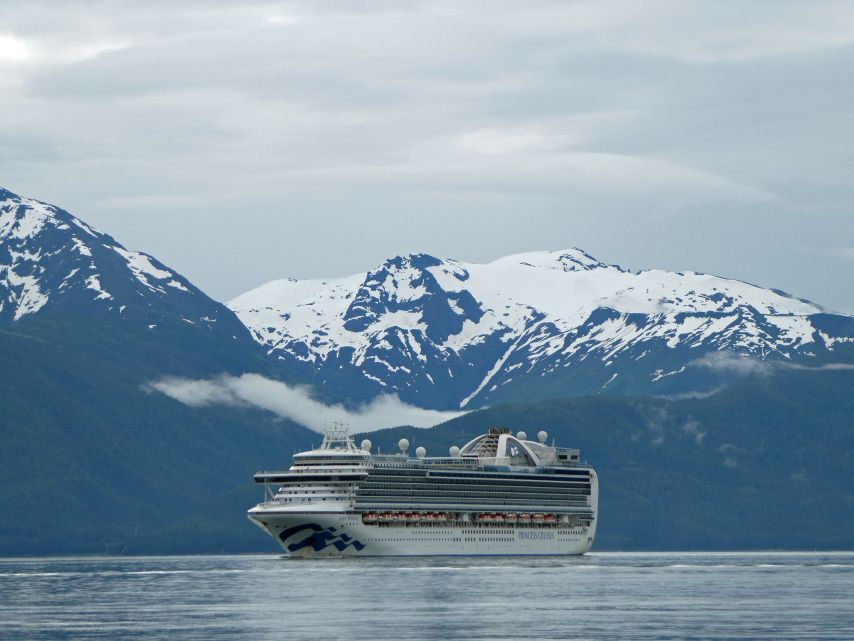
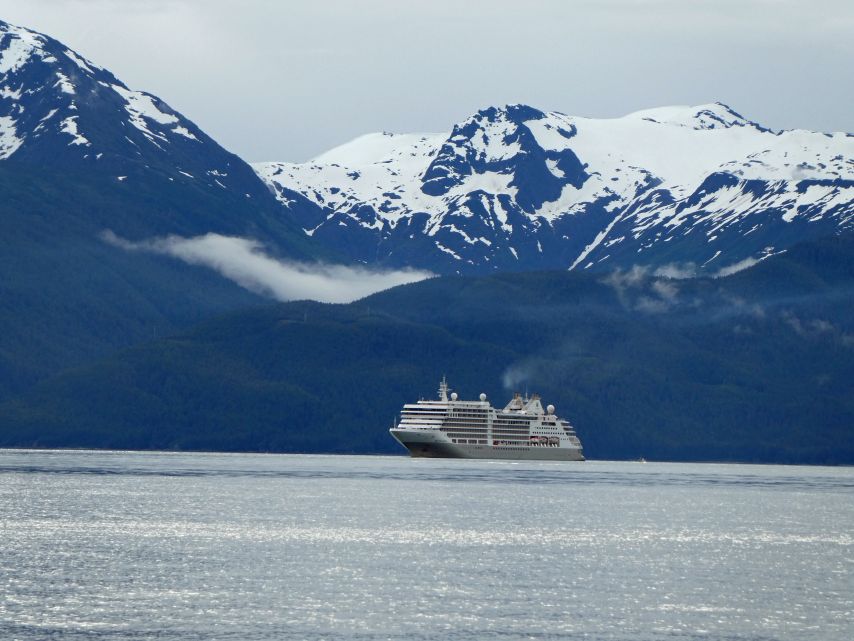
Two cruise ships crossed our path, heading north to Juneau, their bright decks slipping past like moving cities. Southbound, our course carried us through a corridor of distant magic: humpback whales, surfacing in slow arcs, teasing the sky before returning to the deep.
And then—something extraordinary. Years ago, I watched a television commercial for the Pacific Life Insurance Company that featured a humpback whale vaulting from the ocean, spiraling mid-air, then landing with a splash on its back. I never imagined I’d see that cinematic flourish play out in real life. But there it was. Not once, not twice—but thirteen times, as if the whales had choreographed the performance just for us. They rose and turned and crashed back into the sea in exuberant defiance of gravity.
By late afternoon, the skies had cleared and the light returned, brushing the day with new clarity. What began in muted tones ended in brilliance, as if the whales themselves had summoned the sun. We ended the day cradled in the stillness of Portage Bay, where the water was smooth as silk, the hills soft with light, and all around us was solitude.
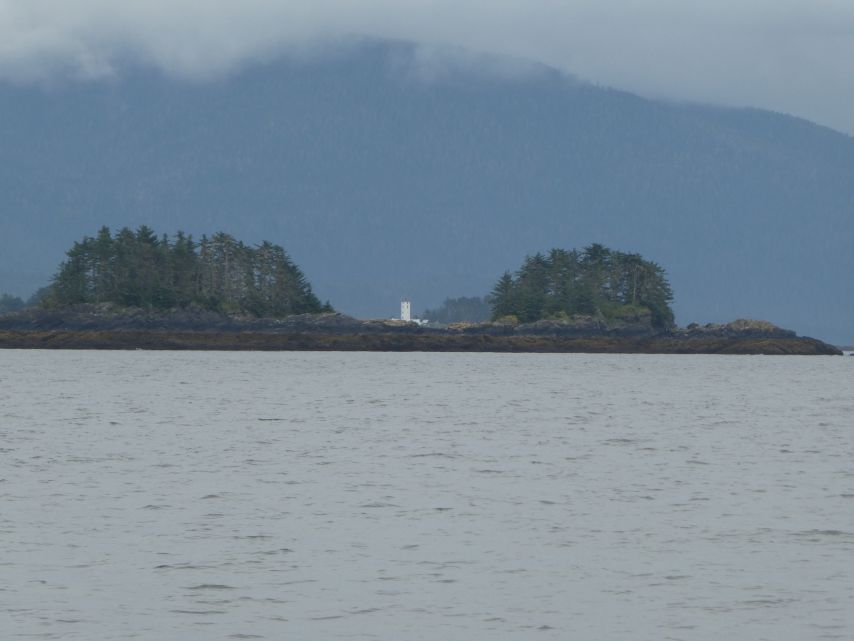
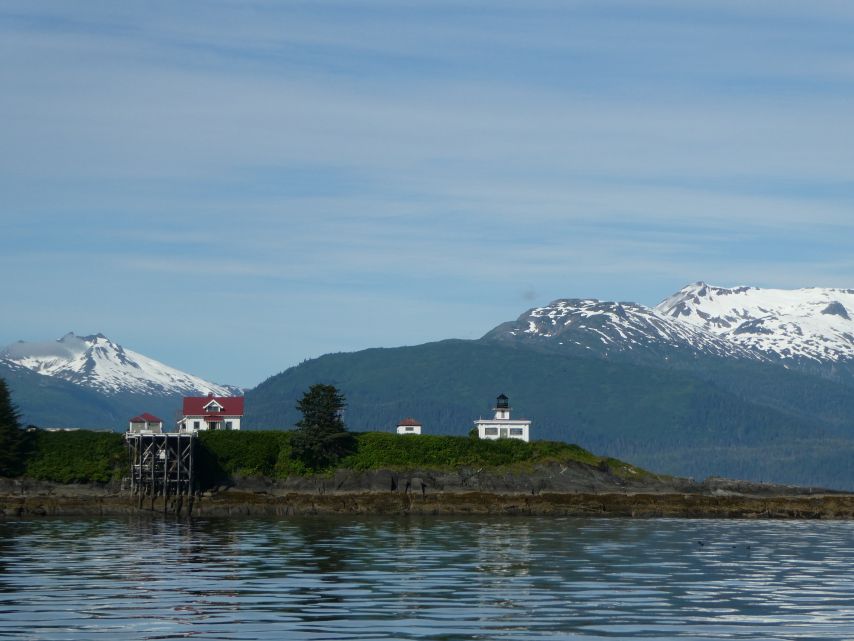
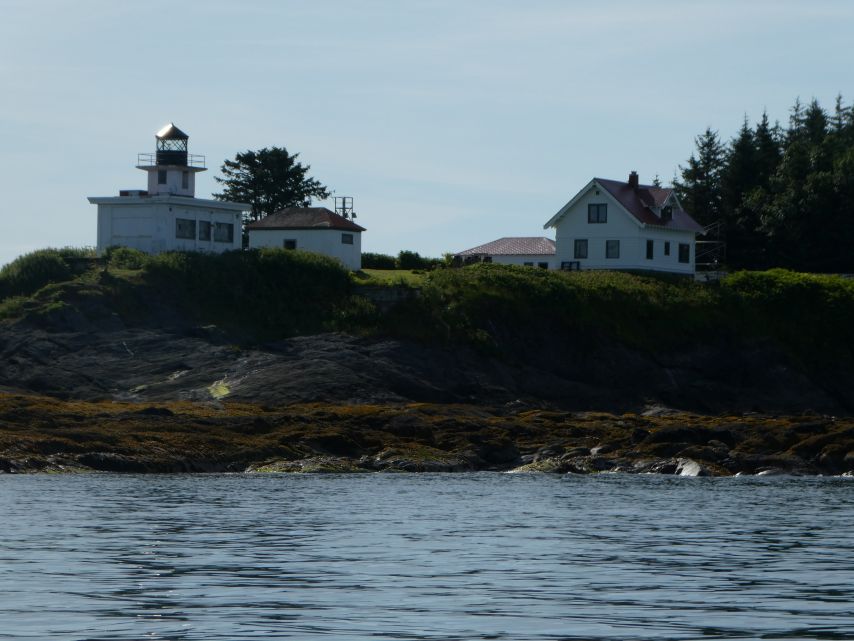
Fog Covered MountainsDiscovery Princess Princess CruisesQueen Elizabeth Cunard LineMorning MeetingThe Brother’s Island Five fingers LighthouseHans HalvorPortage BayPortage Bay
For two years I searched for bears in Southeast Alaska, but the only ones I’d managed to see were carved from wood or painted on signs—symbolic tributes to a wilderness that had remained just out of reach. To celebrate our anniversary, Rick gave me the incredible gift of a trip to Pack Creek.
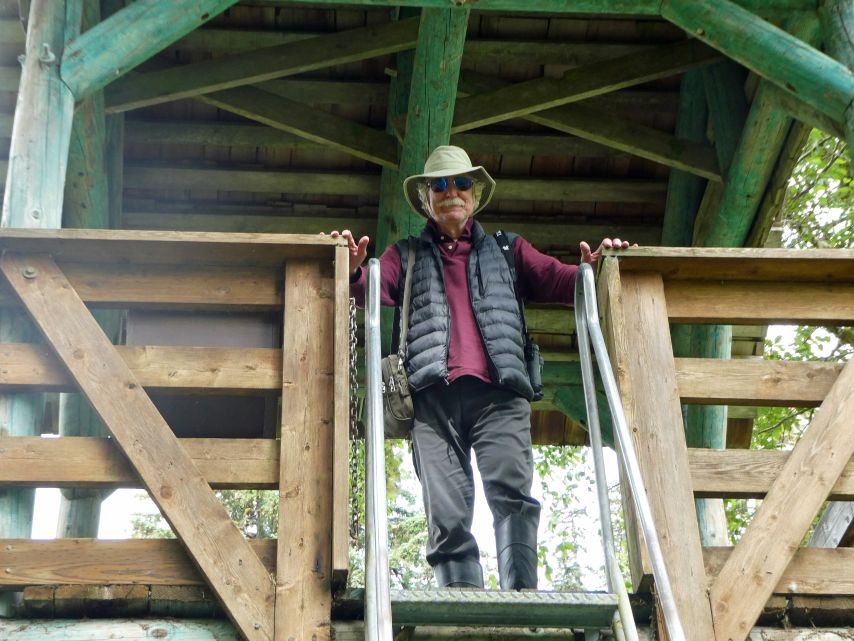
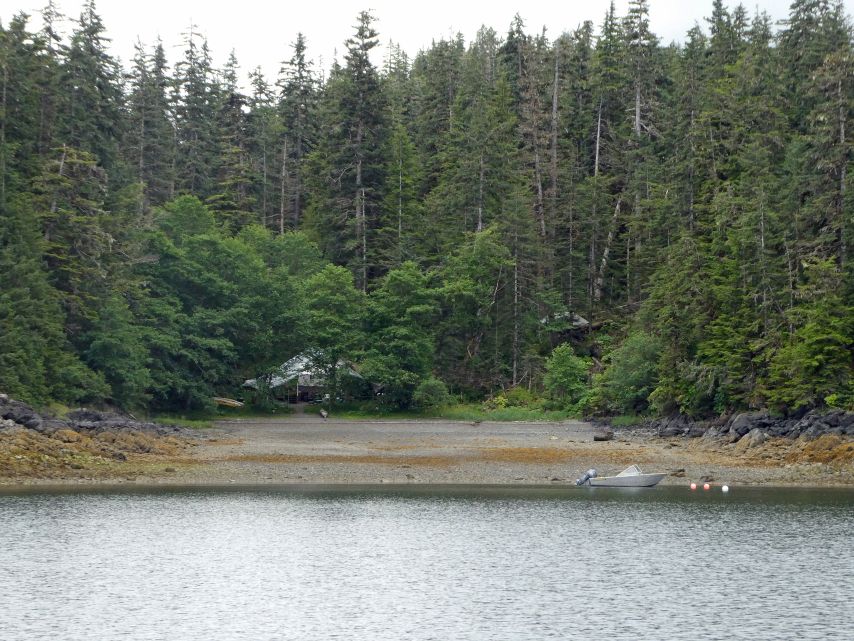
Tucked along the remote coastline of Admiralty Island, Pack Creek—formally known as the Stan Price Wildlife Sanctuary—is a haven where Alaska’s wild heart pulses in its purest form. Accessible only by boat or floatplane, this bear-viewing sanctuary is set within a landscape the Tlingit call Kootznoowoo, meaning “Fortress of the Bears”—and for good reason. With a remarkable density of brown bears drawn to the creek’s salmon-rich waters each summer, the area offers intimate glimpses of sows and cubs meandering through tall grasses, bears digging for clams, and the silent choreography of their fishing rituals. Visitors may observe from the shoreline at the Viewing Spit or climb the forested trail to an Observation Tower, each vantage point revealing its own rhythm of life—always shaped by the bears themselves.
Tuesday
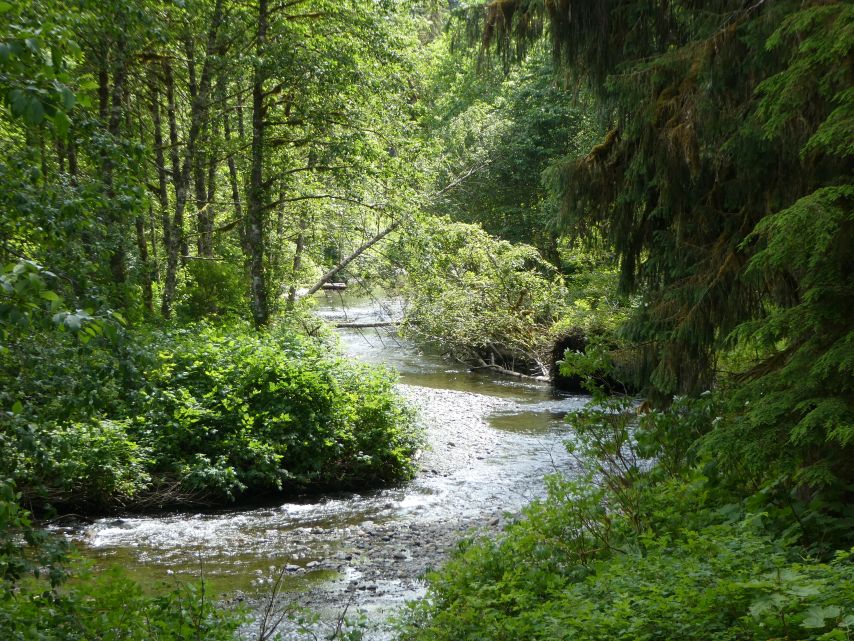
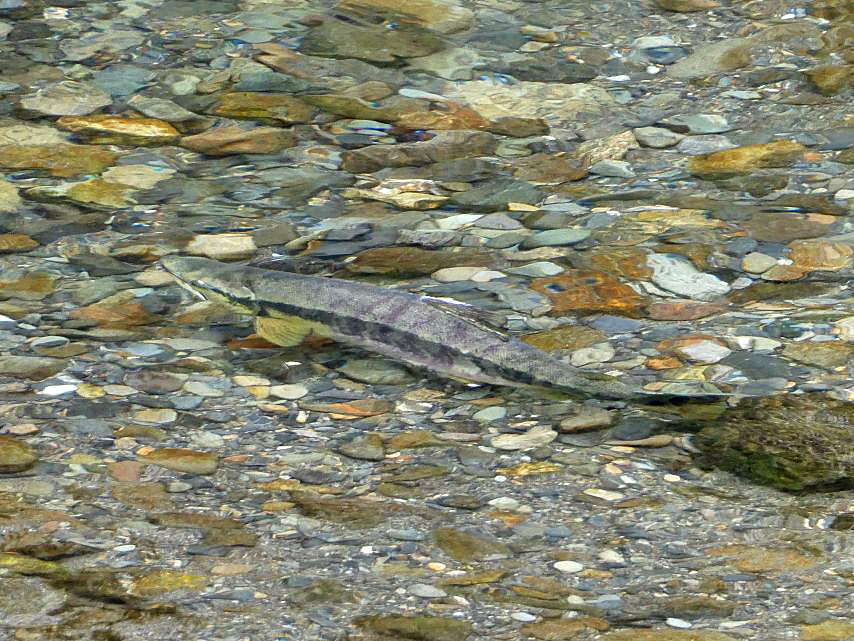
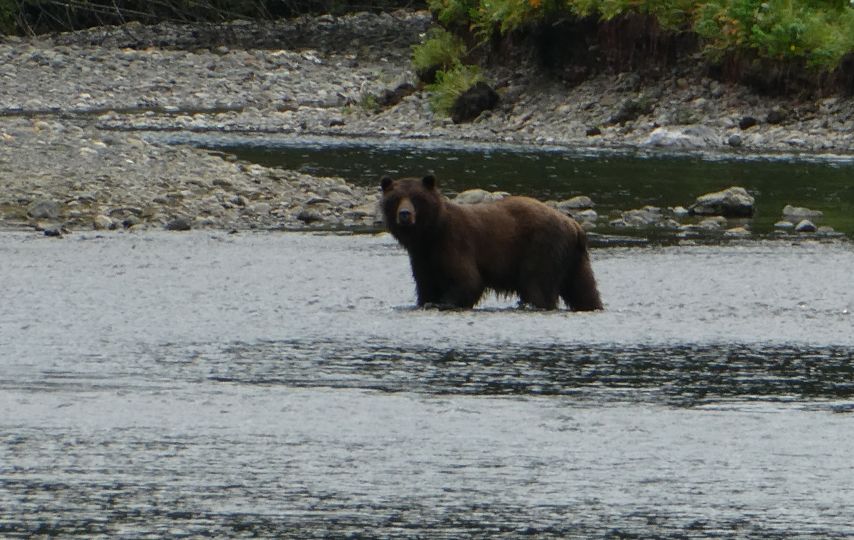
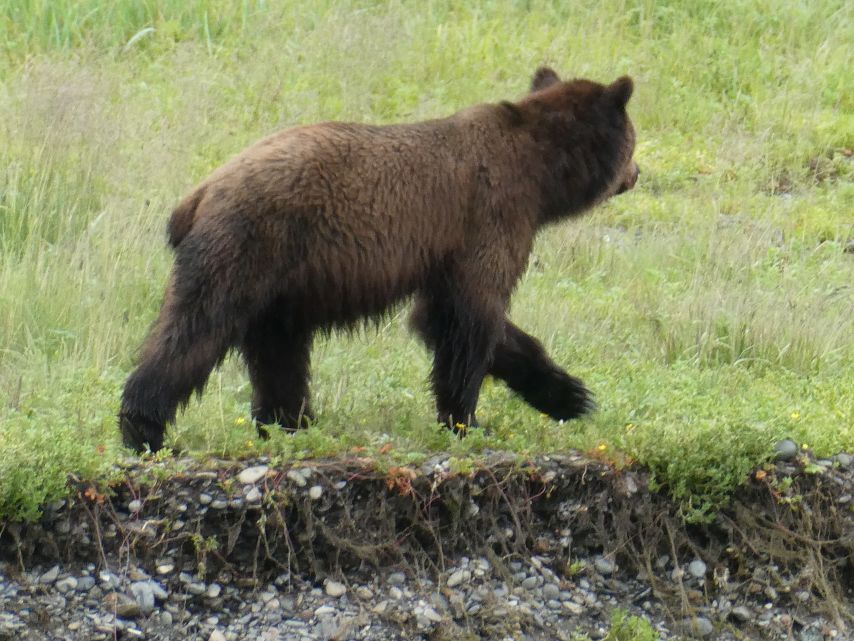
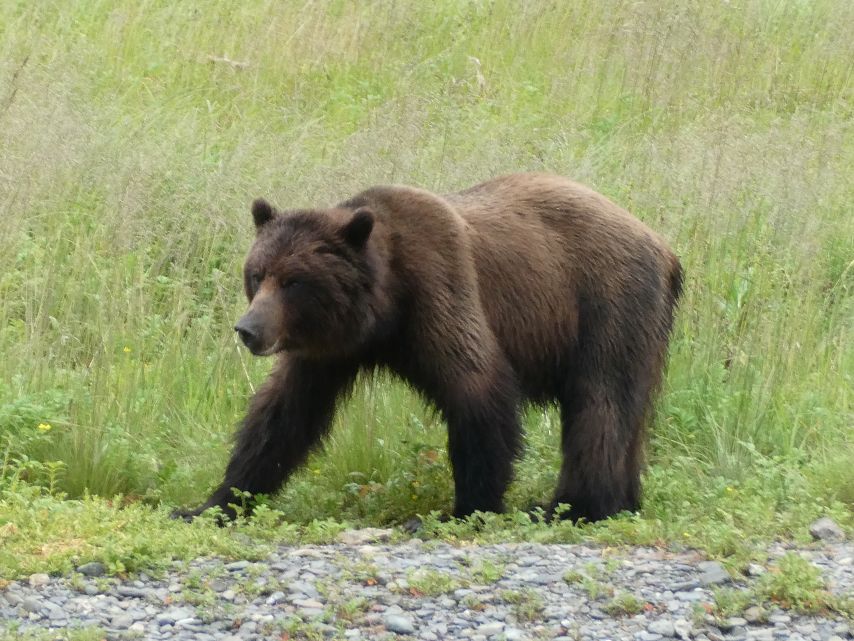
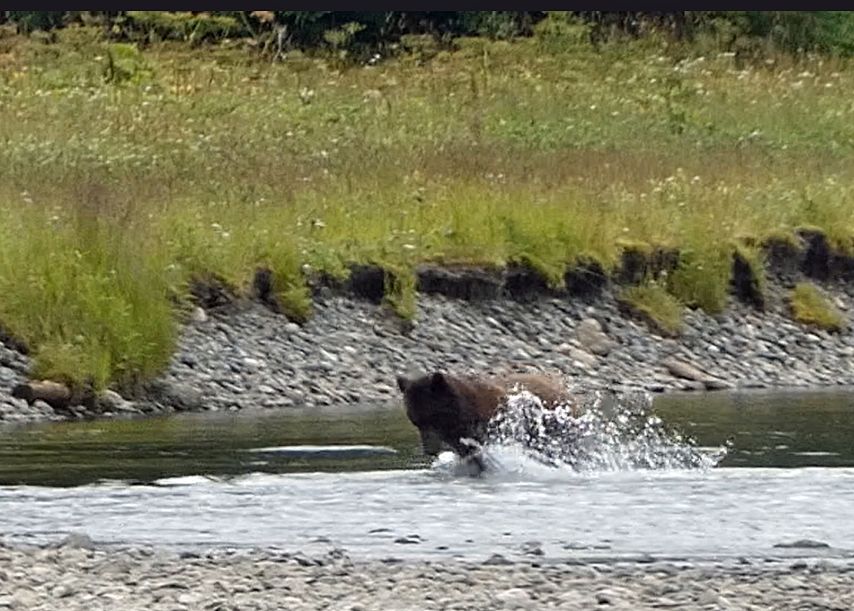
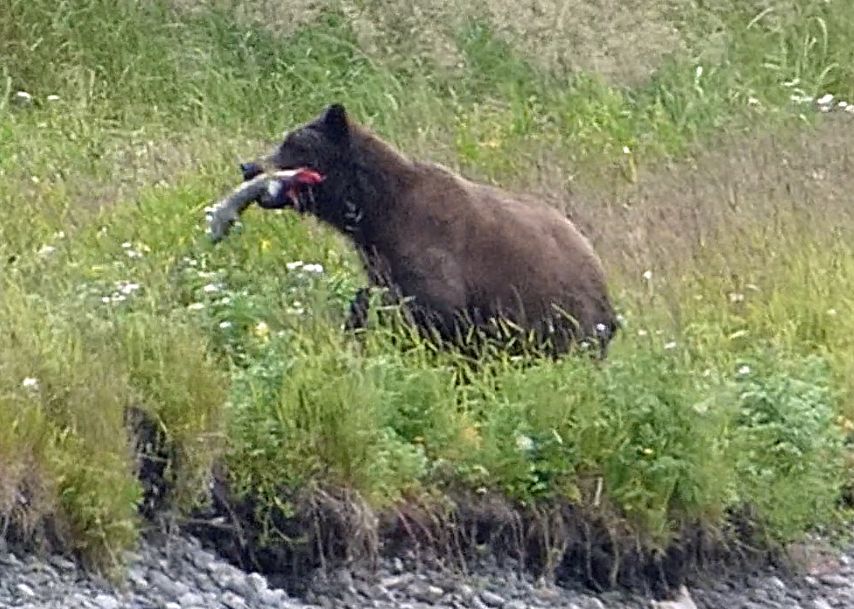
We hiked the park trail to the Observation Tower and visited the spit. From both vantage points, we watched the bears eating salmonberries, fishing for salmon, and wandering along the creek’s edge. One bear emerged from the brush so close we could hear the sound of its steps. Another splashed through the shallows with effortless grace, its eyes fixed forward in quiet concentration.
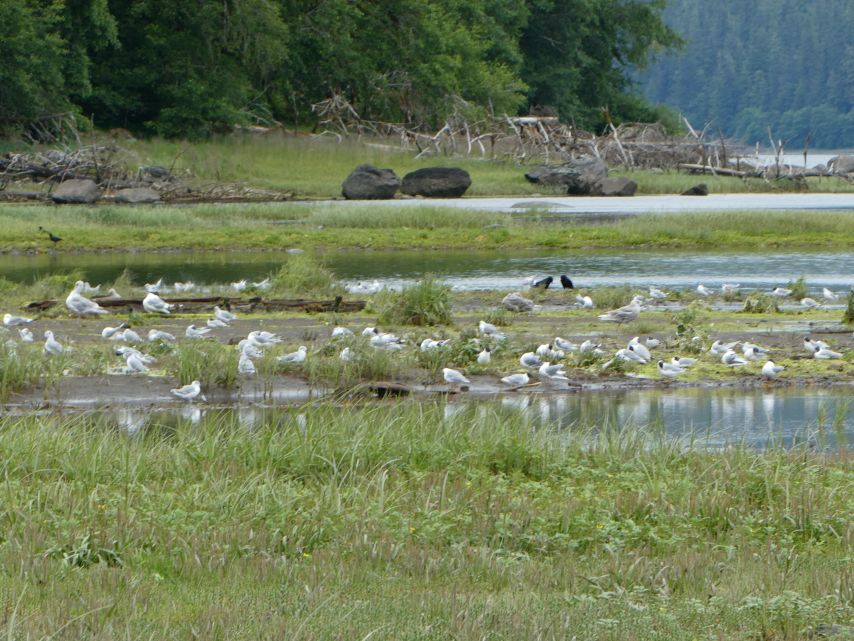
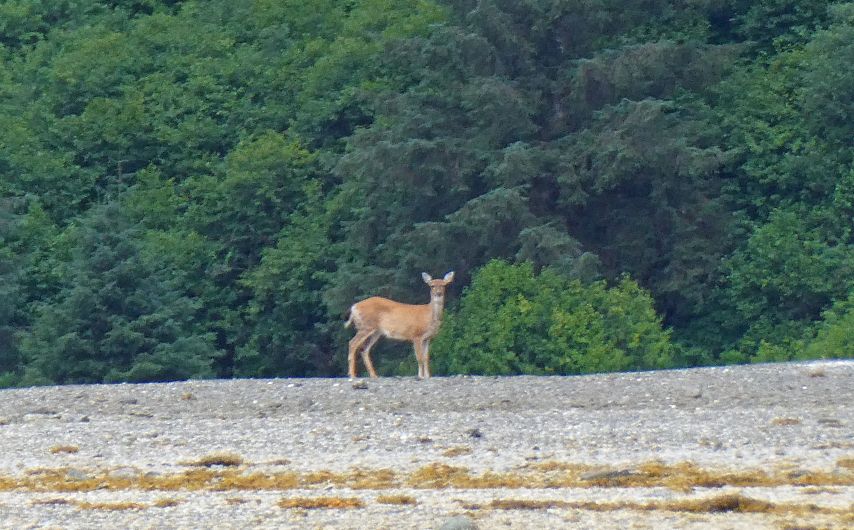
Yet bears were just the beginning. As we made our way to the park by dinghy, a humpback whale surfaced startlingly close—its massive tail rising in a graceful arc just fifty feet away, rivaling the length of our boat. Throughout the day, bald eagles soared overhead and called out from the treetops, their presence constant and commanding. At the Observation Tower, we witnessed one eagle snatch a duckling from a merganser as salmon struggled upstream below—a stark glimpse into the layered drama of life here. Later, Sitka black-tailed deer crept from the brush, harbor seals bobbed in the inlet’s quiet eddies, and a variety of birds stitched color and sound into the sanctuary’s rich tapestry.
Pack Creek remains untouched by roads or modern structures. Its wildness is preserved by permit-only access and strict seasonal limits, ensuring space for stillness, reflection, and reverence. It’s not just a place to visit—it’s a place to enter gently, to listen deeply, and to become part of something timeless.
Getting Ready for the Day
Morning SkyLeaving Paradigm Lost at Anchor Dinghy into the Park
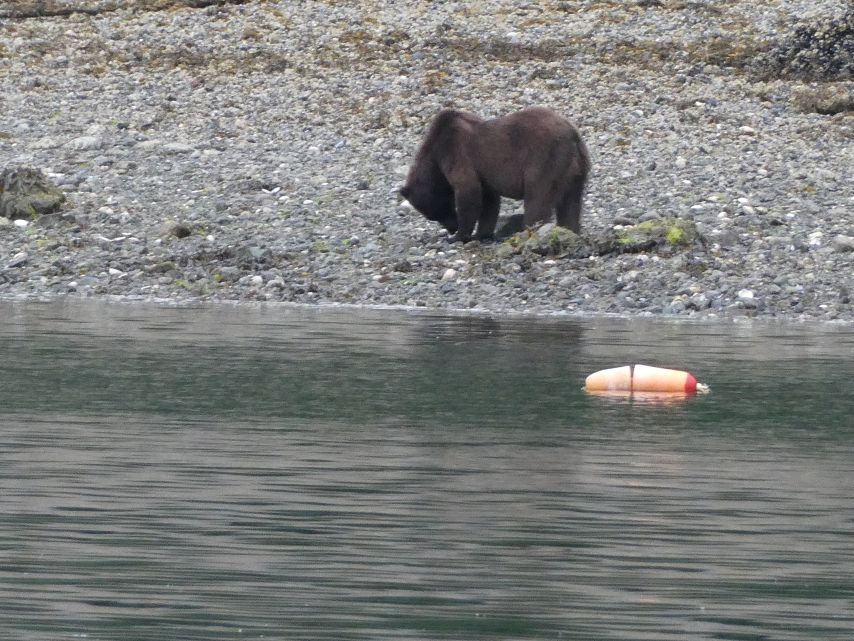
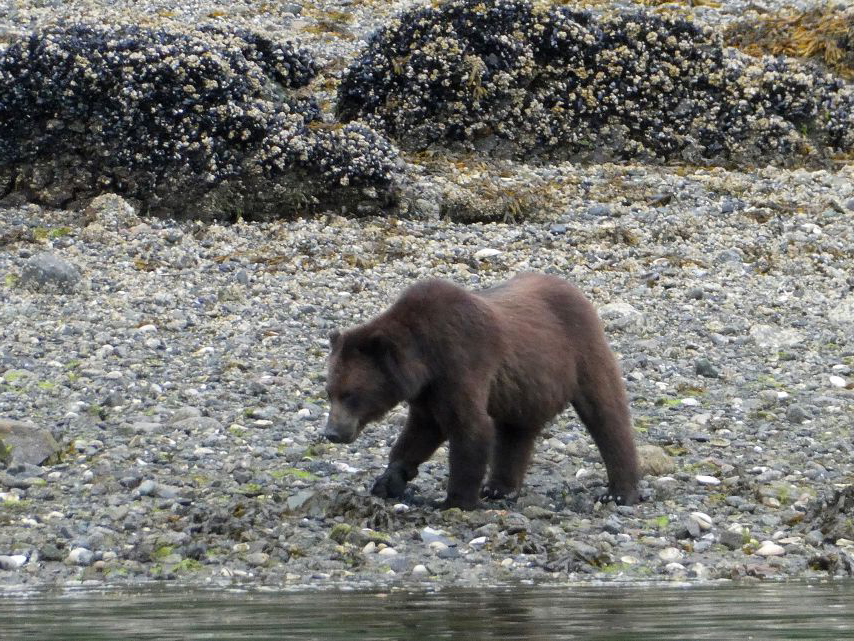
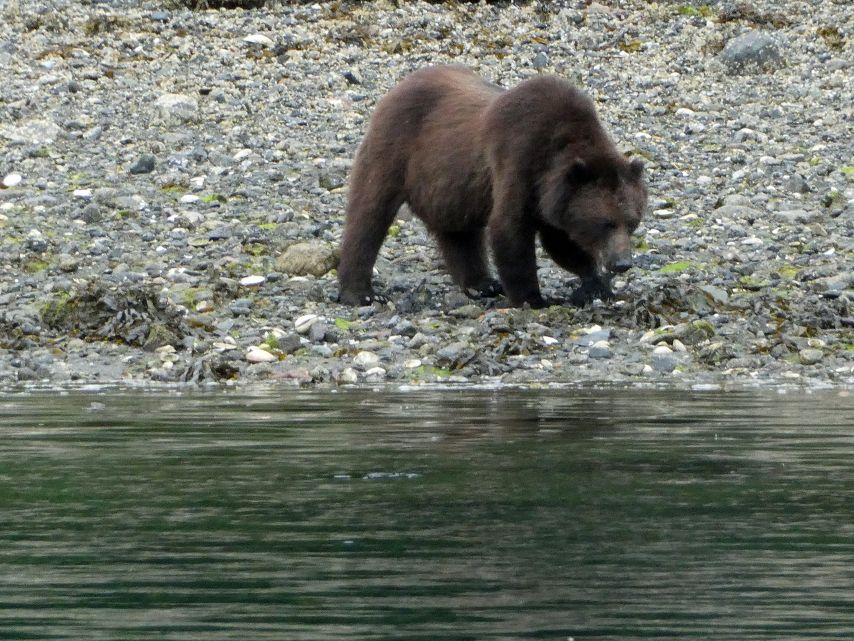
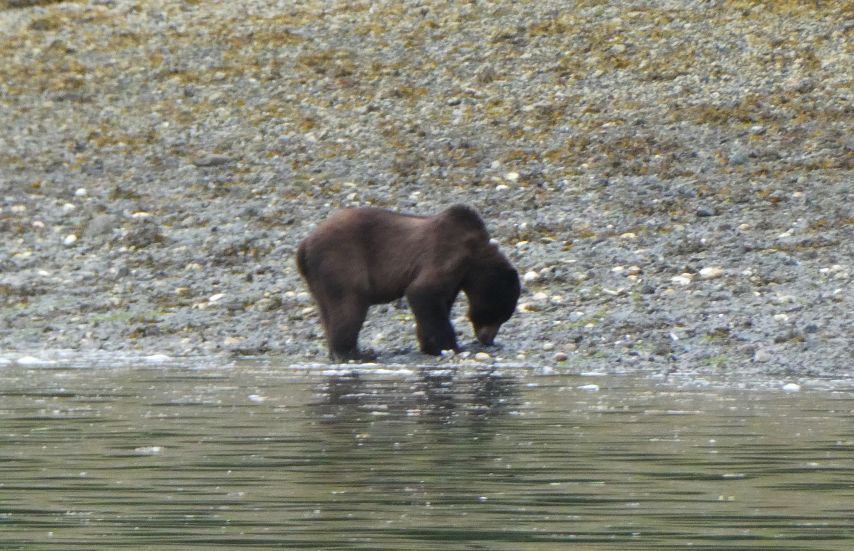
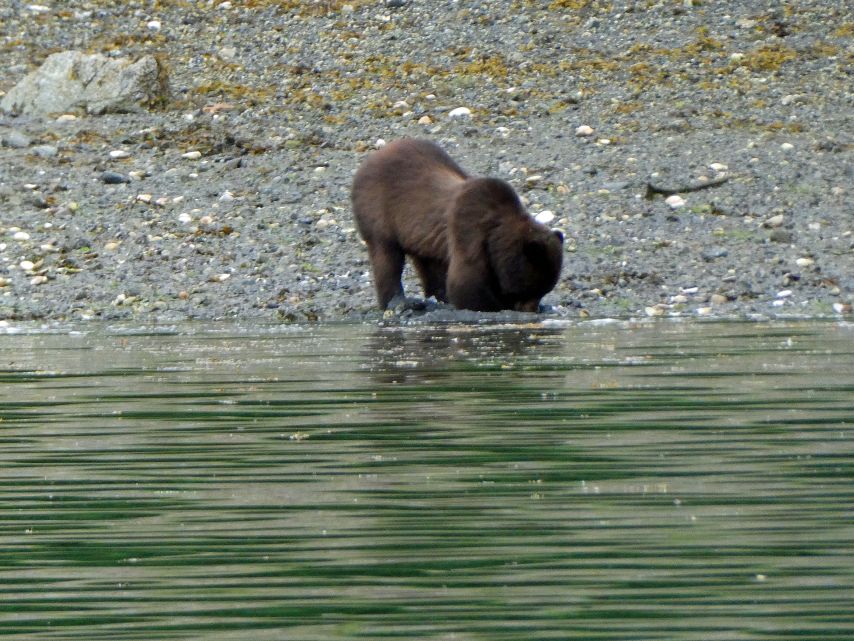
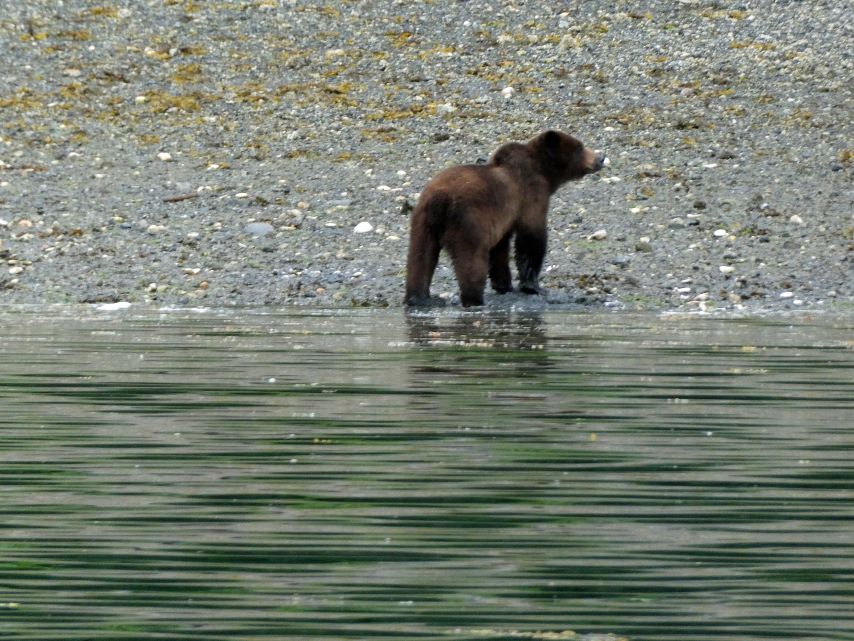
After weighing anchor Wednesday morning, we cruised along the coastline, hoping to spot more bears—and perhaps another whale slipping silently through the water. The bears did not disappoint. We watched several grizzlies foraging for clams, their powerful paws sweeping the shallows like practiced tools. Sitka black-tailed deer appeared at the forest’s edge, harbor seals bobbed in the inlet’s glassy folds, and jellyfish drifted below like slow-glowing lanterns.
Along the shore, birds gathered in a hush, the usual chatter replaced by a watchful stillness. Then, as if summoned by the silence, a bald eagle descended among them—startling and majestic. The birds parted gently as it landed, the moment briefly suspended in quiet awe.
The entire day unfolded like a gift—wild, intimate, and unforgettable. What a spectacular way to mark our anniversary.
Coastline Drifting and Clam-Digging Bears
Ranger’s CottageSitka black-tailed deerSitka black-tailed deerBirds Gathering Eagle LandingMole Bay End of Day
Being on the water and observing nature in Southeast Alaska is always inspiring, but today felt truly extraordinary. The seas were calm, the colors ever-changing, and the abundance of wildlife was nothing short of magical.
As we made our way south through Stephens Passage, a distant pod of humpback whales crossed our path—graceful silhouettes against the shimmering water. Then, turning into Seymour Canal, one of these gentle giants breached just 150 feet from our boat, sending a spray of saltwater skyward and our spirits soaring.
A dozen Pacific white-sided dolphins joined us next, weaving in and out with joyful energy, dancing alongside the hull for nearly 20 minutes. Their playful presence brought laughter and delight.
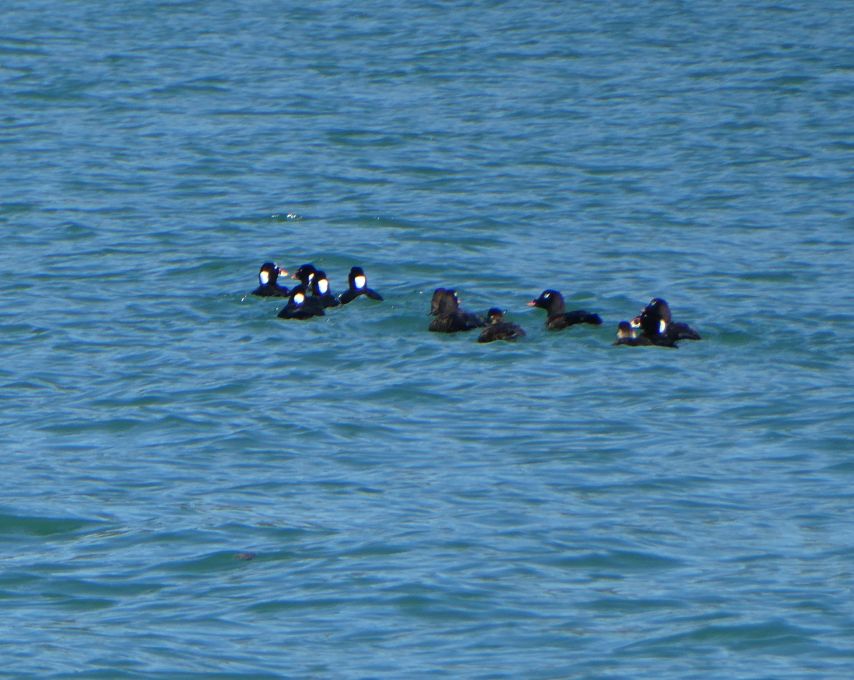
Approaching our anchorage, we were greeted by Surf Scoters, their bold plumage and quirky bills adding yet another layer to the day’s vibrant tapestry.
Days like this remind us that nature doesn’t just surround us, it reaches out and welcomes us in.
Taku Harbor has long been more than a protected pocket in Stephens Passage—it’s been a home, a hub, and a harbor of human spirit. First settled by the Tlingit T’aaku Kwáan, whose seasonal camps and village sites shaped the shoreline, it later welcomed fur traders and salmon packers. The Hudson’s Bay Company briefly stamped its presence here with Fort Durham in 1840—a trading post fortified against time but abandoned just three years later. In the early 1900s, a bustling salmon cannery and cold-storage plant rose from its rocky edge, drawing hundreds to its docks until operations ceased in 1947. The bones of that industrious past still hold fast in decaying pilings, aging walls, and the quiet charisma of Tiger Olson’s solitary cabin.
Today, Taku Harbor hums again—this time with comradery. Fishing vessels raft up at the public dock, tied stern-to-stern, their crews exchanging intel on the chum run or swapping oil filters and smoked coho. Cruisers tuck into its calm belly at day’s end, conversations spark over tide charts and bear sightings, and stories ripple out from boat to boat like wake on the water.
Whether arriving for respite or rendezvous, mariners find Taku Harbor to be part sanctuary, part gathering place, a harbor that holds history in its shorelines and fresh tales in every anchoring.
After soaking in the morning’s whale sightings—gentle breaches in the distance, misty exhales catching sunlight like smoky signals—we continued our passage north, eyes alert for more signs of life along the horizon we were rewarded with several whales in the Lynn Canal. The day was unfolding beautifully, but by afternoon, the wind began whispering its own intentions. Our original plan had been to overnight in Funter Bay, but the breeze had other ideas. We adjusted our heading and set course for Auke Bay instead.
Just before arriving, we passed another pod of humpbacks—this time accompanied by a constellation of whale tour boats, twelve in all—drifting around the giants. We kept our distance and continued toward Auke Bay, which was bustling, with no slips to be had. Then luck found us once again: Jo and Ron aboard MV Interim welcomed us with a side-tie. What a joy to reconnect—it seems the sea is always orchestrating its own charming reunions.
July 17, 2025 – Thursday
Aside from the mooring hiccups, it had been a near-perfect day. We cruised lazily toward Juneau, savoring each gentle swell and distant shore. But alas, the mooring drama wasn’t quite finished with us.
We hoped for a couple of days with shore power and a washer-dryer reprieve, but Juneau’s harbors were packed. We were sent to the marina on Douglas Island—a partial win with power but no laundry. Still doable, we thought… until the boat ahead of us slid brazenly into our assigned slip and refused to budge.
After a call to the harbor office, we were given a new assignment at Aurora Harbor. Hooray! Power and laundry access restored. Or so we thought. As we prepared to pull in, the harbor master called again: “Someone just took that slip. You’ll need to head to Harris Harbor. Good luck.”
And so we spun ParadigmLost around once more, heading to yet another port with crossed fingers. At Harris Harbor, we tied up at the transient docks, hopeful the chaos was finally over. Then came a commercial fishing boat, sidling alongside with a hopeful eye on our spot. Tonight, though, it was his turn to side-tie—an echo of our own journey, marked by chance, charm, and a fair bit of dockside roulette.
Point RetreatGlacierAuke BaySide-tied with InterimSunriseLeaving the Auke MarinaCatalyst 1932-University of WA First Research Vessel
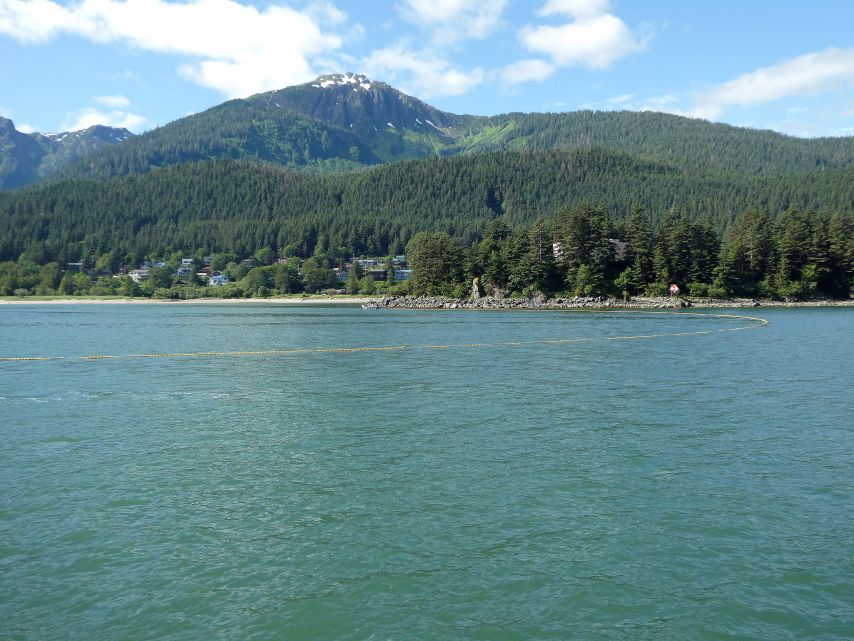
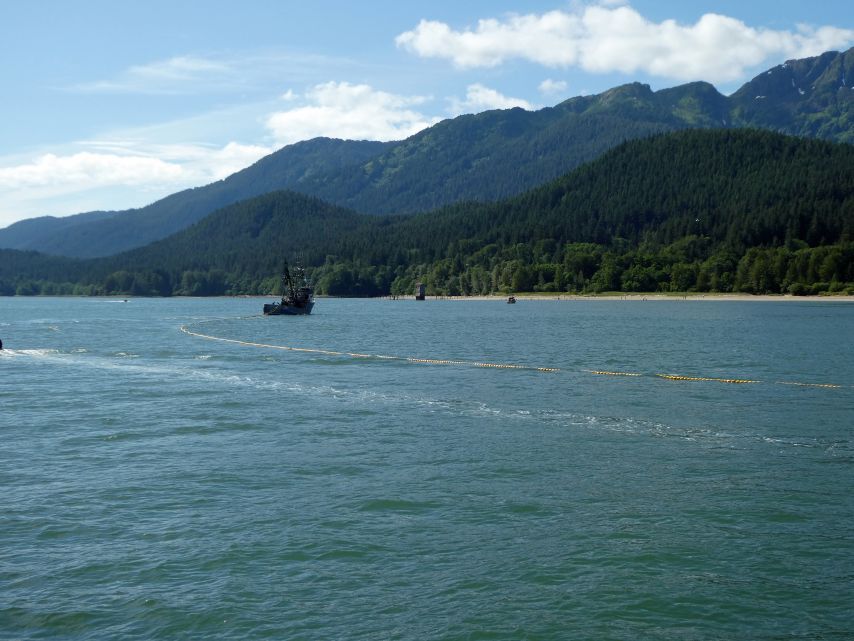
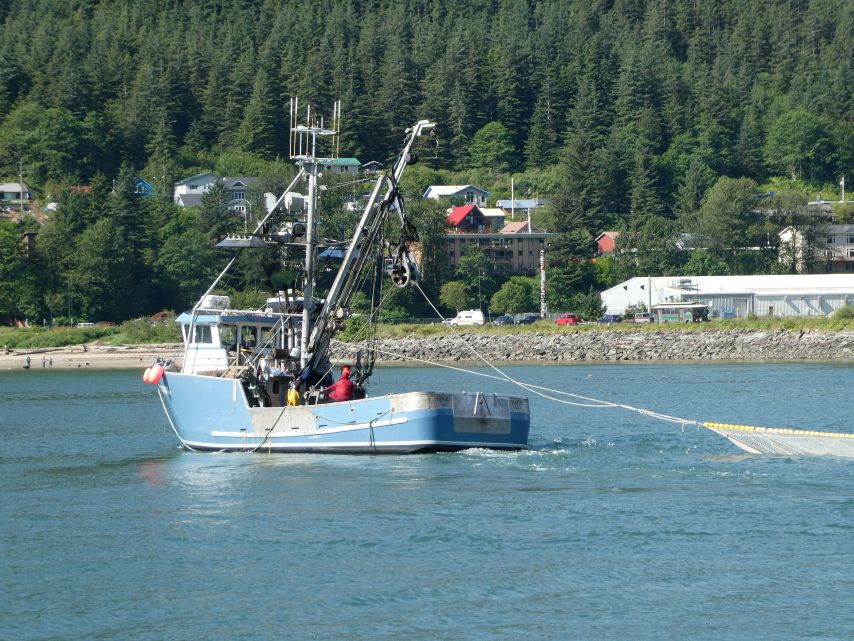
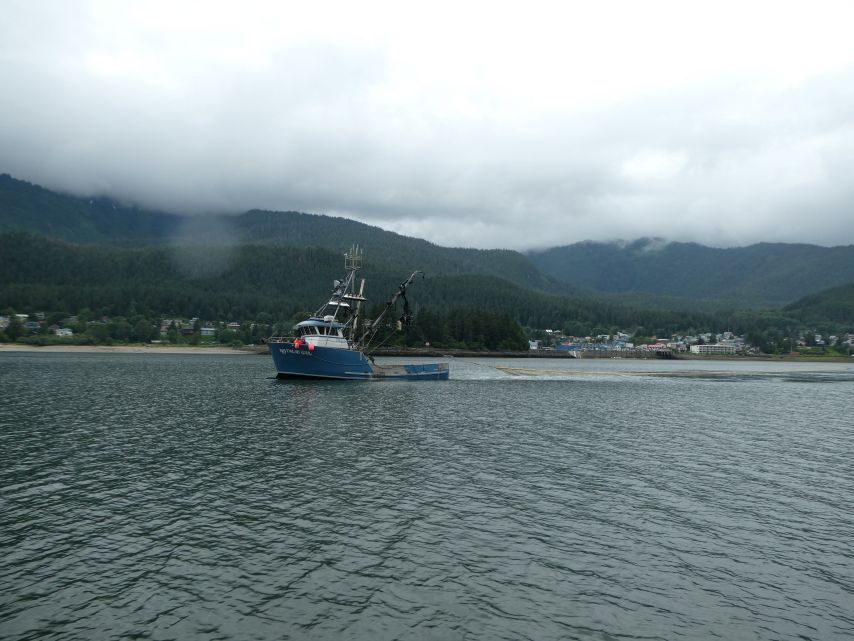
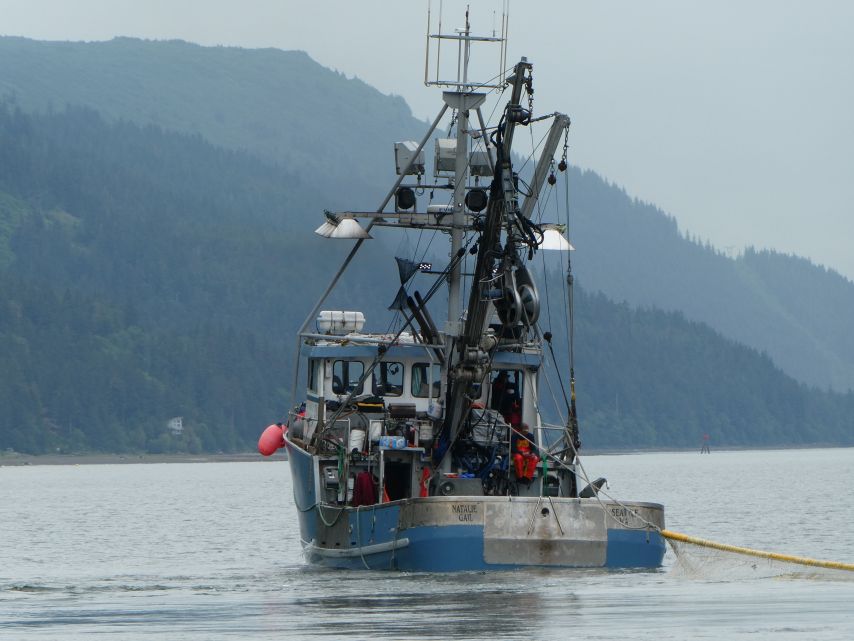
Purse seine fishing in Alaska is a method used to catch salmon, utilizing a large net that forms a “purse” around a school of fish. A purse seine net is rectangular, with a buoyant top (cork line) and a weighted bottom (lead line). A larger vessel tows one end of the net, while a smaller skiff tows the other, creating the “purse”. The purse line pulls tight like a drawstring, cinching the sea’s bounty into a trembling pouch.
Natalie Gail Fishing VesselSkiffClosing the Circle
July 18 & 19, 2025 – Friday &Saturday
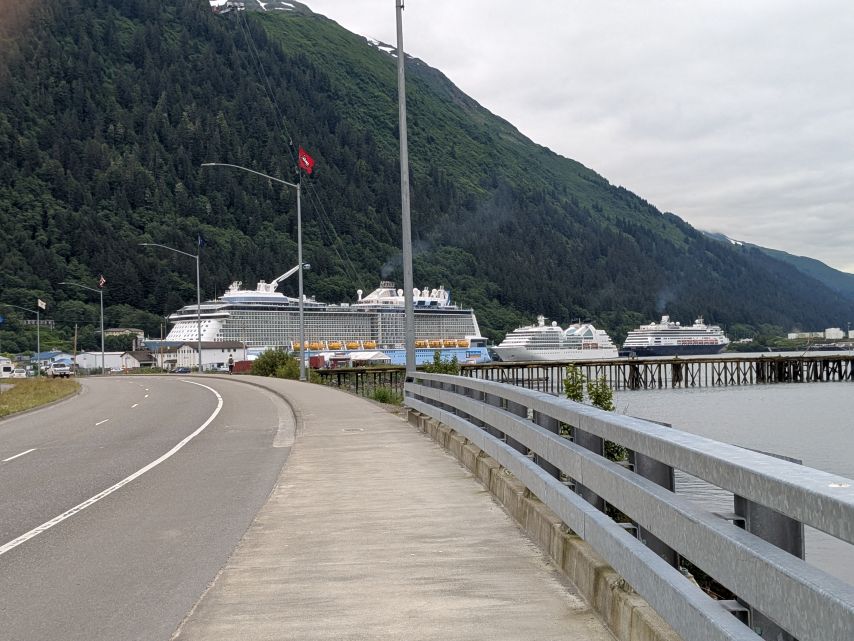
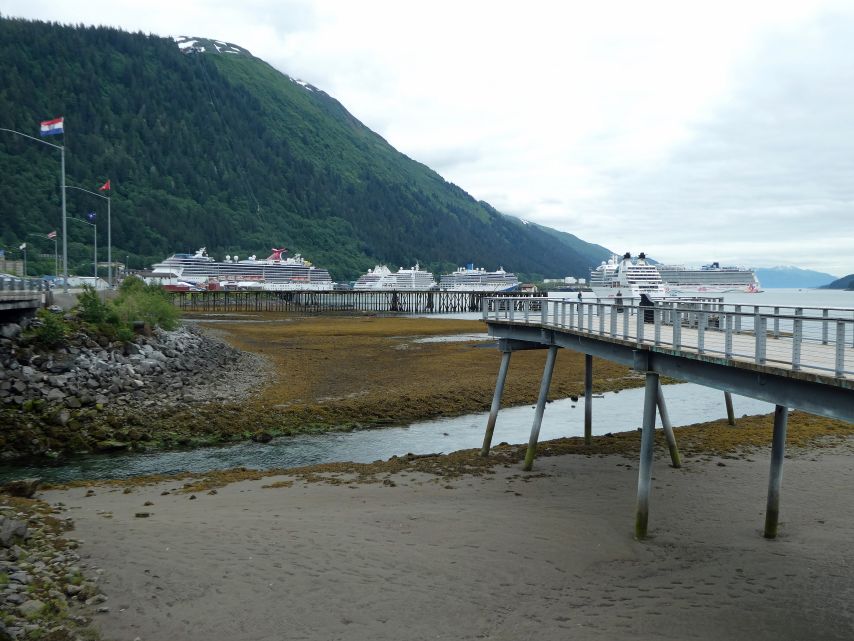
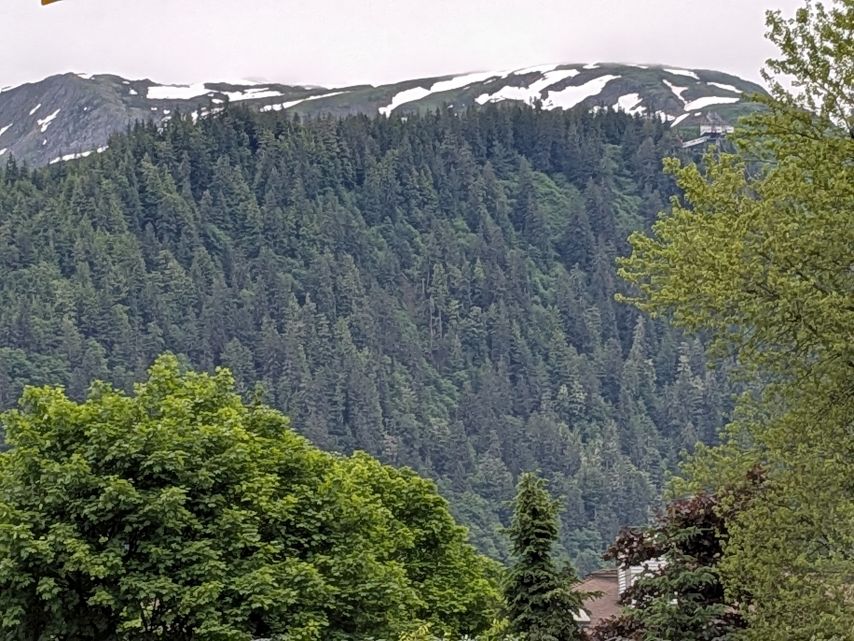
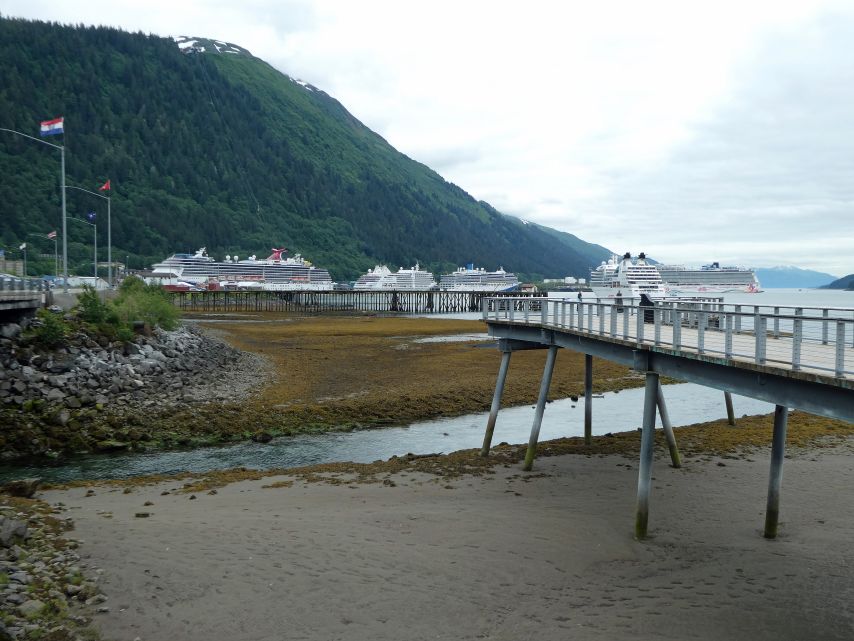
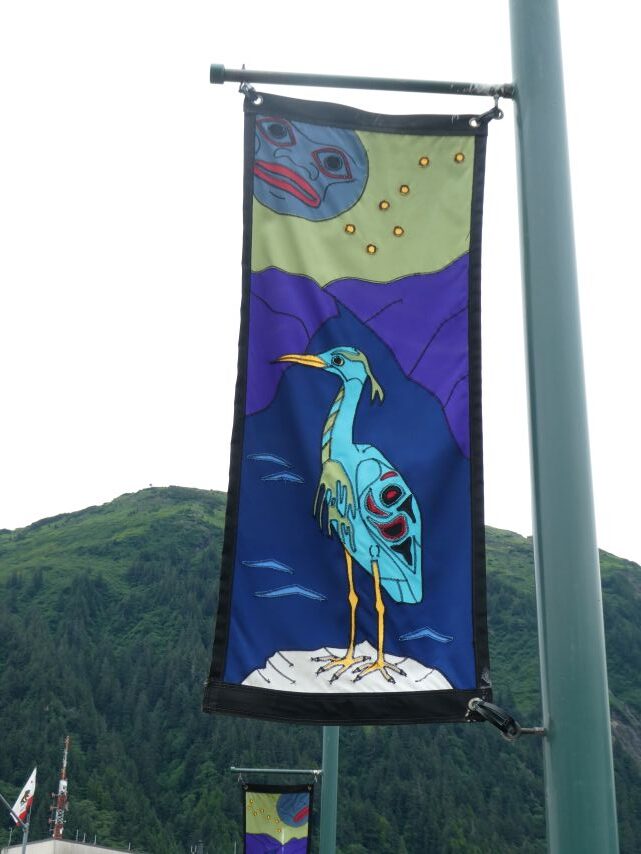
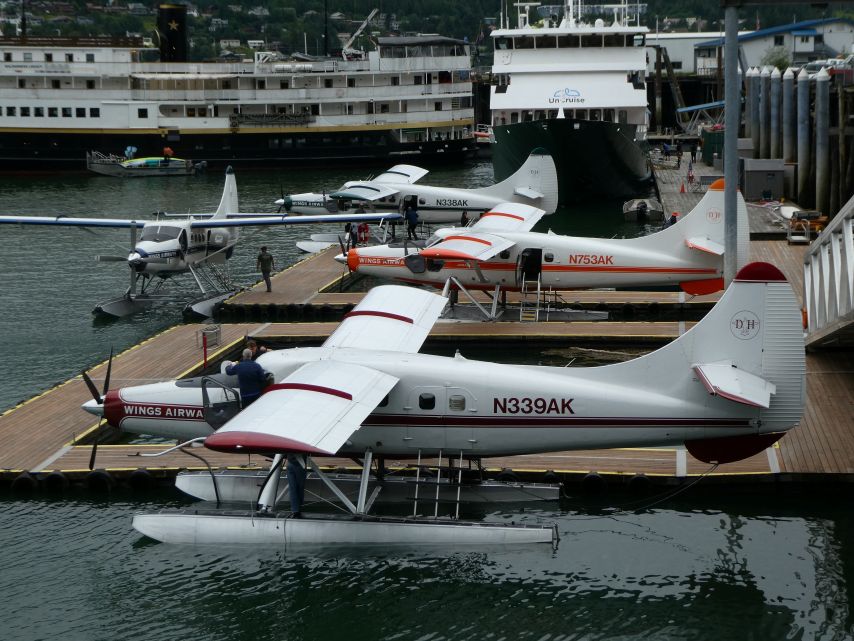
Wandering Through Juneau: A Tapestry of Sights and Stories
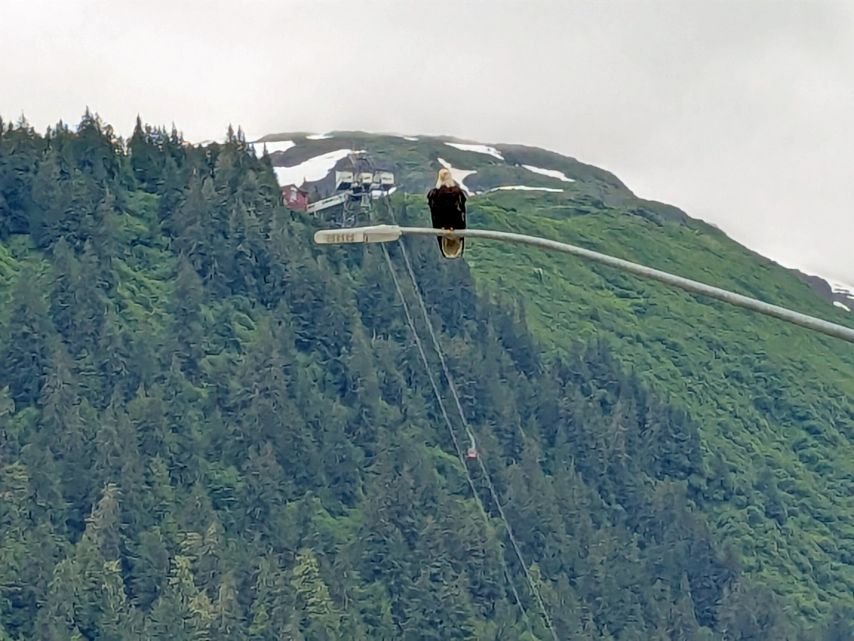
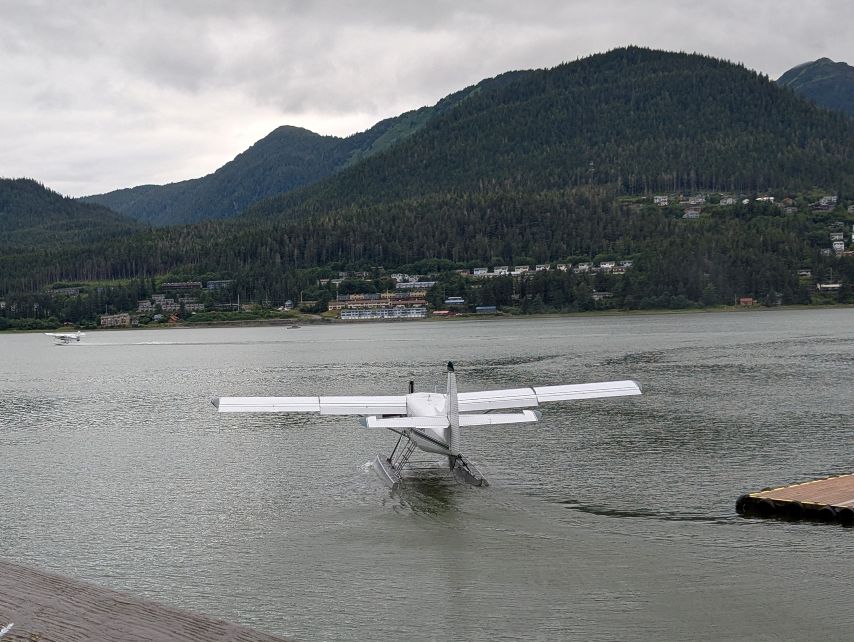
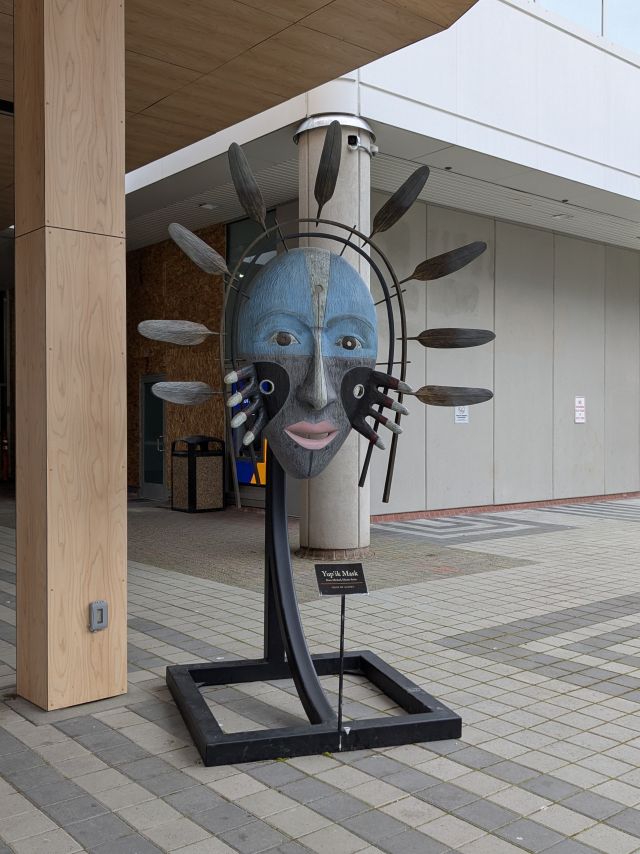
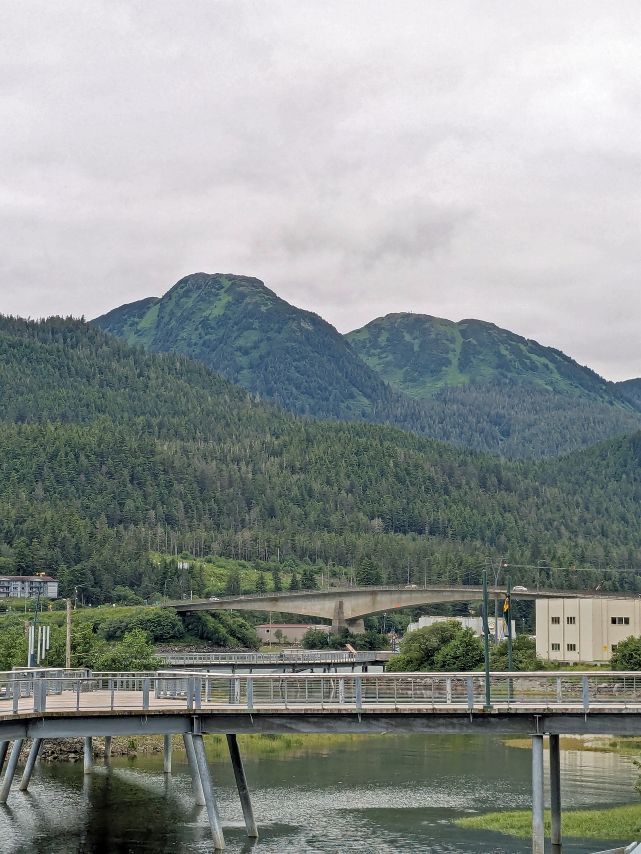
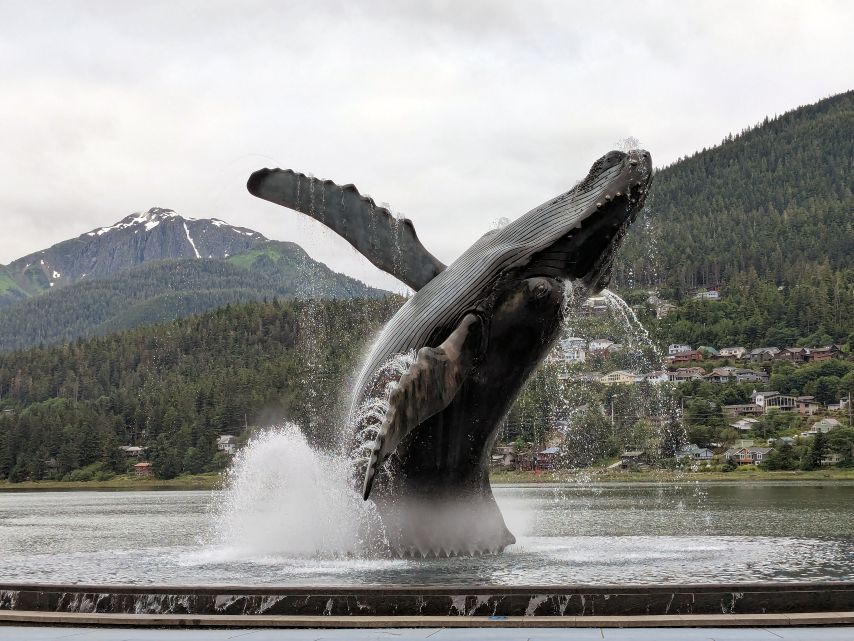
Tram on the MountainSaturday-Four Cruise Ships in TownSunday-Five Cruise Ships in TownGetting Ready for Take-offNative MaskJuneau-Douglas BridgeTahku: The WhaleGastineau Channel,Sunday-Five Cruise Ships in TownSeaplane Dock
As we departed the quiet charm of Hoonah, we veered left at Icy Strait Point, drawn by whispers of whales and the promise of magic in the waters. Word had it that the stretch between Point Adolphus and Pleasant Island was a favored haunt of humpbacks, and the sea did not disappoint. About four miles west of Point Adolphus, we stumbled upon a pod in the midst of a mesmerizing bubble-net feeding ritual — a coordinated ballet of giants beneath the waves.
Though the photos were taken from a respectful distance aboard a boat that pitched and rolled with the rhythm of the strait, I hope they convey the wonder of the moment. We simply drifted, letting the engine idle and our hearts swell, as nature staged an hour-long performance that rivaled any theater.
When we finally turned away, the awe lingered. The raw beauty of this place — the deep blues, the misty silhouettes of distant islands, the sheer presence of these magnificent creatures — etched itself into memory. It was one of those rare moments when the world feels vast and intimate all at once.
Today brought another stretch of sunshine, a rare gift in this part of the world—and one we didn’t take for granted. We felt a buzz of anticipation as we ventured farther west through Southeast Alaska than we had yet traveled. The landscape seemed to rise up in celebration with us: rugged mountain ridges cloaked in deep green spruce and cedar, their sharp peaks softened by the haze of warmth. Along the shoreline, the trees stood tall and thick, brushing the sky as if reaching for the light. A single humpback surfaced with quiet grace, sending ripples across the still water, while bald eagles traced wide arcs overhead, watching as we passed.
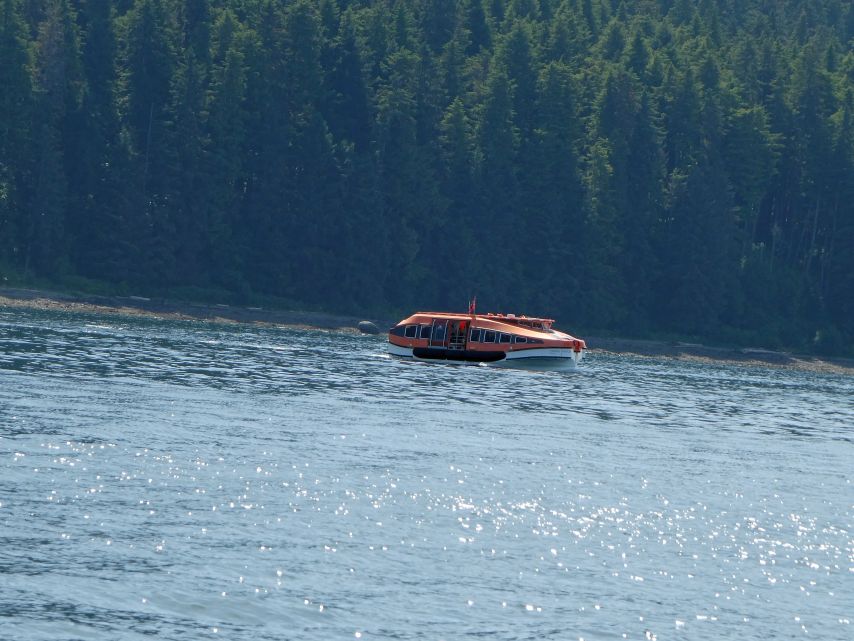
Approaching Port Frederick, three cruise ships came into view—two docked at Icy Strait Point, and one anchored offshore, transferring passengers back and forth in a steady shuffle. The size and bustle were striking against the quiet beauty of the channel. But as we rounded the point, another sight surprised us even more: a broad, sandy beach alive with visitors, toes in the tide, laughter on the breeze. In a region defined by rocky shorelines and mist-wrapped inlets, the playful scene felt almost surreal—like stumbling upon a hidden slice of summer.
Scenes from Stephens Passage, Lynn Canal, and Icy Strait
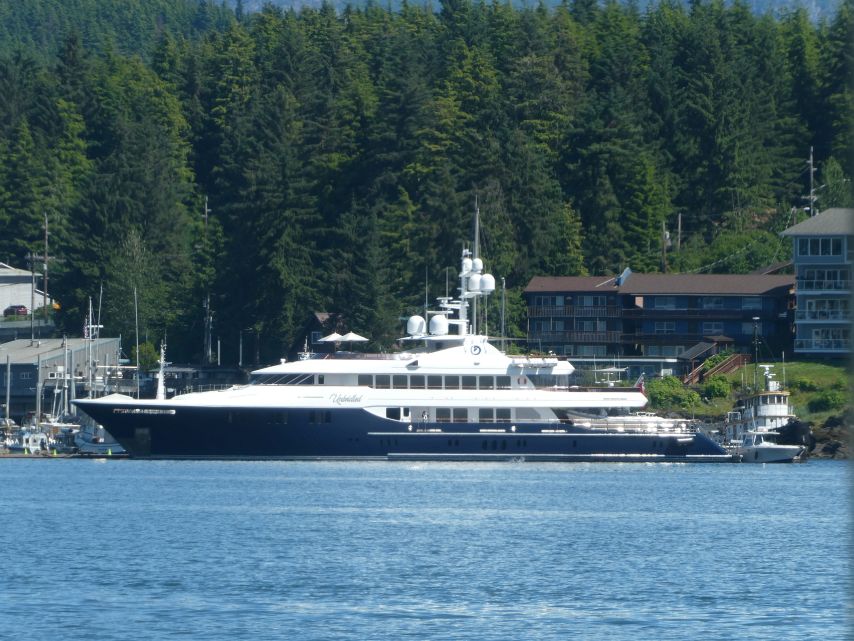
Leaving the MarinaArchimedes and UnbridledAmerican EagleLazy Day FishingPoint Retreat LighthouseViking Venus-Seven Seas Explorer-Radiance of the SeaRadiance of the Sea Ferry
July 15 -Tuesday
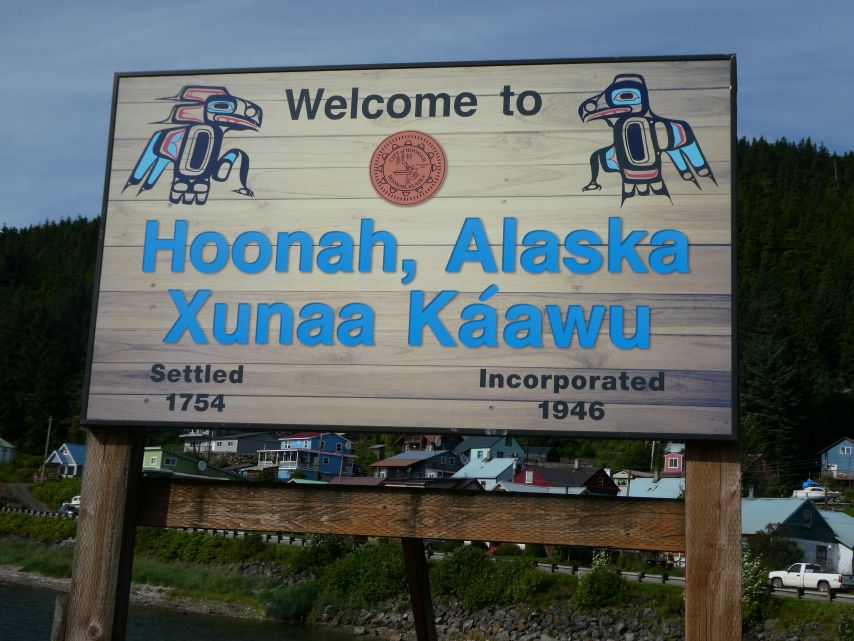
Nestled on the rugged shores of Chichagof Island, Hoonah, Alaska is a vibrant coastal town steeped in Tlingit heritage and framed by the wild beauty of the Tongass National Forest. With a population of just under 1,000, Hoonah stands as the largest Tlingit community in the state, offering a rare glimpse into Indigenous traditions that continue to thrive. Small but mighty, the people of this community have worked together to build a growing economy rooted in resilience and cultural pride.
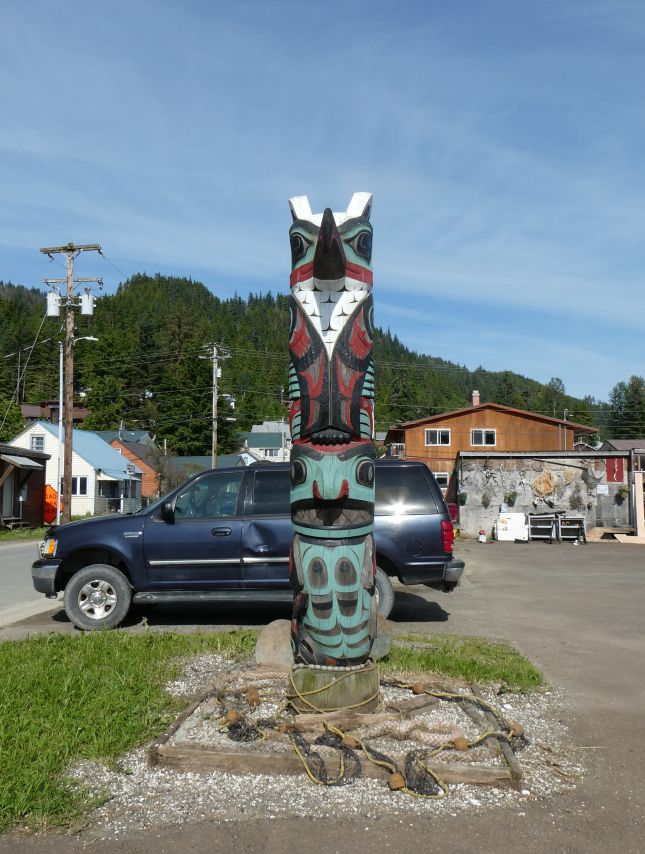
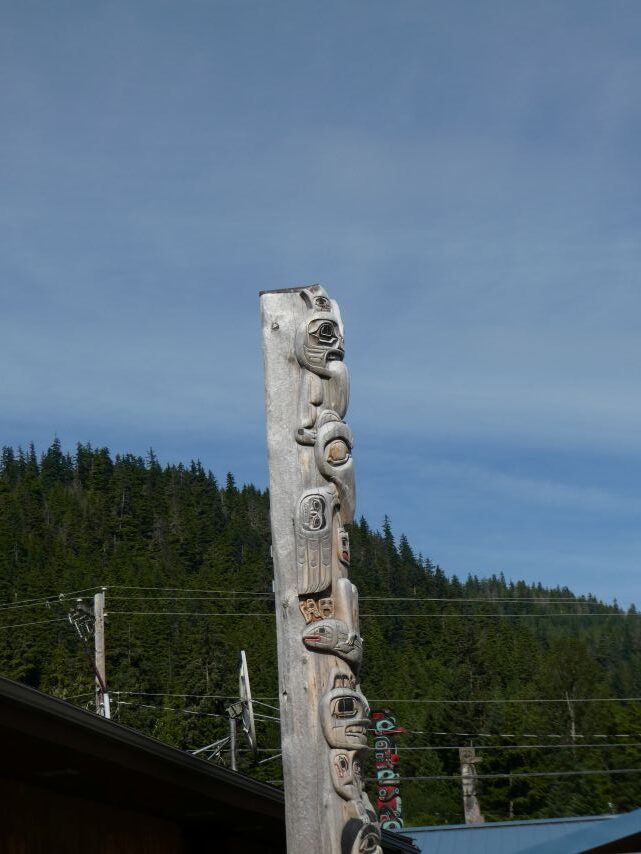
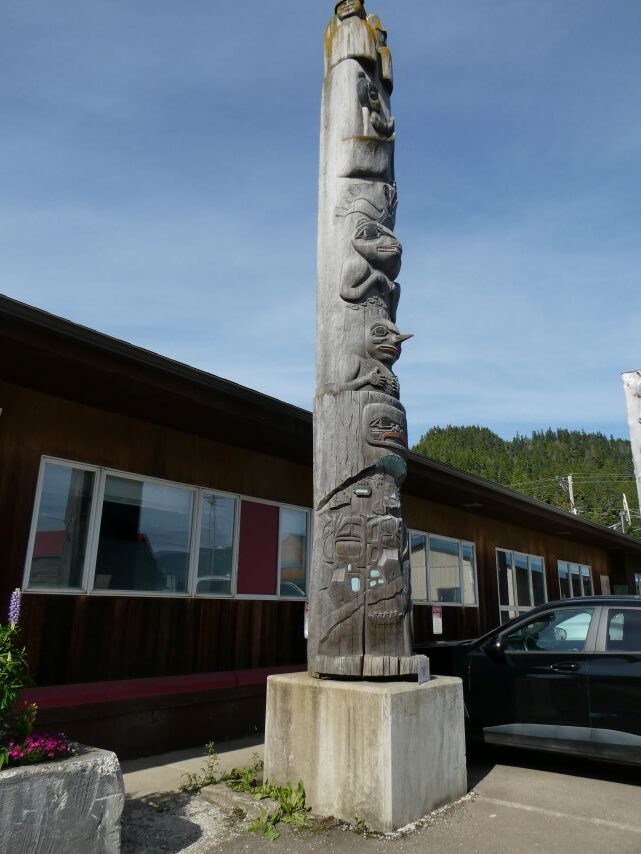
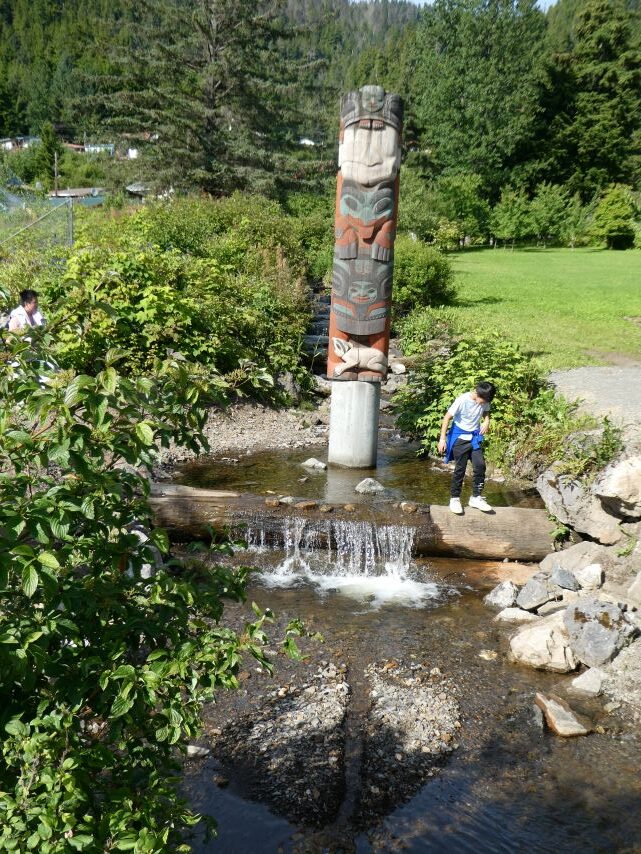
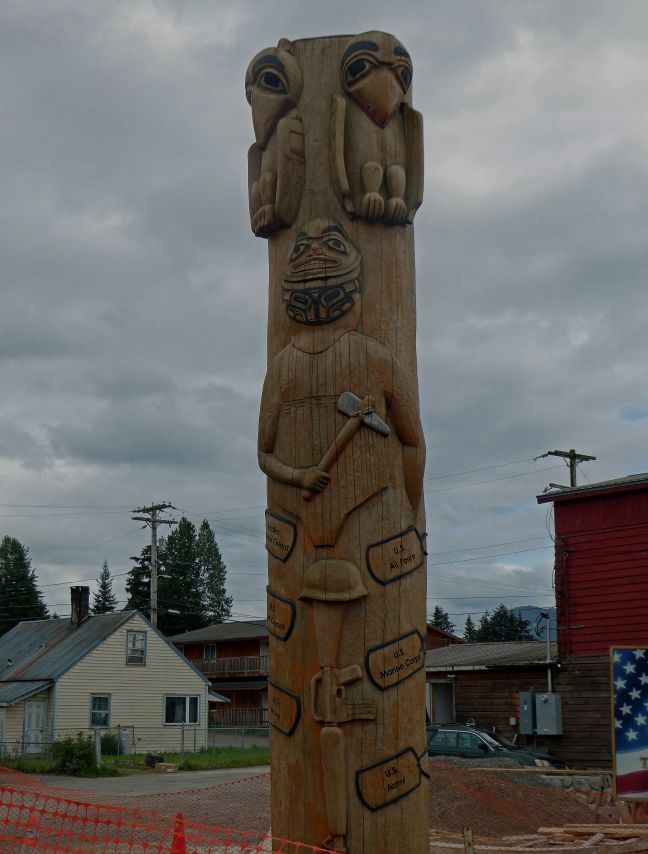
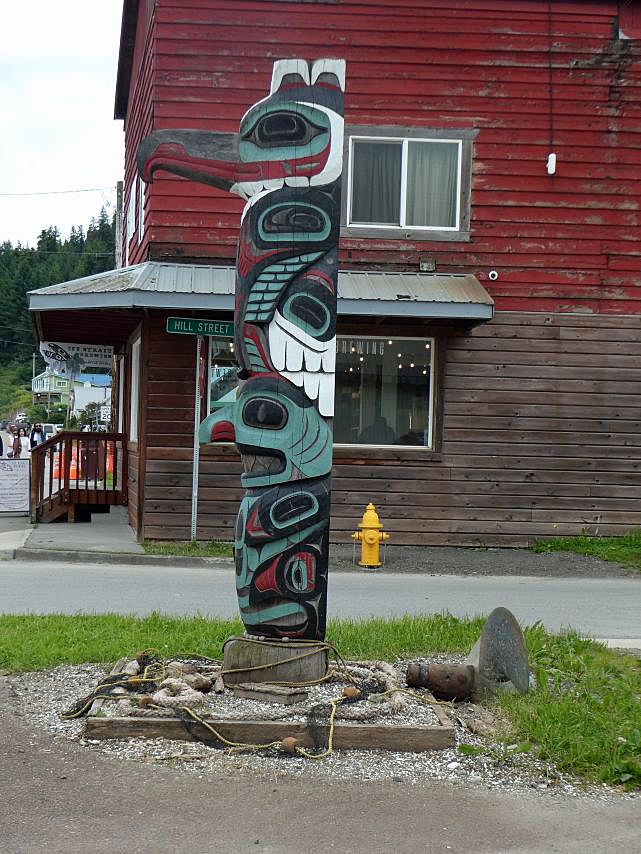
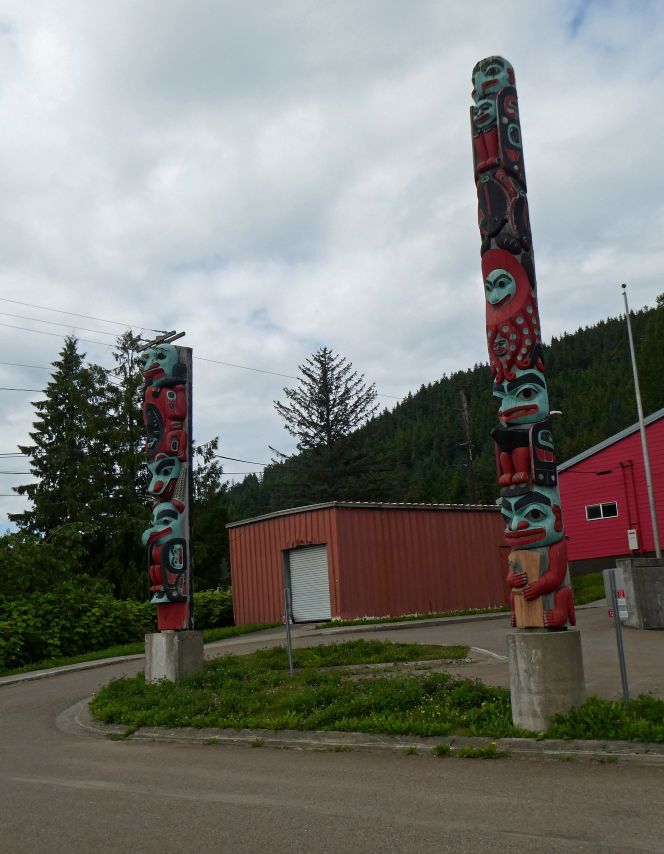
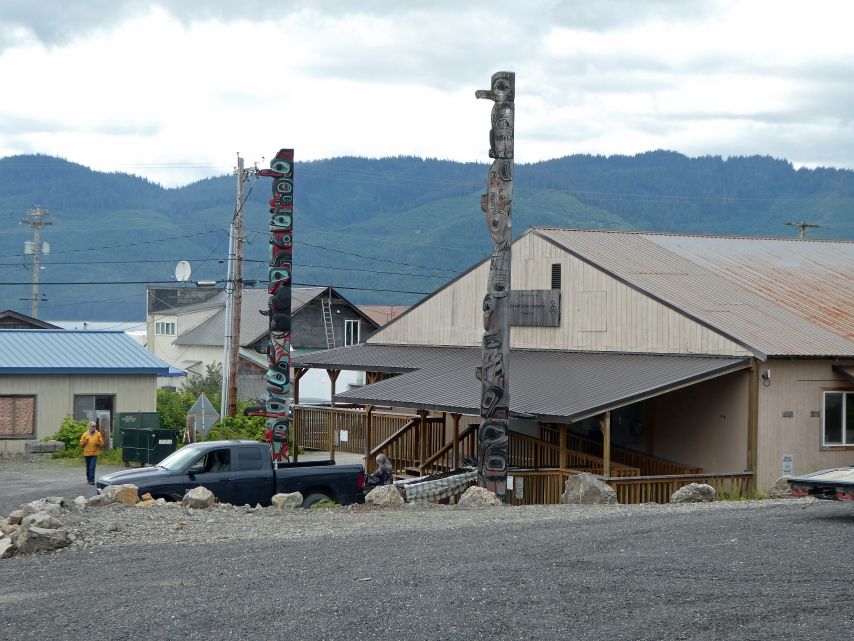
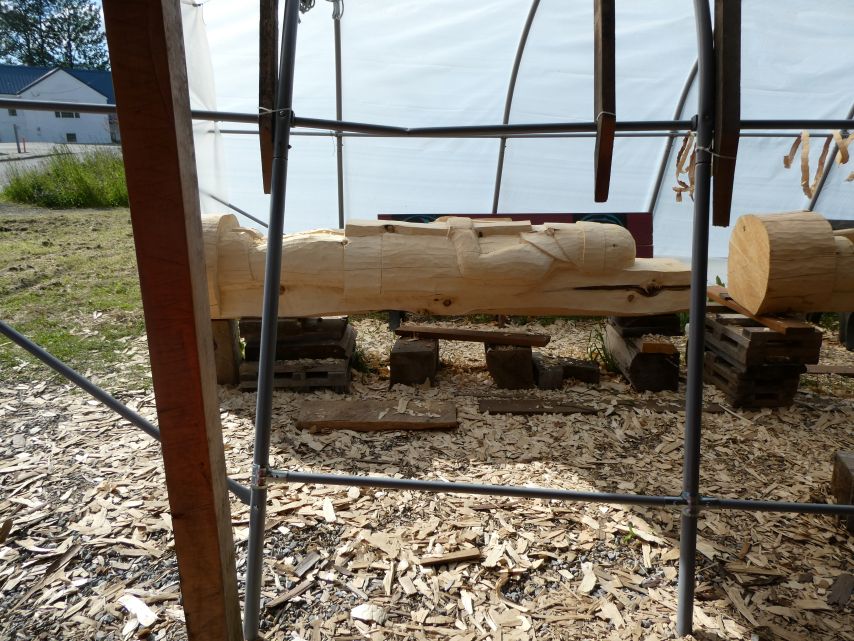
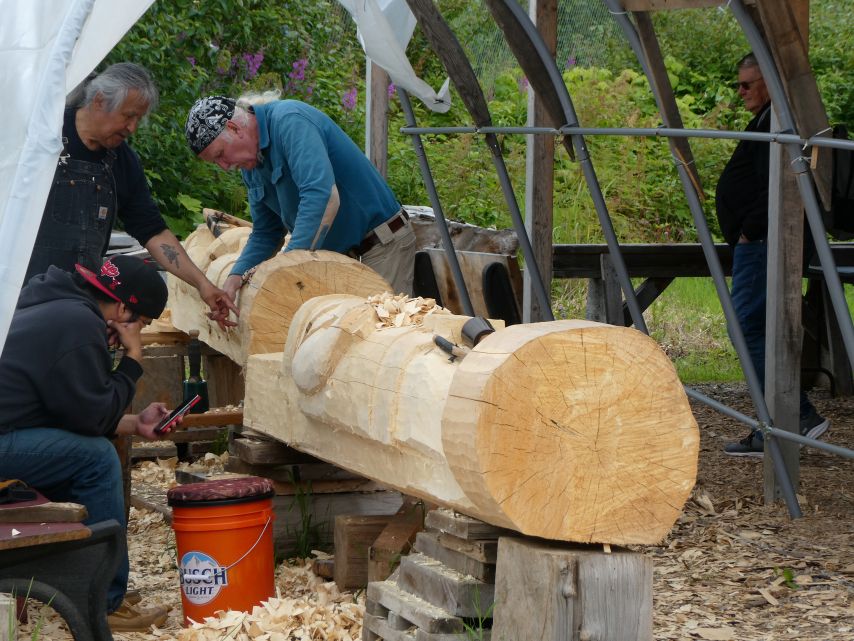
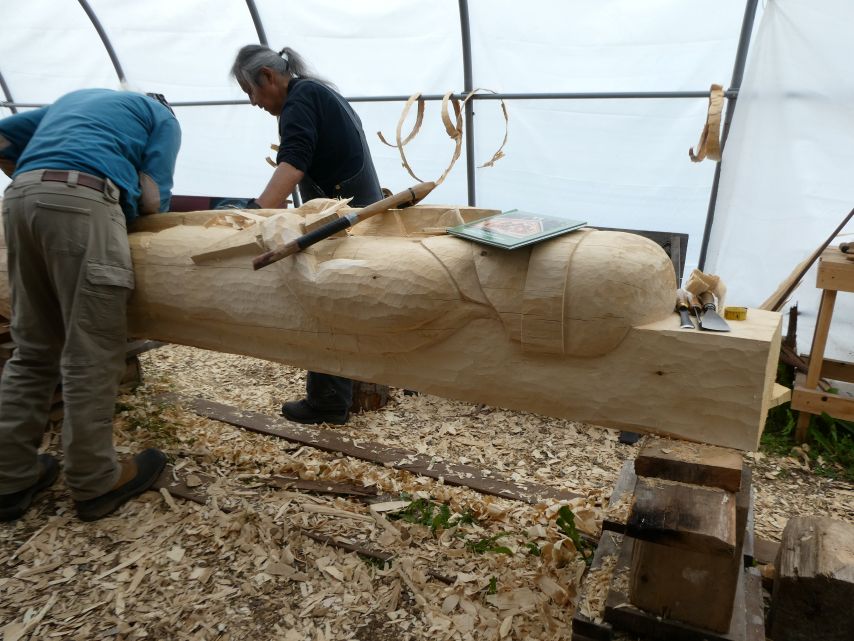
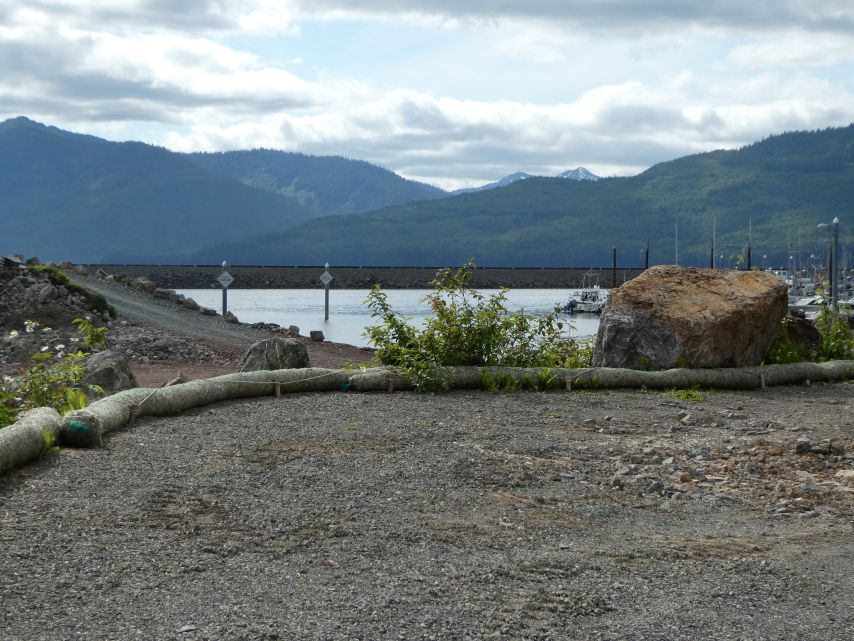
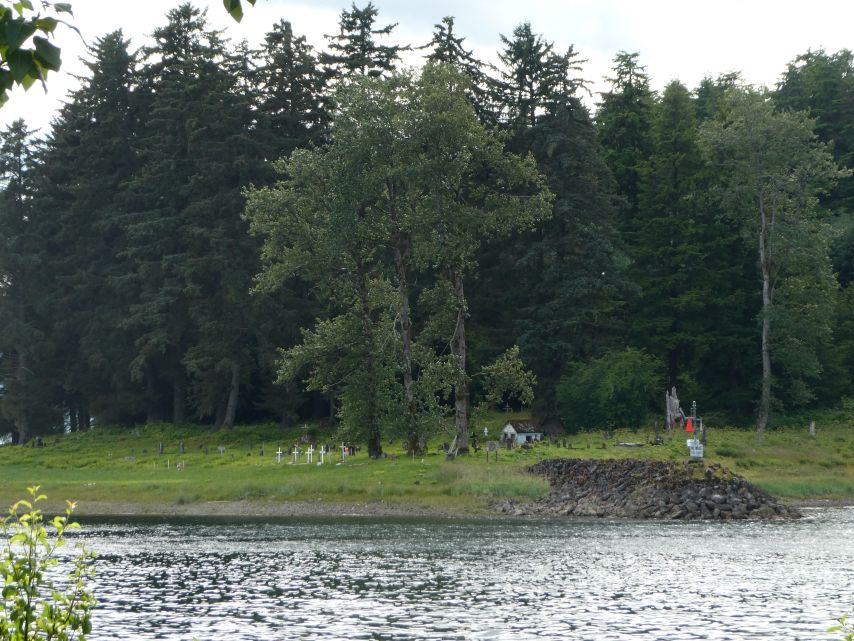
As we spent the day immersed in local life, we admired intricately carved totem poles by talented local artists and learned about the marina’s evolving role in the town. One striking initiative is the paving of the breakwater out to Graveyard Island on the west shore of Port Frederick—an effort to ease the journey for burials held in that sacred place on Chichagof.
At the mouth of Port Frederick lies Icy Strait Point, a repurposed cannery turned cultural and adventure hub. Here, visitors can zoom down the world’s largest zipline, explore a museum rich with maritime and industrial history, head out on whale-watching excursions, or choose from a variety of outdoor adventures that celebrate the surrounding wilderness. We stayed closer to town, walking the nearby trails, conversing with locals, and sharing stories with fellow mariners—each encounter adding a new layer to the portrait of Hoonah’s heart and soul.
Hoonah in Focus
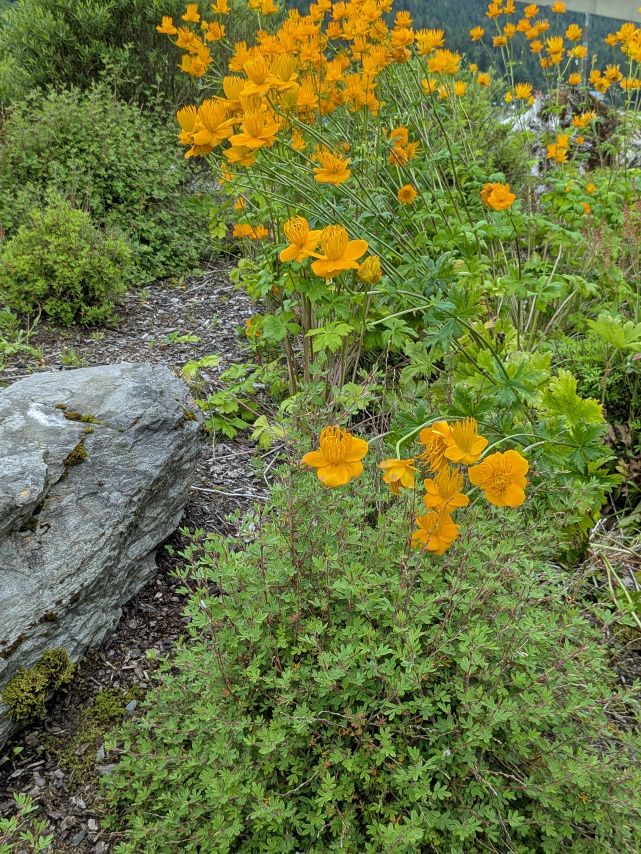
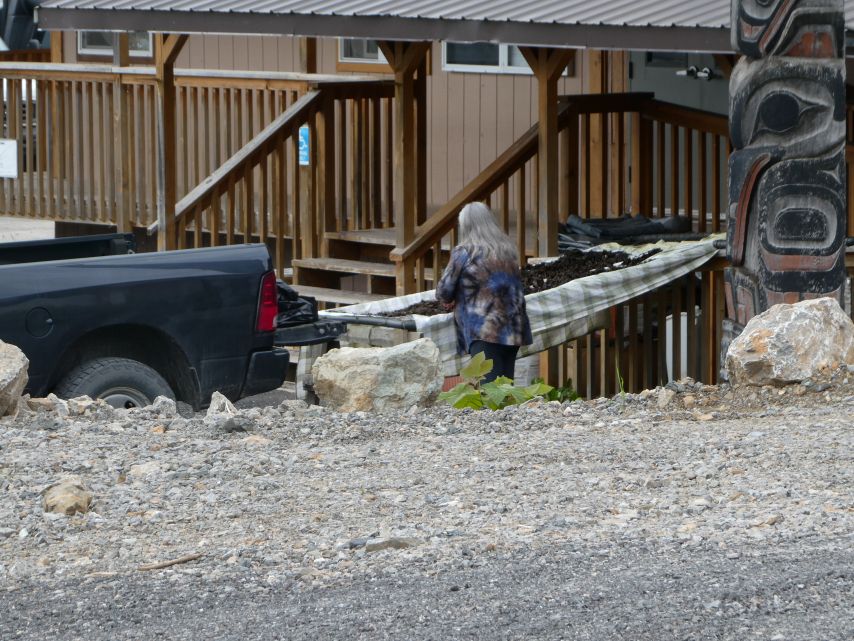
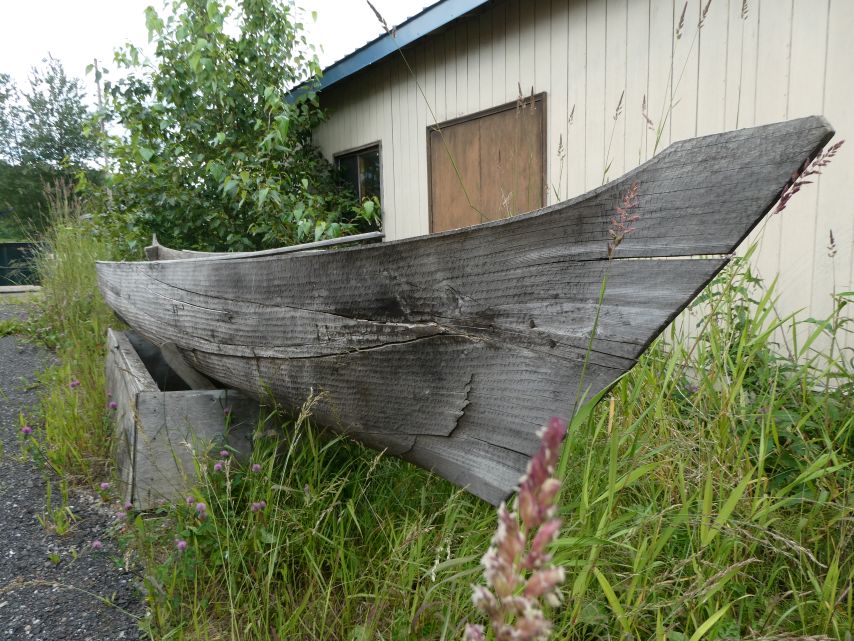
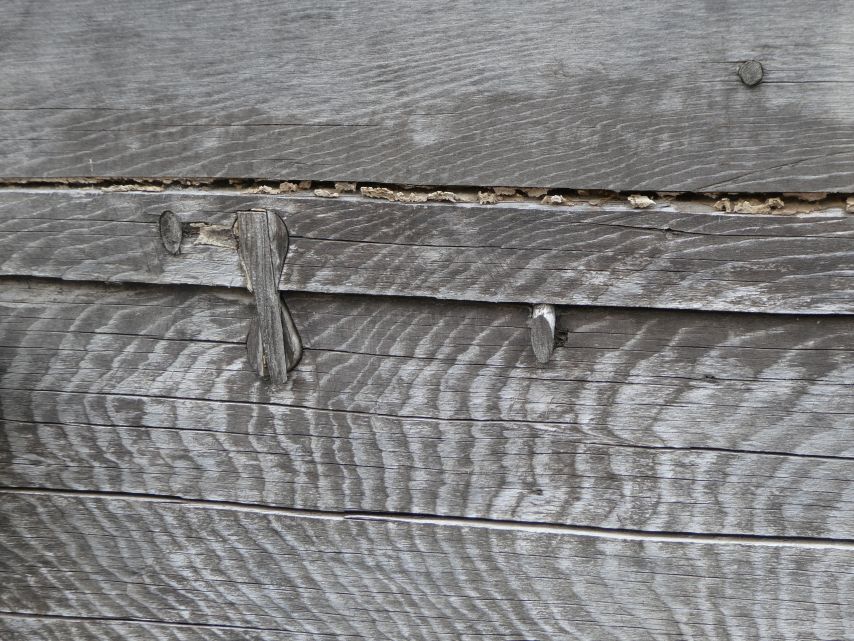
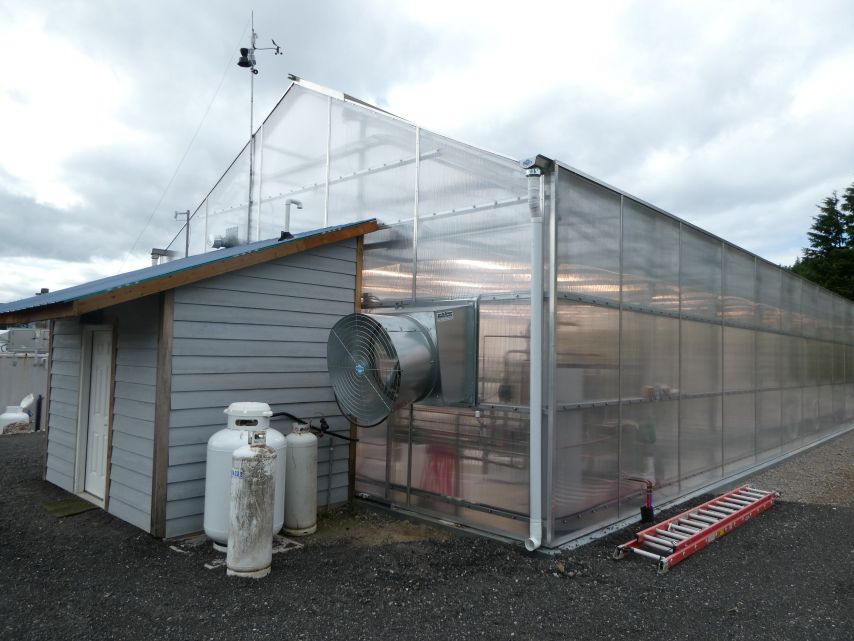
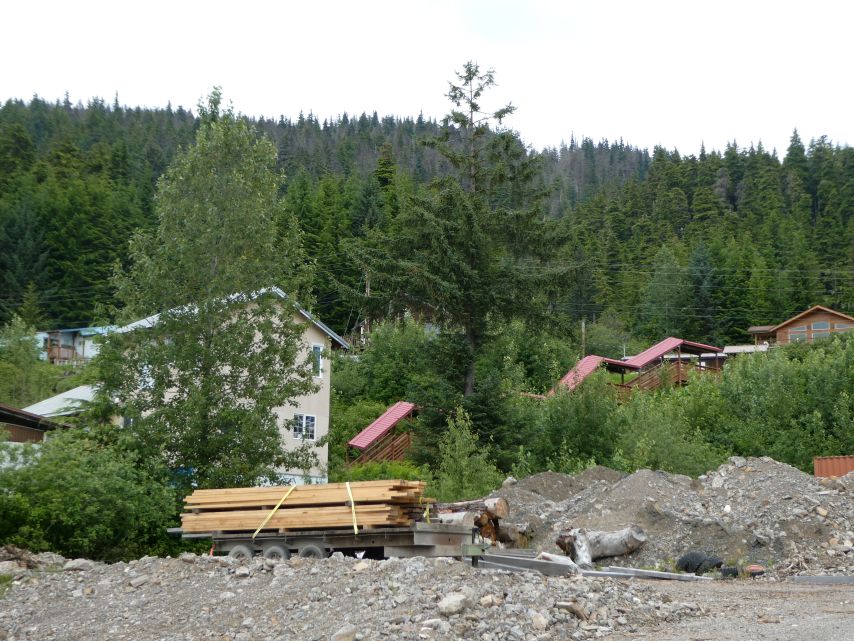
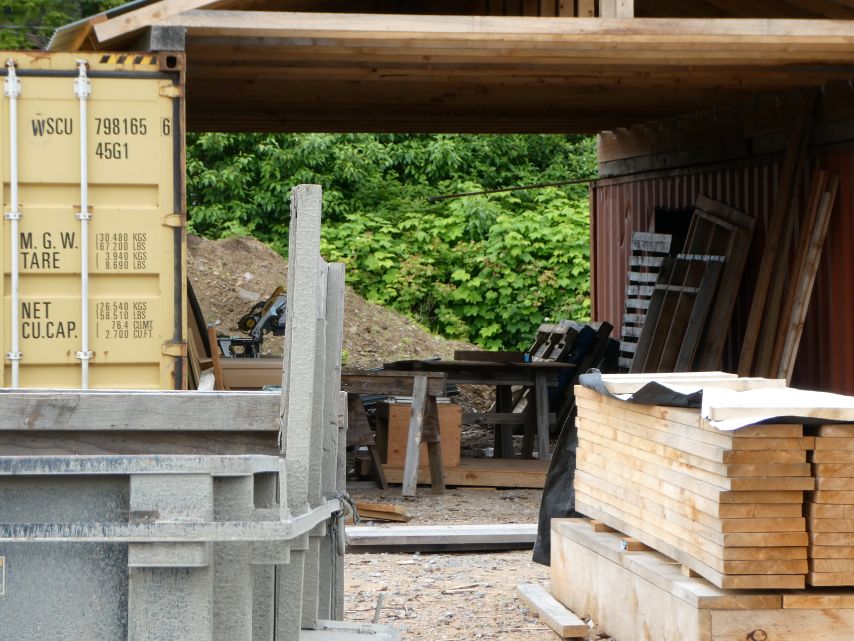
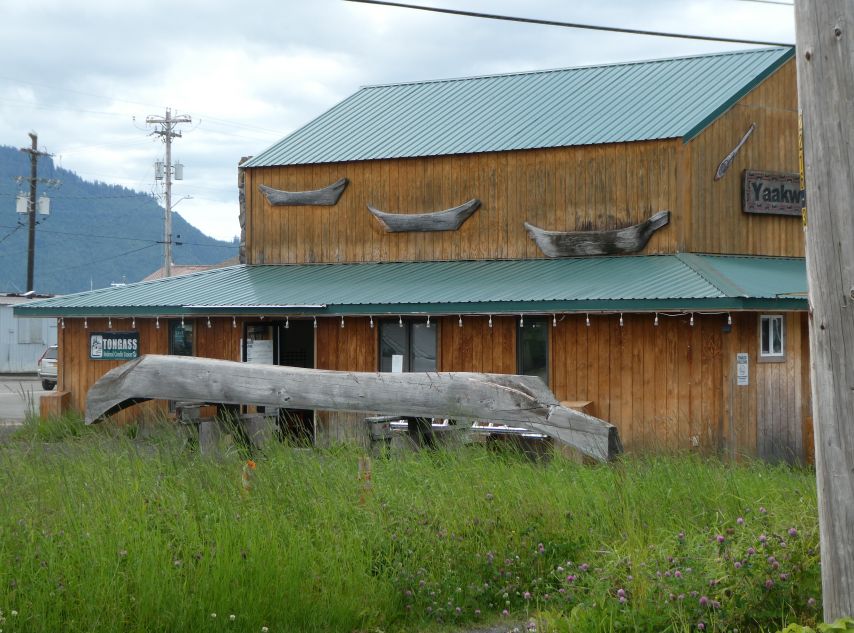
Main Street TotemMain Street TotemMain Street TotemCommunity Park TotemIn Honor of Veterans TotemMain Street TotemSchool TotemsHoonah Indian Association TotemsTotems in the MakingDrying Black SeaweedDugout CanoeWooden Fastener Produce Green HouseConstruction AreaMilling AreaYaakw Kahidi Cultural CenterPort FrederickPaving’s for BreakwaterCemetery Rustic CabinKayak TourWildflowers
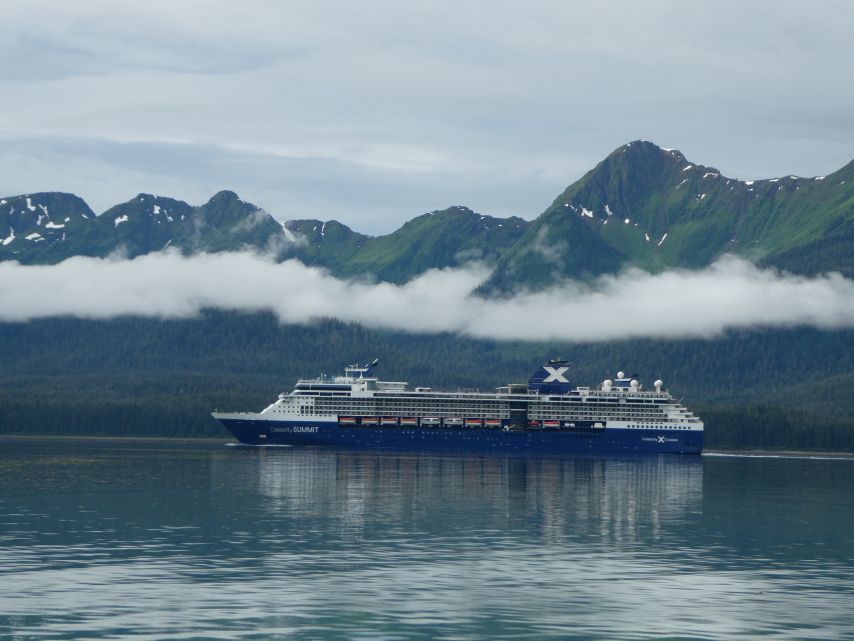
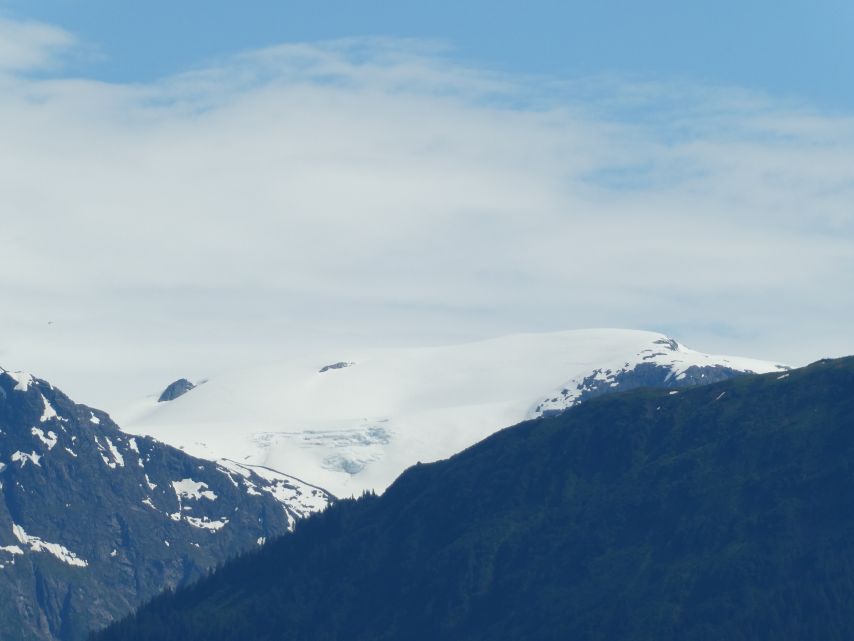
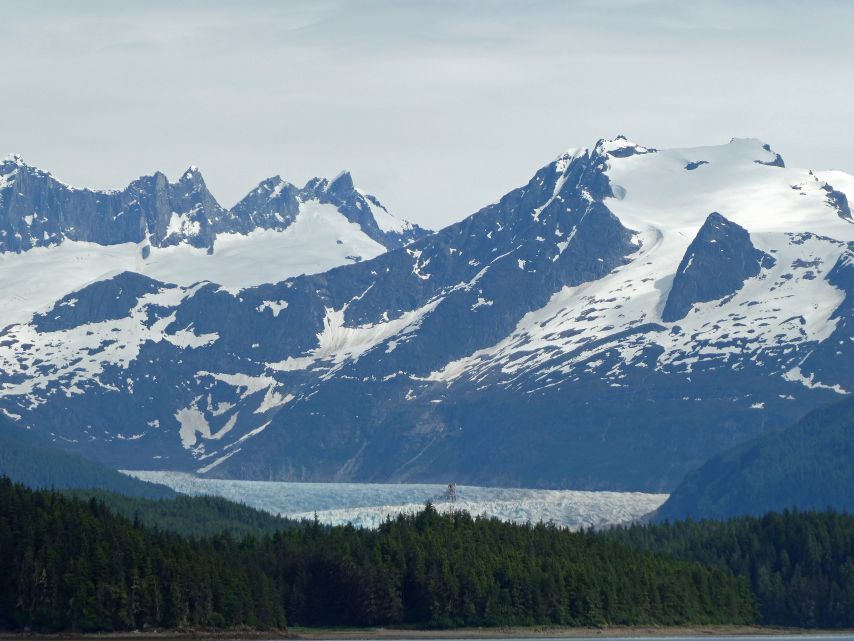
As we left Gastineau Channel and entered Stephens Passage, we passed three cruise ships en route to Juneau, which we’d assumed was the busiest port in the region. But upon arriving in Auke Bay, we learned otherwise. Despite the towering liners drawing thousands of visitors downtown each day, it’s Auke Bay that quietly claims the title—less by spectacle than by a steady, purposeful motion. From sunrise to long past dusk, its docks pulse with life: commercial fishermen prepping gear, locals launching toward Taku Inlet, whale-watching crews slipping into the bay’s deeper mysteries. Kayakers glide past, floatplanes skitter across the surface, and the marina hums with a quiet urgency.
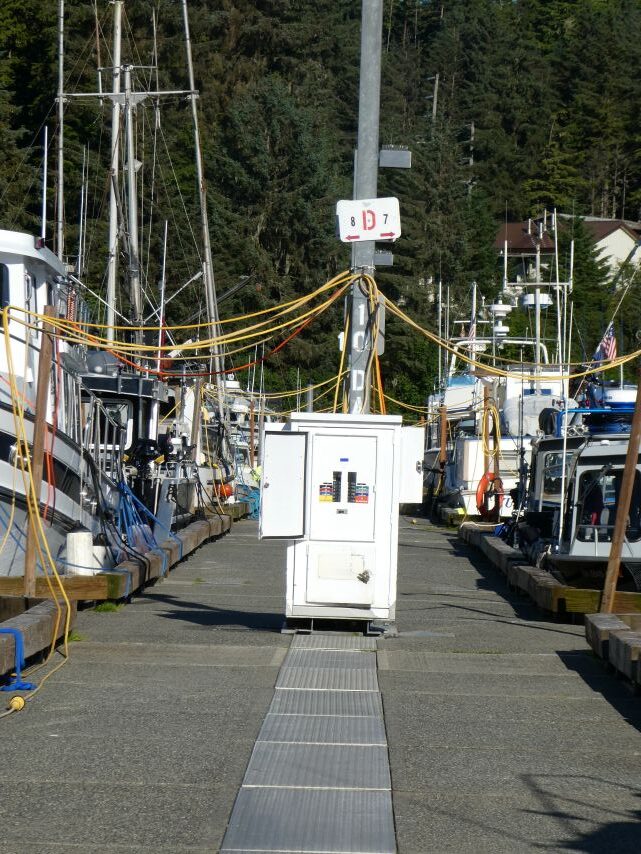
The electrical setup at the transient dock where we tied up was unlike anything we’d encountered before. It sat along a main float that stretched at least 450 feet, with finger piers extending roughly 150 feet each. To plug in, you’d need an exceptionally long cable—and even then, the pedestal offered just four outlets. Boats rotated in and out like clockwork; as soon as one disconnected, another glided in to claim the spot. We weren’t able to hook up to shore power, but the big win was that just upland from the marina, we managed to refill our propane tank.
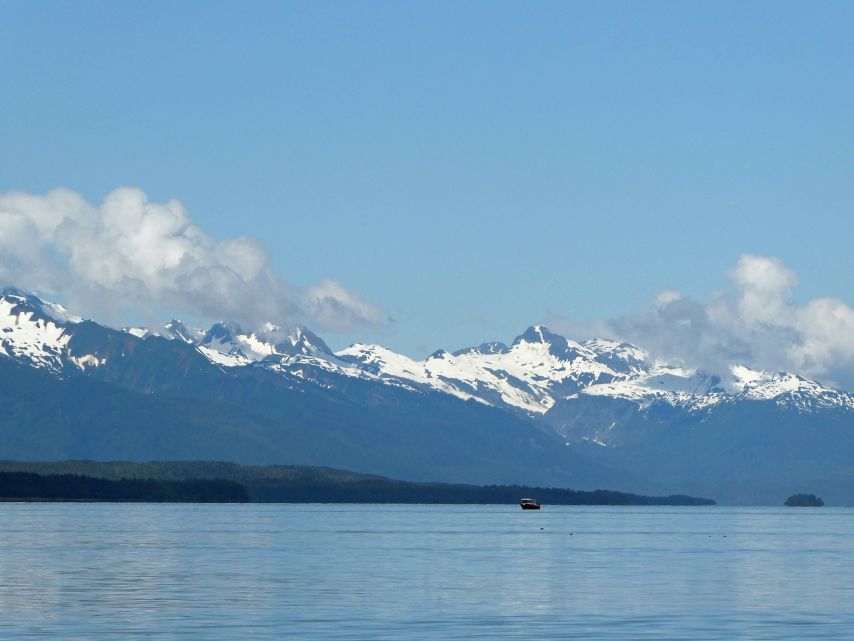
After days of steady rain and somber skies, the sun finally broke through, bathing the channel in warmth and light. The water lay smooth as glass, reflecting a brilliant stretch of blue overhead, and with each mile traveled, our spirits lifted. It felt as if the landscape was smiling with us—inviting, vivid, and quietly triumphant.
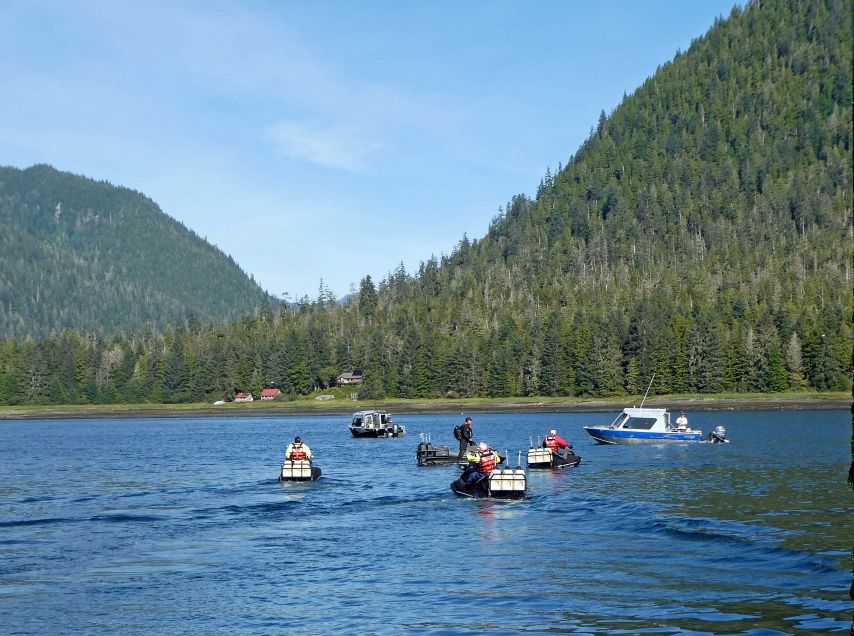
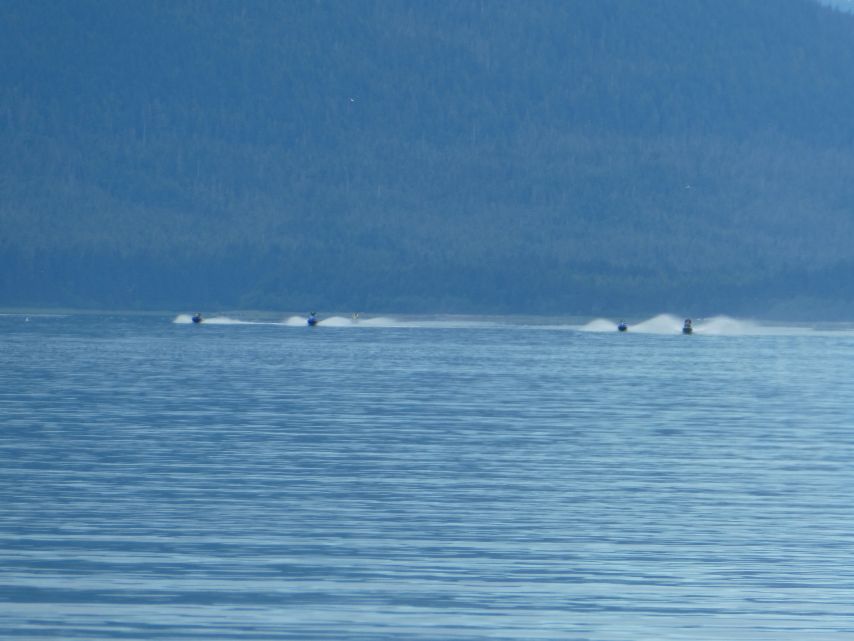
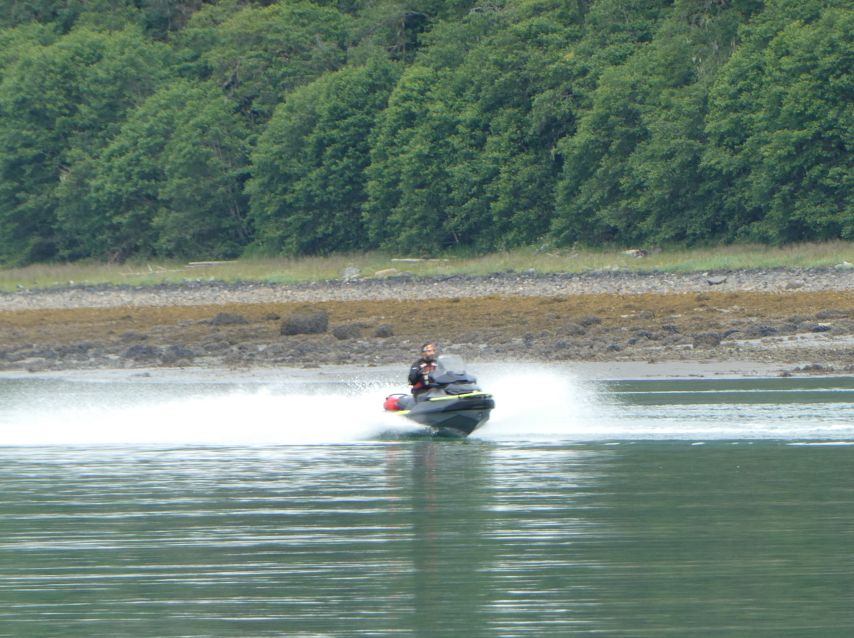
On our way today, a group of eleven adventurous souls zipped past us heading south. We often cross paths with folks touring through Dangerous Water Adventures. While most of their trips are based out of Juneau, we’ve spotted groups riding jet skis from Seattle to Alaska at the beginning of the season—and another group makes the return journey south at season’s end. It’s an extraordinary way to travel. Skimming the surface and feeling the rhythms of the water, they seem to have a special closeness with the wildlife, both above and below the waves. We find it all utterly fascinating—but we have no intention of making that trip ourselves. Some adventures are best admired from a comfortable distance.
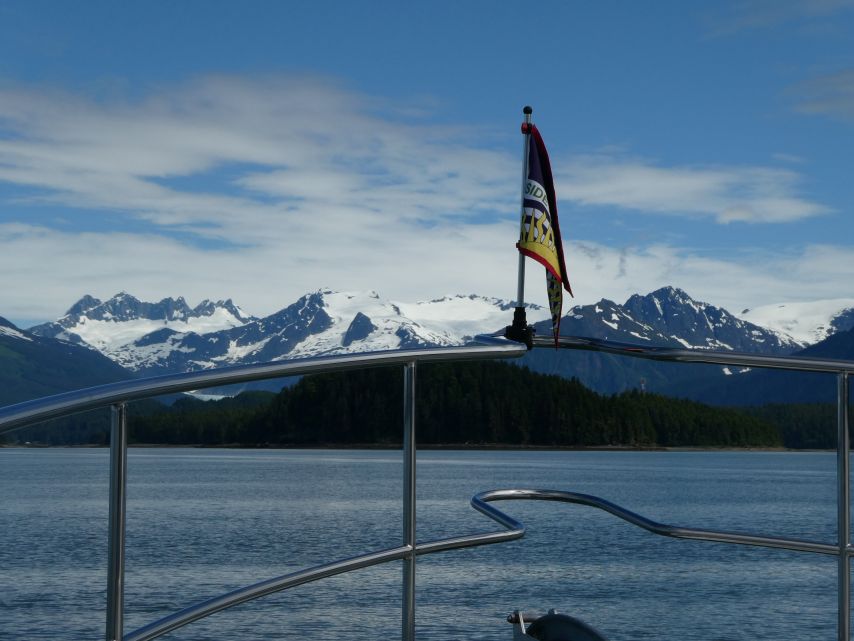
Dangerous BowspritLeaving Douglas MarinaGastineau ChannelRuby PrincessSilver MoonCelebrity SummitDangerous Water AdventuresFollowing the PackMendenhall GlacierEntering Auke BayUnbridled Auke BayElectrical Cords40 ft Trawler compared to 25 ft TrawlerSentinel